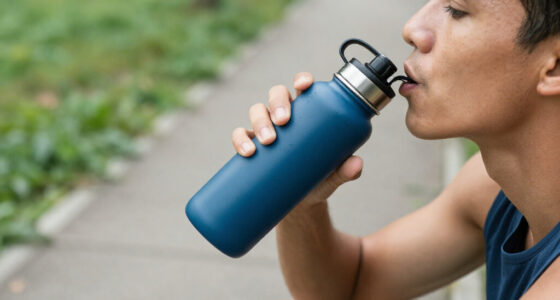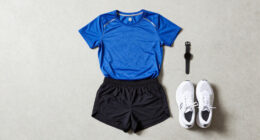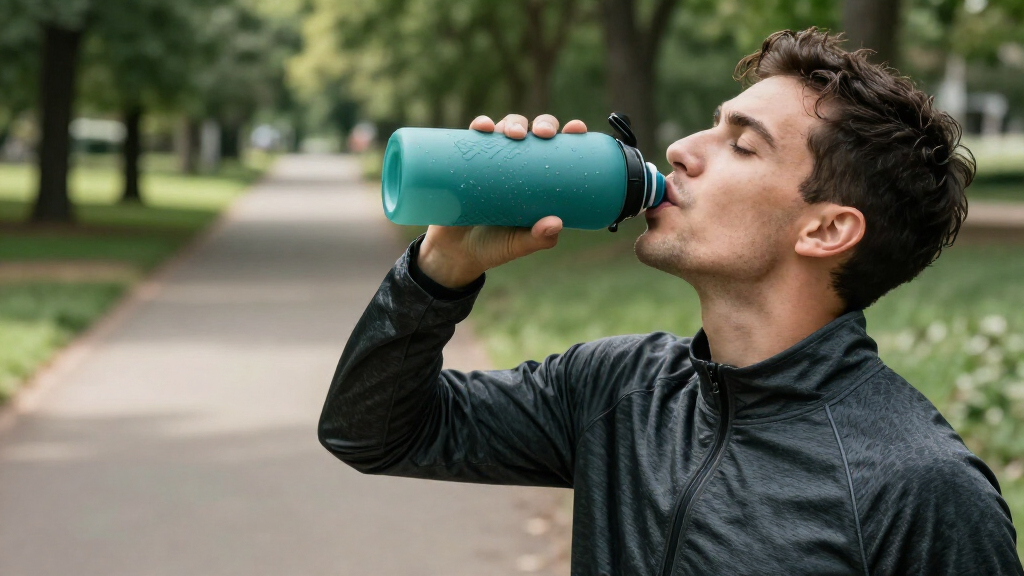
Choosing a sports water bottle comes down to how you drink during activity: do you need quick sips without breaking pace, or do you want water that stays cold through a long session? Squeeze bottles are light, easy to use on the move, and usually inexpensive. Insulated bottles keep drinks cool longer, but weigh more and can take extra effort to carry and clean.

Get sports gear delivered free with Prime
- Fast, free delivery on millions of items
- Prime Video, Amazon Music and more included
- Member-only deals all year
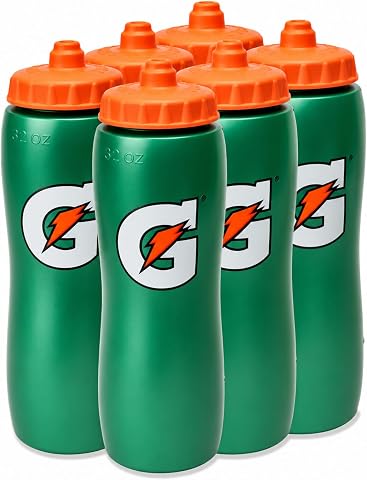
Gatorade 32 oz Squeeze Water Sports Bottle – Value Pack of 6
- ✔ Capacity: 32 oz per bottle
- ✔ Pack count: 6 bottles
- ✔ Material: Plastic
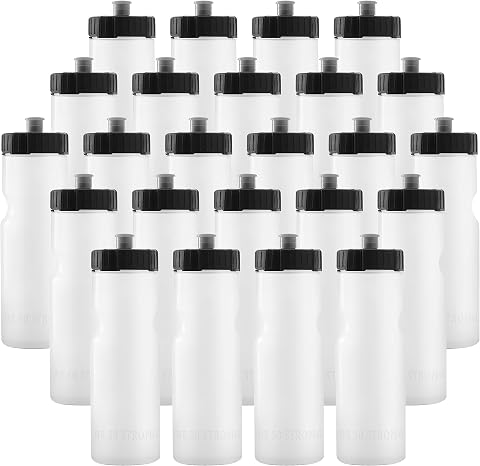
50 Strong Bulk Water Bottles, 24-Pack, 22 oz, Sports Squeeze, Clear
- ✔ Capacity: 22 oz per bottle
- ✔ Pack count: 24 bottles
- ✔ Material: BPA-free HDPE plastic

50 Strong Sports Water Bottles – Reusable 22 oz BPA-Free Plastic Bottles with Pull Top Cap – Made in USA – Top Rack Dishwasher Sa…
- ✔ Capacity: 22 fluid oz per bottle
- ✔ Pack count: 6 bottles
- ✔ Material: BPA-free polyethylene plastic
This comparison focuses on reusable squeeze bottles designed for sports and insulated bottles with a vacuum-insulated body. Both can work for training, commuting, and everyday hydration, but they solve different problems. Choose a squeeze bottle if speed, low weight, and easy refills matter most. Choose an insulated bottle if cold water over several hours is worth the added bulk. Bottle quality varies, so check the lid seal, materials, and cleaning instructions before buying.
At a Glance
| Criteria | Squeeze sports water bottles | Insulated sports water bottles | Winner |
|---|---|---|---|
| Drinking speed during activity | Fast; squeeze to deliver water through a sports nozzle, often with one hand | Slower; usually requires opening or using a separate lid or straw | A |
| Temperature retention | Little insulation; water warms toward the surrounding temperature | Vacuum insulation can keep drinks cold for hours, depending on design and conditions | B |
| Weight and portability | Usually light and easy to carry in a hand or bottle cage | Heavier and bulkier, especially when filled | A |
| Leak resistance | Depends on the nozzle and cap; some require the nozzle to be closed before packing | Often secure when fully closed, but lids, straws, and seals still need inspection | Depends |
| Cleaning and maintenance | Often simple to rinse, though valves can collect residue | More parts and narrow openings can make thorough cleaning slower | A |
| Durability | Flexible plastic can dent less but may wear, stain, or hold odors | Metal bodies resist many impacts, though they can dent and coatings can chip | Depends |
| Price and value | Usually lower-cost; good value for frequent training and easy replacement | Higher upfront cost; worthwhile when cold retention is a regular need | Depends |
Gatorade 32 oz Squeeze Water Sports Bottle – Value Pack of 6
When we want a squeeze bottle that can cover more of a practice before a refill, the 32 oz capacity gives this Gatorade set an advantage over both 22 oz 50 Strong options. Its contoured shape is intended to make a full bottle easier to grip, while the clear side strip lets us check the remaining liquid at a glance. That capacity can be useful on the sideline or in the gym, though the larger format may feel less convenient than a standard cage-sized bottle during a bike ride.The drinking setup is its strongest distinction. A one-way valve and self-sealing gasket are designed to let us drink by squeezing, without the pull-top action used by the 50 Strong bottles. The wide-mouth screw lid also simplifies refilling and access for cleaning. We get six bottles in the pack, fewer than the 24-bottle 50 Strong set but enough for a household, team subgroup, or rotation through training days.There are real tradeoffs: each bottle comes in the same 32 oz size, and the plastic may retain odors over time. The supplied dimensions also describe a taller, broader format than the 50 Strong bottles, so buyers prioritizing a typical bike-cage fit should compare the physical bottle carefully. This is our strongest all-around choice when capacity and squeeze-to-drink convenience matter more than compactness.
Pros:
- 32 oz capacity reduces refill frequency compared with the 22 oz 50 Strong bottles.
- One-way valve and self-sealing gasket support squeeze-to-drink use.
- Contoured grip and clear side strip help with handling and monitoring fluid.
- Wide-mouth lid and top-rack dishwasher-safe design simplify refilling and routine cleaning.
Cons:
- Only one 32 oz size is included, and the larger format may be less convenient for bike cages.
- Plastic construction may retain odors over time.
Best for: Athletes who want a higher-capacity bottle for practice, gym sessions, or sideline use and prefer a squeeze-activated valve.
Not ideal for: Cyclists who prioritize a compact bottle for a standard cage, or buyers who need multiple bottle sizes or insulation.
Bottom line: Choose the Gatorade six-pack when greater per-bottle capacity and a self-sealing squeeze valve outweigh the compactness of the 22 oz alternatives.
“Choose the Gatorade six-pack when greater per-bottle capacity and a self-sealing squeeze valve outweigh the compactness of the 22 oz alternatives.”
50 Strong Bulk Water Bottles, 24-Pack, 22 oz, Sports Squeeze, Clear
For coaches, organizers, or households outfitting several people at once, this 24-bottle pack fills a different need from the Gatorade six-pack. The 22 oz capacity is smaller than Gatorade’s 32 oz, so athletes may refill more often, but the lower capacity can be easier to manage when bottles need to fit standard bike cages. The product details say these bottles fit most standard cages, which makes them the most explicitly bike-oriented choice in this lineup.Each bottle uses BPA-free HDPE plastic and a pull-top lid. That familiar setup is simple for quick drinks during practice, and the clear finish makes it easy to see the contents. Compared with the 50 Strong six-pack, the bottle format is essentially the same kind of 22 oz pull-top option, but this version prioritizes quantity and a uniform clear appearance. It is a practical match for shared equipment rather than a personalized set.Bulk quantity brings storage and organization considerations: 24 bottles take room, and the clear-only color may not help players distinguish their own bottle. The product information also notes that the cap may loosen with extended heavy use, so regular checks are sensible for bottles that circulate through frequent practices. Choose it when team supply and cage compatibility outweigh higher capacity or assorted colors.
Pros:
- Twenty-four bottles suit team practices and group events.
- 22 oz size is stated to fit most standard bike cages.
- Lightweight, squeeze-friendly HDPE plastic with a pull-top lid.
- BPA-free and dishwasher safe for routine reuse and cleaning.
Cons:
- Clear is the only listed color, making personal identification less convenient.
- The cap may loosen with extended heavy use.
- At 22 oz, it holds less than the Gatorade bottle and may need more frequent refills.
Best for: Teams, sports programs, and event organizers who need many lightweight 22 oz squeeze bottles with a stated fit for most standard bike cages.
Not ideal for: Solo buyers or small households that do not need 24 bottles, and athletes who want a larger bottle or distinct colors for identification.
Bottom line: Pick the 50 Strong 24-pack when outfitting a group matters more than maximizing capacity or offering color choices.
“Pick the 50 Strong 24-pack when outfitting a group matters more than maximizing capacity or offering color choices.”
50 Strong Sports Water Bottles – Reusable 22 oz BPA-Free Plastic Bottles with Pull Top Cap – Made in USA – Top Rack Dishwasher Sa…
The six-pack version of 50 Strong’s 22 oz bottle is a useful middle option for buyers who need more than one bottle but do not want the 24-piece bulk set. Its assorted colors can help a small group tell bottles apart, and the supplied details describe an easy-squeeze polyethylene body with a pull-top cap. Compared with Gatorade, it trades the 32 oz capacity and self-sealing valve for a smaller, more conventional sports-bottle format.Like the bulk 50 Strong pack, this set is designed to fit most bike cages and is top-rack dishwasher safe. Those shared traits make it suitable for cycling, gym sessions, and outdoor activities where a lightweight bottle and quick pull-top access are more important than keeping a drink cold. The key distinction from the 24-pack is scale: six bottles with multiple colors are easier to allocate to a family or small training group, while the bulk option serves larger rosters.The main limitation is that these bottles are not insulated, so they will not keep drinks cold for extended periods. At 22 oz, they also hold less than Gatorade’s larger bottle, which matters on longer sessions without refill access. This set is our pick for modest quantities and shared activities, provided buyers are comfortable with ambient-temperature drinks and a pull-top lid.
Pros:
- Six-bottle pack suits small groups without the volume of a 24-pack.
- Assorted colors can make bottles easier to distinguish.
- 22 oz bottles are stated to fit most bike cages and holders.
- Pull-top cap and top-rack dishwasher-safe construction support convenient use and cleaning.
Cons:
- Not insulated, so drinks will not stay cold for extended periods.
- 22 oz capacity is lower than the Gatorade option.
- Pull-top lid lacks the Gatorade model’s described self-sealing valve and gasket.
Best for: Families, small teams, and active individuals who want a handful of lightweight 22 oz bottles for cycling, gym use, or outdoor activities.
Not ideal for: Buyers who need a team-size quantity, longer cold retention, or the larger capacity of the Gatorade bottle.
Bottom line: Choose this six-pack for a small group that values assorted colors and bike-cage compatibility over larger capacity or insulation.
“Choose this six-pack for a small group that values assorted colors and bike-cage compatibility over larger capacity or insulation.”
As an Amazon Associate we earn from qualifying purchases.
Key Differences
The main practical difference is how each bottle fits into the moment of drinking. A squeeze bottle is designed for quick access: lift it, squeeze, and take a sip with little interruption. That suits cycling, running, team sports, and gym sessions where a free hand or a long stop may be inconvenient. The tradeoff is that the water itself gets little protection from heat. On a warm day or during a long outing, a refill may no longer feel refreshing.
An insulated bottle solves the temperature problem, but its heavier body and lid usually make it less convenient to use at speed. It makes more sense for a long hike, a day at work, or a workout where the bottle can sit nearby. Both types can leak if a seal is damaged or a lid is left open, and neither should be judged by body material alone. For most active users, the best value follows the routine: pay for insulation if cold water matters often, and keep the lighter squeeze bottle if fast access matters more.
Detailed Comparison
Drinking speed during activity (Squeeze sports water bottles wins — major)
Squeeze bottles win by a major margin for quick hydration. Their flexible body and sports nozzle let users drink with little handling, which helps during a run, a cycling stop, or a brief break in a game. Insulated bottles may use a straw or flip lid, but many require more steps and are less convenient while moving. For stationary workouts, the difference is smaller; for continuous activity, the squeeze design is the clearer fit.
Temperature retention (Insulated sports water bottles wins — major)
Insulated bottles win by a major margin. A vacuum-insulated construction slows heat transfer and can keep water cold for hours, although results depend on the starting temperature, outdoor conditions, and how often the bottle is opened. A standard squeeze bottle offers little protection, so its water tends to warm faster. Choose insulation for long sessions in hot conditions; skip the extra cost if you refill often or do short workouts.
Weight and portability (Squeeze sports water bottles wins — moderate)
Squeeze bottles win by a moderate margin. Their simple plastic construction is generally lighter and easier to fit into a cycling cage or carry during a run. Insulated bottles add weight before they are filled and can be wider, which matters on long outings or when pack space is limited. That added bulk may be acceptable if the bottle mostly stays in a gym bag or on a desk.
Leak resistance (moderate difference)
There is no universal winner. A squeeze bottle can drip if its nozzle remains open or its valve is worn. An insulated bottle can leak if its lid is cross-threaded or its gasket is damaged. Leak performance depends more on the closure design and its condition than on whether the body is plastic or metal. Look for a clearly lockable lid if the bottle will travel in a bag, and test the seal before packing it with electronics.
Cleaning and maintenance (Squeeze sports water bottles wins — moderate)
Squeeze bottles usually win by a minor to moderate margin. Many have a straightforward body and cap that are easy to rinse after use. Their drinking nozzles can still trap sports drink residue, so check whether the valve comes apart or can be cleaned as directed. Insulated bottles often have more lid components, straws, or narrow openings that take longer to scrub and dry. Dishwasher safety varies, so follow the manufacturer’s care instructions for either type.
Durability (moderate difference)
This depends on the damage a bottle is most likely to face. A metal insulated bottle resists many scratches and is less likely to crack from ordinary use, but a hard fall can dent it and damage its finish or lid. A flexible squeeze bottle can survive drops without denting, yet its plastic body, nozzle, or valve may wear over time. The gap is moderate and use-specific: prioritize a replaceable cap or valve if the bottle sees daily hard use.
Price and value (moderate difference)
Neither wins for every buyer. Squeeze bottles generally cost less and offer strong value for people who want dependable hydration during workouts, especially if they refill often. Insulated bottles cost more, but the premium pays for temperature retention and can be worthwhile for long sessions or all-day use. If cold water is only an occasional preference, the added cost and weight bring little practical return.
Squeeze sports water bottles: Pros and Cons
Pros:
- Light and convenient to carry during active sports
- Fast drinking with a simple squeeze and nozzle
- Usually less expensive and easy to refill
- Often straightforward to rinse and maintain
Cons:
- Does little to keep water cold
- Nozzles and valves may need careful cleaning
- Some designs can drip unless the nozzle is closed
- Plastic may stain, wear, or retain odors over time
Insulated sports water bottles: Pros and Cons
Pros:
- Keeps drinks cold much longer than a standard squeeze bottle
- Metal body can withstand many everyday knocks
- Useful for long outings, travel, work, and hot conditions
- A secure lid can make it practical to pack
Cons:
- Heavier and bulkier to carry
- Often slower to open and drink from during sport
- Lids, straws, and seals can take longer to clean
- Costs more upfront
Who Should Choose What
Choose Squeeze sports water bottles if:
- You run, cycle, play field sports, or train where a fast sip matters.
- You want the lightest practical bottle for a cage, belt, or gym bag.
- You refill regularly and are comfortable drinking water near ambient temperature.
- You want a low-cost bottle that is simple to use during workouts.
Choose Insulated sports water bottles if:
- You want cold water to last through a long workout, hike, or workday.
- You often exercise in hot weather and can carry the extra weight.
- Your bottle usually stays in a bag, vehicle holder, or beside your desk.
- You value temperature retention enough to pay more and clean a more involved lid.
Skip both if: If you need a leakproof bottle for bag travel above all else, compare specific lid designs and independent leak claims before choosing either category; bottle type alone does not guarantee a reliable seal.
Value for Money
Paying more for an insulated bottle is worthwhile when cold water is a regular need over several hours. The extra cost buys temperature retention, not faster hydration or easier carrying. If your sessions are short, you have access to refills, or you drink water at room temperature, a squeeze bottle usually delivers better value. For a routine that includes both fast sport use and long hot days, owning both can be sensible: use the squeeze bottle during activity and reserve the insulated one for longer outings.
Final Verdict
For most users buying a bottle specifically for active sports, choose a squeeze bottle. Its lighter build and faster drinking suit movement, and the lower price makes it the stronger everyday training value. Choose an insulated bottle if keeping water cold for hours is the deciding factor and you can accept more weight, bulk, and cleaning. The biggest question is simple: will you use the bottle while moving, or will it sit within reach while you need cold water over time?
Frequently Asked Questions
Are squeeze bottles or insulated bottles better for sports?
Squeeze bottles are usually better for active sports because they are light and quick to drink from. Insulated bottles fit longer sessions where maintaining cold water matters more than speed or weight.
Is an insulated sports bottle worth the higher price?
It is worth paying more if you regularly want cold water through a long workout, hike, or day away from home. For short sessions with easy refills, a basic squeeze bottle is usually better value.
Which type is easier to clean?
A squeeze bottle often has fewer parts, though its valve still needs attention after use with sports drinks. Insulated bottles may have straws, multi-part lids, and narrow openings that take longer to clean and dry.
Which sports bottle is less likely to leak in a bag?
Neither type is automatically leakproof. Check for a lockable closure, inspect the gasket, close the cap fully, and follow the maker’s packing guidance. A squeeze nozzle left open can drip; a poorly seated insulated-bottle lid can also leak.