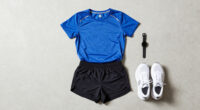
Choosing clothes for running is a tradeoff between paying for details that can make repeated miles more comfortable and keeping the cost of a basic kit low. Technical running wear is purpose-built around movement, sweat, weather, and frequent washing. Budget athletic wear can cover the same basic need for less, especially for short, occasional runs in mild conditions.

Get sports gear delivered free with Prime
- Fast, free delivery on millions of items
- Prime Video, Amazon Music and more included
- Member-only deals all year
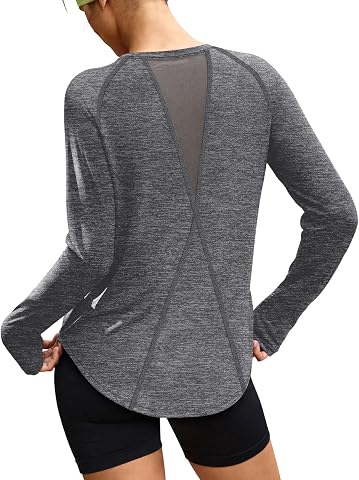
Women’s Long Sleeve Workout Top with Mesh Back
- ✔ Material: White: 86% polyester, 14% spandex; other colors: 95% polyester, 5% spandex
- ✔ Care: Machine wash
- ✔ Origin: Imported

Women’s Long Sleeve Workout and Underscrub Shirt
- ✔ Fabric: 94% polyester, 6% spandex
- ✔ Care: Machine wash
- ✔ Origin: Imported
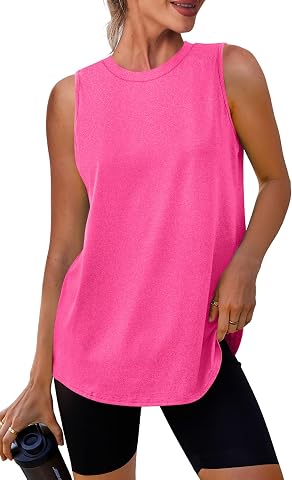
Women’s Lightweight Sleeveless Workout Tank Top – Loose Fit Athletic Shirt
- ✔ Fabric: 95% polyester, 5% spandex
- ✔ Care: Machine wash
- ✔ Closure: Pull-on
The difference matters most when you run often, go out in rain or cold, or find that chafing and damp fabric cut sessions short. Technical gear is usually the stronger fit for those demands; budget wear makes more sense when you are starting out, run casually, or already own comfortable workout clothes. The best decision is to buy for the conditions and frequency you actually face, rather than assuming every runner needs a complete premium wardrobe.
At a Glance
| Criteria | Technical running wear | Budget athletic wear | Winner |
|---|---|---|---|
| Sweat management | Usually uses lightweight, quick-drying fabrics designed for running | Varies; some items wick well, while others stay damp | A |
| Fit and freedom of movement | Often shaped and patterned for a running stride | Can work well, though fit may be less tailored to running | A |
| Chafing and comfort | May offer flat seams, low-friction panels, and purpose-made liners | Comfort depends on fabric, seams, and individual fit | A |
| Weather protection | More likely to include running-specific layers and weather features | Basic coverage is available, but specialized features are less common | A |
| Durability | Often better suited to frequent use and washing, though quality varies | Varies widely and may wear sooner under frequent use | A |
| Visibility and useful details | More likely to include reflective details and secure pockets | Basic features; reflectivity and pocket placement may be limited | A |
| Upfront cost and value | Higher initial cost; value improves with frequent use | Lower initial cost; strong value for occasional use | Depends |
Women’s Long Sleeve Workout Top with Mesh Back
For runners who prefer sleeves but tend to warm up, this top has the most directly useful combination in the lineup: sweat-wicking stretch fabric and a V-shaped mesh back panel. The panel gives it a ventilation feature the raglan shirt does not specify, while the curved high-low hem adds coverage during movement. That makes this our best overall match for variable effort or mild conditions where a tank feels too exposed.There are practical unknowns. Fabric composition changes by color, so we should check the selected version rather than assuming every option has the same blend. The supplied details also advise checking the size chart, and they do not state how close the shirt fits while running. Compared with the raglan option, this one names a dedicated vent but does not specify flatlock seams or four-way stretch; compared with the tank, it offers more coverage and less open airflow. We would skip it if we want maximum cooling or a reliably consistent fabric specification across colors.
Pros:
- Mesh back panel adds a dedicated ventilation area.
- Quick-drying, sweat-wicking fabric is suited to active use.
- Curved high-low hem offers coverage while moving.
- Long sleeves provide more coverage than the tank.
Cons:
- Fabric composition varies by color.
- The size chart should be checked before ordering.
- No warmth rating or reflective details are specified.
Best for: Runners who want long sleeves, sweat-wicking stretch and extra back ventilation for mild or changeable conditions.
Not ideal for: Runners seeking a sleeveless top for hot weather, or anyone who needs a consistent fabric composition without checking color-specific details.
Bottom line: We rank this first for runners who want covered arms with a ventilation feature, provided they confirm the selected color and fit.
“We rank this first for runners who want covered arms with a ventilation feature, provided they confirm the selected color and fit.”
Women’s Long Sleeve Workout and Underscrub Shirt
This is the more adaptable long-sleeve choice if our running routine includes warm-ups, cool-downs or layering over a base layer. Its four-way stretch is intended to allow movement in multiple directions, while raglan sleeves and flatlock seams are designed to support mobility and reduce seam-related discomfort. The lightweight, sweat-wicking fabric also gives it a straightforward role for workouts where we want sleeves without a heavy feel.Compared with the mesh-back top, the raglan shirt does not describe a dedicated ventilation panel or a high-low hem, so it is less clearly aimed at runners seeking extra airflow or coverage. It does, however, specify four-way stretch and flatlock seams, details that the mesh-back description does not provide. The shirt is also described for work shifts and everyday wear, which suggests versatility, but the supplied information gives no warmth rating for cooler runs and no size measurements. We should choose it for a flexible layer, not assume it will provide insulation or a precise running fit.
Pros:
- Four-way stretch supports unrestricted movement.
- Raglan sleeves are designed for comfortable arm mobility.
- Flatlock seams are intended to reduce seam discomfort.
- Quick-drying fabric can work for workouts and layering.
Cons:
- No fall or winter warmth rating is provided.
- Available sizes and fit measurements are not specified in the supplied details.
- No mesh vent or reflective feature is described.
Best for: Runners who want a lightweight long-sleeve layer with stated four-way stretch and mobility-oriented seams.
Not ideal for: Runners who need a specified warmth level, dedicated back ventilation or clear fit measurements before choosing a size.
Bottom line: We recommend this as the flexible layering pick when stretch and seam comfort matter more than a dedicated ventilation panel.
“We recommend this as the flexible layering pick when stretch and seam comfort matter more than a dedicated ventilation panel.”
Women’s Lightweight Sleeveless Workout Tank Top – Loose Fit Athletic Shirt
When temperatures rise, this tank is the simplest way in this group to increase airflow: it has a sleeveless cut, lightweight fabric and a loose fit. Its high neckline adds coverage at the front, while the quick-drying, sweat-wicking polyester blend is intended for active use. Compared with either long-sleeve pick, it leaves the arms uncovered, so it is the natural choice for warm conditions when sleeves feel unnecessary.That comfort-first shape also defines the tradeoff. The description notes that the loose fit may not provide compression support, and a relaxed top may not appeal to runners who prefer a close-to-body fit. The mesh-back top provides more coverage while still naming a ventilation feature; the raglan shirt adds sleeves and specifically calls out four-way stretch and flatlock seams. This tank instead prioritizes easy movement and layering. Its synthetic blend may retain odors more than natural fibers, so it may be less appealing if odor management is a priority. We also do not have details about reflective elements or storage.
Pros:
- Sleeveless design allows more open airflow than the long-sleeve options.
- Lightweight fabric is breathable and quick-drying.
- High neckline provides coverage during movement.
- Loose fit allows comfortable movement and easy layering.
Cons:
- Loose fit may not provide compression support.
- Synthetic blend may retain odors more than natural fibers.
- No reflective details or storage are specified.
Best for: Runners who want a lightweight, sleeveless top with a loose fit and high neckline for warm conditions.
Not ideal for: Runners who prefer compression support, a close fit, long sleeves or natural-fiber odor management.
Bottom line: We would choose this for warm runs and relaxed comfort, but not when we want support or a close-fitting running layer.
“We would choose this for warm runs and relaxed comfort, but not when we want support or a close-fitting running layer.”
As an Amazon Associate we earn from qualifying purchases.
Key Differences
The main advantage of technical running wear is a more reliable experience across repeated runs. Lightweight, quick-drying fabrics can feel less heavy as you sweat, while running-oriented cuts and seam placement may reduce distraction over longer distances. These features do not guarantee comfort for every person, and a well-fitting budget shirt can beat a premium one that rubs. Still, technical gear is more likely to address common running problems directly.
Budget athletic wear wins on the cost of getting started. A runner doing a short loop once or twice a week in mild weather may notice little practical difference between a comfortable basic shirt and a specialized one. The tradeoff changes with frequency and conditions: wet fabric, poor layering, fading elastic, or chafing become more consequential when sessions are long and repeated. Spend selectively on the item that solves a real problem, such as a supportive sports bra, weather layer, or shorts that do not rub, rather than upgrading everything at once.
Detailed Comparison
Sweat management (Technical running wear wins — moderate)
Technical running tops and bottoms are more likely to use light fabrics that move sweat away and dry quickly. Budget athletic wear ranges from effective synthetic blends to heavier cotton-rich garments that can stay wet and feel clingy. The gap is moderate: for a short run it may barely register, but on a hot day or a longer route, less damp fabric can mean less discomfort. Technical wear wins for regular or longer runs.
Fit and freedom of movement (Technical running wear wins — moderate)
Running-specific cuts account for repeated strides, arm swing, and layering, so they are more likely to stay in place without excess fabric. General athletic clothes can still fit well and allow full movement, but are designed for a wider range of workouts. The gap is minor to moderate and depends heavily on body shape and garment cut. Try-on comfort matters more than the label; technical wear has the edge when general gym clothes ride up or bunch.
Chafing and comfort (Technical running wear wins — moderate)
Technical items may use smoother fabrics, low-profile seams, and shorts liners intended for running. Budget pieces can be just as comfortable when the seams sit well and the fabric does not rub, but they offer fewer purpose-specific design cues. The gap is moderate over longer distances, since repeated friction has more time to become irritating. Technical gear is the safer bet for runners who already know where they chafe, while budget wear is reasonable for short runs if it feels good in motion.
Weather protection (Technical running wear wins — major)
Technical running ranges are more likely to include insulating layers, wind-resistant shells, and fabrics selected for wet conditions. Budget athletic clothing can provide basic warmth or coverage, but may trap sweat or offer little protection in wind and rain. This is a major difference for year-round outdoor runners and a minor one for people who run indoors or only in mild weather. Choose technical pieces for the conditions you actually face, not for a hypothetical expedition.
Durability (Technical running wear wins — moderate)
Technical wear is often built for frequent running and washing, and better construction can help it retain fit and function. Budget clothing varies: inexpensive items may last well with occasional use, while thin fabric, stretched elastic, or seam wear can shorten service with heavy rotation. The gap is moderate for high-mileage runners and minor for casual use. Inspect stitching and fabric feel; a higher price alone does not prove an item will last longer.
Visibility and useful details (Technical running wear wins — moderate)
Technical running garments more often include reflective elements, pockets that secure small essentials, and features such as thumb loops or vents. Budget athletic wear may cover the basics but can lack those details or place pockets where they bounce. The practical gap is moderate for early-morning or evening outdoor runs, particularly when a secure key pocket matters. Reflective clothing does not replace lights or other visibility measures in low light; pay for details that suit your route.
Upfront cost and value (major difference)
Budget athletic wear costs less to try and makes it easier to build a basic rotation without a large initial spend. Technical wear costs more, but may earn its price through comfort and useful service when worn often. This is a genuine depends result: for a weekly short run, budget gear is usually better value; for frequent long runs, a few targeted technical pieces can be worth the added cost. Consider cost per comfortable use, not just the tag.
Technical running wear: Pros and Cons
Pros:
- Designed around running movement and common sources of discomfort
- More choices for sweat management and changing weather
- Often includes practical details such as secure pockets or reflective accents
Cons:
- Higher upfront cost
- Feature claims do not guarantee a comfortable fit
- It is easy to pay for specialized features that a casual runner rarely uses
Budget athletic wear: Pros and Cons
Pros:
- Lower cost makes starting or replacing basics easier
- Works well for casual runs and mild conditions when the fit is comfortable
- Can be used for other workouts, so one item may serve more than one purpose
Cons:
- Fabric, seams, and sweat management vary substantially
- May lack weather features, secure pockets, or reflective details
- Frequent use can expose weaknesses in elastic, seams, or fabric
Who Should Choose What
Choose Technical running wear if:
- You run several times a week or regularly cover longer distances
- You run outdoors in cold, wind, rain, or low light and need suitable layers or visibility details
- You have recurring problems with chafing, damp fabric, bouncing pockets, or clothes shifting
Choose Budget athletic wear if:
- You are trying running and want to limit the initial spend
- Your runs are short, occasional, or mostly on a treadmill
- You already own comfortable workout clothes that stay put and do not rub
Skip both if: If neither option gives you a comfortable fit, focus on garment cut, support, and fabric feel over category or price. For outdoor runs in severe weather, choose clothing and safety equipment specifically suited to the conditions.
Value for Money
Paying more is worthwhile when a technical item solves a problem you encounter often: a layer that keeps you comfortable in cold wind, shorts that prevent chafing, or a top that dries faster on long runs. For frequent runners, those gains can justify buying fewer, better-chosen pieces. A complete premium outfit is rarely necessary to get started.
Budget athletic wear is better value for occasional runs, mild weather, and runners who already have comfortable basics. Start with what you own, then replace only the pieces that cause discomfort or fail to meet your conditions. Judge value by how often you use an item and whether it improves the run, not by the number of technical features listed.
Final Verdict
For most new or occasional runners, budget athletic wear is the sensible starting point: choose comfortable pieces that stay in place and work in your usual weather. Technical running wear is the better choice for regular mileage, long sessions, challenging conditions, or persistent comfort problems. The biggest deciding factor is how often and where you run. Pay more only for features you will use; a small number of well-chosen technical pieces can make more sense than replacing an entire wardrobe.
Frequently Asked Questions
Do I need technical running clothes to start running?
No. Comfortable athletic clothes that allow free movement are enough for most short runs in mild weather. Upgrade when sweat, weather, fit, or friction creates a problem.
Is cotton a bad choice for running?
Not for everyone or every run. Cotton can feel comfortable on a short, easy outing, but it tends to hold moisture more than many synthetic running fabrics. If damp clothing bothers you or you run longer distances, a quick-drying top may feel better.
Which technical running item is most worth buying first?
Buy the item that addresses your most frequent discomfort. That may be shorts that prevent rubbing, a supportive sports bra, or a weather layer. A new shirt will not help much if the actual problem is poor footwear or an uncomfortable fit elsewhere.
Is expensive running wear more durable?
Not automatically. Fabric quality, construction, care, and how often you wear the item all matter. Check seams and elastic and follow the care label; compare likely lifespan with how often you expect to use it.