TL;DR

Get sports gear delivered free with Prime
- Fast, free delivery on millions of items
- Prime Video, Amazon Music and more included
- Member-only deals all year
Sports water bottles are reusable containers designed to make drinking convenient during exercise and daily activities. Choose by activity, capacity, weight, drinking style, and cleaning needs: a light squeeze bottle may suit cycling, while a wide-mouth insulated bottle may work better for hiking. Wash the bottle and lid regularly, follow the manufacturer’s care instructions, and drink according to your needs and conditions.
A full water bottle can feel like a small thing at home and a stubborn extra weight halfway through a run. The right sports water bottle lets you drink without fumbling, fits where you carry it, and doesn’t leave a damp patch across your gym clothes.
Sports water bottles are reusable containers designed to make drinking convenient during workouts, travel, and everyday errands. They range from simple squeeze bottles to insulated steel bottles and hands-free hydration systems. Your best choice depends on where you’ll carry it, how long you’ll be active, and how easily you can refill and clean it.
This guide walks you through materials, capacity, lids, and care, with examples for runners, cyclists, and hikers. You’ll also find practical hydration pointers, because the bottle matters—but how and when you drink matters too.
Choose a bottle around your activity and carrying method: bike cage, running belt, backpack pocket, or gym bag.
Plastic is usually lighter and easier to squeeze; insulated steel keeps drinks cold longer but adds weight.
Check lid fit, leak resistance, and whether straws or valves can come apart for cleaning.
Plan capacity around session length, conditions, and refill access; a full 750 mL adds about 750 grams.
Wash the bottle and drinking parts regularly, dry them fully, and follow the maker’s care instructions.
Match the Bottle to the Workout You Actually Do
A sports water bottle is a reusable container that makes drinking easier during exercise and daily activities. The best style depends on how you move: a cyclist needs a bottle that fits a cage and squeezes easily, while a hiker may want a durable bottle that carries comfortably in a pack. Start with your routine, not the bottle’s feature list.
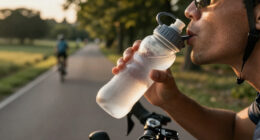
On a road ride, stopping to unscrew a cap can be awkward, so a cage-friendly bottle with a push-pull spout is a practical choice. The point is not only speed: a familiar, one-handed motion can help you drink during a brief safe pause without losing your grip or attention. If you run with a belt, a smaller bottle or soft flask may bounce less than a full-size rigid bottle; less movement against your body can make the load easier to ignore, though a smaller flask may mean more refills. At a desk or in a gym, a larger bottle can save trips to the fountain, provided it fits your bag and cup holder.
Some products are designed to make drinking convenient during movement with bite valves or tubes; those can help when your hands need to stay on handlebars or trekking poles. The tradeoff is that narrow channels and extra pieces can take longer to clean and may be harder to inspect for residue. A bottle that works beautifully on a bike might be frustrating on a treadmill, where a tube can get in the way and a simple bottle is easy to set down. Picture the exact moment you’ll reach for it and how you’ll carry it back afterward.
Choose for the hardest part of your routine: the climb, the run, or the crowded commute where you need to open the lid with one hand. The easiest bottle to use at that moment is more likely to be useful than one whose features only matter when you’re standing still.
For example, if you walk to a yoga class and then cycle home, a bottle that fits your bike cage may solve two problems at once. Check the cage fit and try the lid before committing to the setup: a bottle that rattles, sticks, or takes two hands to open can turn a convenient combination into a nuisance.
Products Worth Considering

BowFlex SelectTech 552 Adjustable Dumbbells (Pair)

Coleman SaluSpa Miami Energy-Efficient AirJet Inflatable Hot Tub (2-4 Person)

YETI Tundra 35 Cooler
As an affiliate, we earn on qualifying purchases.
Pick a Material That Fits Your Carry and Cleaning Habits
Plastic, stainless steel, and glass each suit different needs, and no material wins for every workout. Plastic is usually lighter and easier to squeeze; steel is durable and often insulated but heavier; glass can preserve taste but weighs more and can break. These differences affect the experience as much as durability: a bottle you enjoy using at a desk may become an awkward load on a long run. Product quality and care guidance vary, so read the manufacturer’s instructions for the specific bottle.
For a short run, a light plastic bottle may be more comfortable than carrying steel, because every extra gram moves with you step after step. A hiker who wants cold water through a warm afternoon might accept the extra weight of an insulated bottle, especially if the bottle stays in a pack between breaks. At home or in the office, glass can be appealing for taste, but its weight and breakability may make it a poor match for a crowded backpack. Think about where the bottle will spend most of its time, not just how it feels empty in a shop.
Capacity affects weight too. A 750 mL fill adds roughly 750 grams of water before you count the bottle, which can feel noticeable on a run. A smaller bottle reduces the load but also shortens the time before you need a refill; that tradeoff matters less where fountains are easy to find and more on a route with no reliable water access. It depends on access to water and your personal needs.
Take Maya, who runs for 30 minutes before work and then fills a bottle for her desk. She uses a small, light bottle on the run and a larger one at work. The split lets her avoid carrying water she won’t need during the run while keeping a convenient supply at her desk. One bottle doesn’t have to cover every part of your day.
Check whether the bottle is intended for hot liquids, freezing, or dishwasher use before trying any of them. A bottle that looks sturdy may still have seals or parts that don’t tolerate heat, and damage can affect how well the lid seals or how comfortable the bottle is to use.
Compare Lid Styles Before You Take a Bottle Outside
The lid determines how quickly you can drink, how secure the bottle feels in a bag, and how much cleaning it needs. Push-pull spouts and squeeze bottles work well when you want a fast sip in motion; screw caps can offer a simple, secure closure; straws and bite valves let you drink without tipping the bottle. These conveniences come with different costs: a fast-access lid may have more parts to wash, while a simple cap may be slower to open. Test how the mechanism feels in your hand before you head out.
| Lid style | Works well for | What to check |
|---|---|---|
| Push-pull spout | Cycling and quick gym breaks | Whether it closes securely in your bag |
| Screw cap | Travel and everyday carrying | Whether you can open it easily during activity |
| Straw or bite valve | Hands-free access and hydration packs | Whether all drinking parts can be cleaned |
| Flip-top lid | Desk use and casual workouts | Whether the latch stays shut when packed |
A cyclist may prefer a squeeze bottle with a push-pull spout that opens quickly at a red light. A runner might choose a soft flask with a bite valve to reduce sloshing. For a gym bag, leak resistance when closed matters more than a lid you can open without looking, since a small leak can soak clothing and equipment. Match the lid’s convenience to the consequence of using it in the wrong place.
Lids with straws, valves, or moving parts can collect residue in narrow corners. Look for pieces that come apart and check whether the maker says they’re dishwasher-safe. A mechanism that’s convenient to drink from but difficult to clean can become less appealing over time, so consider whether its extra effort fits your routine. If you can’t inspect or clean the drinking parts easily, a simpler cap may suit your routine better.
Choose a Capacity You Can Carry Without Regretting It
The right capacity gives you enough water for the session or a realistic refill plan without adding weight you don’t need. Short workouts often suit smaller bottles, while longer outings call for more water, refills, or additional carrying options. There is no single size that fits every workout or person: carrying too little can leave you dependent on a refill that isn’t available, while carrying too much adds weight for the whole session.
For example, a 30-minute strength session at a gym with a fountain nearby may not call for the same bottle as a two-hour hike on a hot trail. A runner can carry a handheld bottle, wear a belt, or plan a refill point. A cyclist can carry more than one bottle if the bike has room, but every full bottle adds weight. The practical choice balances how much water you may want access to against how much weight and bulk you’re willing to carry.
Use this quick process before buying:
- Name the activity: running, cycling, hiking, gym training, or everyday use.
- Estimate the time and conditions: a warm, exposed route may call for a different plan from an air-conditioned studio.
- Check access to refills: look for fountains, shops, or planned stops.
- Test the carry method: make sure the bottle fits your cage, pocket, belt, or backpack.
During a summer hike, a hiker might carry a larger bottle plus a refill plan rather than relying on one small flask for the entire route. On a short morning run around the block, that same bottle could feel like a heavy, sloshing distraction. Choose for the session you’re planning and the water you can access; a refill point only helps if it’s open and reasonably close to your route.
Hydration needs change with your body, effort, weather, and sweat rate. A bottle’s capacity is a way to plan what you can carry, not a measure of what you must drink. Avoid treating a printed bottle size as a drinking target; carry what makes sense for the activity and drink according to your needs.
Keep the Bottle Fresh With a Simple Cleaning Routine
A bottle stays pleasant to use when you wash it regularly, pay attention to the lid, and let every part dry. Clean the bottle and its drinking parts after use, ideally after each day you drink from it, and follow the manufacturer’s instructions for dishwasher safety. A fresh rinse alone may not clear residue trapped inside a valve or straw, and residue left there can affect taste and odor.
After an evening workout, open the lid, separate any removable straw or valve, and wash the parts thoroughly with soap and water. A wide opening makes it easier to reach the bottom and spot residue, which is why it can simplify routine care. Let the pieces air-dry completely before putting them back together, so moisture doesn’t sit hidden inside the lid.
Dishwashers can save time, but only use one if the maker says the bottle and its parts are dishwasher-safe. Heat may damage some plastics, seals, insulation, or lid mechanisms. If your bottle smells odd even after a proper wash, check for residue in the drinking parts and inspect for damage; a persistent smell can be a sign that the bottle needs more attention or that a component is worn.
Suppose you use a straw lid on weekday rides and leave it assembled in your bag all week. The lid’s narrow channels need attention just as much as the bottle body, because water can remain in places you can’t see. A bottle with fewer removable parts may be easier to keep fresh if you’re short on time; ease of cleaning can determine whether a good routine is realistic.
Dry first, then reassemble: clean parts can still develop stale odors if you trap moisture inside them.
Drink to Suit the Session, Not a One-Size Rule
Water works for many ordinary workouts, while prolonged, strenuous exercise—especially in heat—may call for electrolytes and carbohydrates depending on the activity and your individual needs. Hydration needs vary with body size, weather, effort, and sweat rate, so a fixed bottle count or schedule won’t suit everyone. Don’t force large amounts of fluid beyond your needs; more drinking does not automatically mean better hydration.
For a relaxed 25-minute walk on a mild day, plain water may be all you need. For a hard, extended ride on a hot afternoon, the combination of duration, effort, and heat may change what you need to drink. Longer or more strenuous exercise can increase fluid and energy demands, while heat can make cooling more difficult. Plan for the route and conditions, and listen to your body rather than treating a bottle’s printed capacity as a prescription.
A bottle can make drinking easier, but it can’t tell you how much fluid is right for your body. Smart bottles that track intake are available, though they’re a niche option and may need charging or app support. Their reminders can be convenient, but an app’s prompts don’t account for every change in effort, temperature, or individual need, so they aren’t a substitute for your judgment.
If you’re new to sports or outdoor training, build activity gradually and ask a qualified coach or health professional for guidance when you need it. On a hot day, a beginner might shorten the session, choose a cooler route, and carry water rather than pushing through discomfort. Adjusting the plan can reduce exposure to conditions that make a workout harder to manage. Follow official emergency guidance if a situation becomes dangerous.
Before an event or gym visit, check current rules about bottles, hydration packs, and drink contents. A venue may have limits that differ from your usual routine, which can affect what you bring and how you plan to drink during the session.
Frequently Asked Questions
What size sports water bottle should I get?
Choose a size that fits your activity, carry method, and access to refills. A short gym session near a fountain may need less than a long hike without water stops.
Is stainless steel or plastic better for sports?
Steel is durable and often insulated, but it weighs more. Plastic is usually lighter and easier to squeeze, which may suit running or cycling; choose based on how you carry and clean the bottle.
How often should I wash my sports bottle?
Wash the bottle and lid regularly, ideally after each day of use, and clean straws or valves thoroughly. Let every part dry before reassembling it.
Can I put my sports bottle in the dishwasher?
Only if the manufacturer says the bottle and its parts are dishwasher-safe. Dishwasher heat can damage some plastics, seals, insulation, or lid mechanisms.
What should I drink during exercise?
Water suits many ordinary workouts. Longer, harder sessions, especially in heat, may call for electrolytes and carbohydrates depending on the activity and your needs.
Conclusion
Choose the bottle that fits the workout you actually do, then check that it’s comfortable to carry, easy to drink from, and easy to clean. A light squeeze bottle may be perfect for a bike cage, while a wide-mouth insulated bottle may suit a slower hike.
Fill it, test the lid, and take it on your next session. The best bottle is the one that’s still easy to reach when the trail warms, the gym gets loud, or the road tilts uphill.