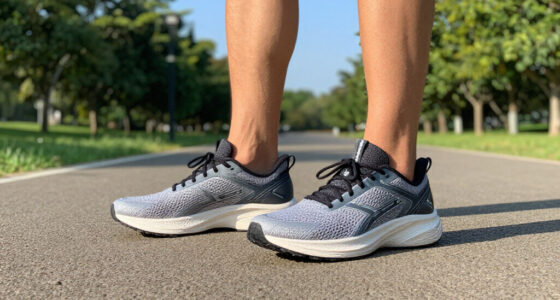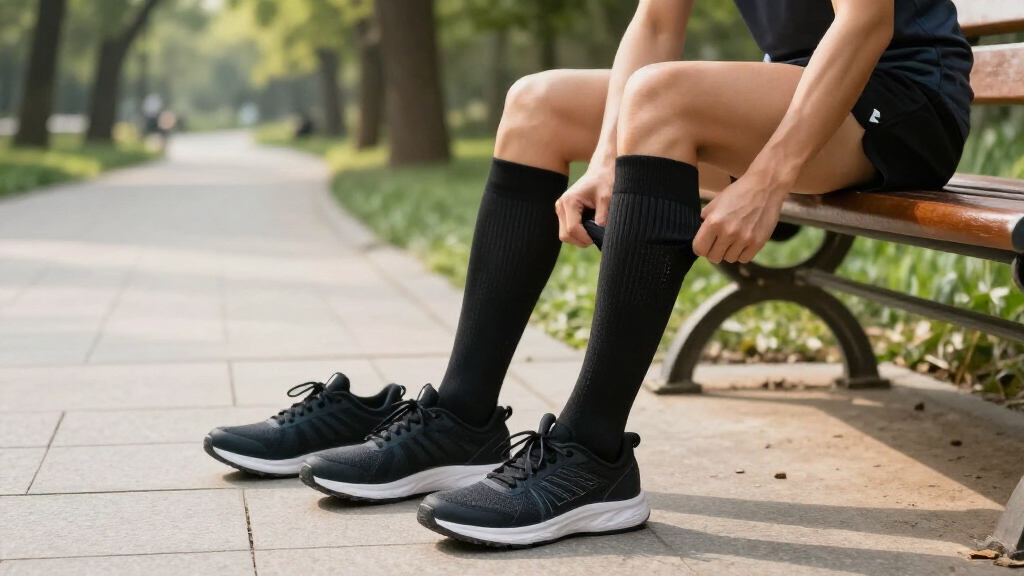

Compression running socks and regular running socks can both work for training, but they solve different problems. Compression socks apply snug, graduated pressure around the foot and lower leg; regular running socks provide a more familiar fit with cushioning and moisture management. The practical decision is whether that added pressure feels useful enough to justify the tighter fit and often higher price. Choose compression if you prefer firm support or want socks marketed for use during travel and recovery; choose regular socks if comfort, easy sizing and everyday value matter more. Neither type can guarantee faster recovery or prevent running injuries.

Get sports gear delivered free with Prime
- Fast, free delivery on millions of items
- Prime Video, Amazon Music and more included
- Member-only deals all year

Fitrell 3-Pair Compression Socks for Women and Men, 20–30 mmHg Circulation Support
- ✔ Compression: 20–30 mmHg, graduated five-zone support
- ✔ Fabric: 72.1% polyamide, 18.4% polyester, 9.5% spandex
- ✔ S/M calf size: 9–15 in

Compression Running Socks, 3 Pairs, Cushioned Crew
- ✔ Compression: 15–20 mmHg, gradient
- ✔ Fabric: 35% CoolMax polyester, 30% nylon, 25% cotton, 10% spandex
- ✔ Style: Crew

ROCKBROS Knee-High Compression Socks for Women and Men
- ✔ Length: Knee-high
- ✔ Compression: Graduated, decreasing from ankle to calf; numeric level not stated
- ✔ Fabric: Nylon and spandex
At a Glance
| Criteria | Compression running socks | Regular running socks | Winner |
|---|---|---|---|
| Support and pressure | Graduated pressure provides a snug, supportive feel; compression levels vary by model. | No added compression; support comes from the sock’s fit, cushioning and construction. | A |
| Comfort on long runs | Close fit can feel secure, but pressure may bother runners who dislike tight clothing. | Usually easier to wear for long periods, with more choice of cushioning and feel. | Depends |
| Moisture management | Depends on fabric and construction; compression alone does not make a sock cooler or drier. | Performance models commonly use moisture-wicking materials; features vary by pair. | Tie |
| Fit and ease of use | Often needs careful sizing by calf and foot measurements; can take more effort to put on. | Generally straightforward to size and put on, with a broad range of cuts and thicknesses. | B |
| Recovery and travel use | Some runners prefer them for travel or post-run wear, but benefits vary and are not guaranteed. | Works for running and daily wear, but offers no compression-specific feel. | A |
| Price and value | Usually costs more; the added cost makes sense only if the compression fit suits your needs. | Often less expensive and easier to replace, making it a strong everyday value. | B |
Fitrell 3-Pair Compression Socks for Women and Men, 20–30 mmHg Circulation Support
Fitrell earns the top spot because it pairs the lineup’s highest stated compression range, 20–30 mmHg, with features that address comfort inside a running shoe. Its five-zone graduated support is intended to vary pressure through the sock, while the seamless toe and cushioned sole target two familiar friction points: the front of the foot and the footbed. Mesh panels and a moisture-wicking blend also give this pick a stronger comfort case than compression level alone would suggest.Compared with the 15–20 mmHg crew model, Fitrell is the better match for someone specifically seeking firmer compression and cushioning underfoot; the crew option is likely the more approachable choice for runners uncertain about tighter support. ROCKBROS offers the longest coverage, but its description does not state a numeric range, so Fitrell is easier to evaluate on compression intensity. The tradeoff is fit: calf measurements matter, and the overlapping S/M and L/XL calf ranges call for careful checking. Three pairs may also be a limited rotation for frequent runners.
Pros:
- Five-zone graduated compression is specified at 20–30 mmHg.
- Moisture-wicking fabric and breathable mesh are intended to help manage heat and dampness.
- Seamless toe and cushioned sole address friction and underfoot impact.
- Two calf-size options are listed for both men and women.
Cons:
- Choosing between sizes depends on accurate calf measurement.
- The three-pair pack may not cover a frequent runner’s weekly rotation.
Best for: Runners who want a clearly specified, firmer 20–30 mmHg compression sock with a cushioned sole and seamless toe.
Not ideal for: Runners who prefer mild compression, do not want to measure their calves, or need more than three pairs for regular rotation.
Bottom line: Fitrell is our strongest all-around pick when we want firm, clearly rated compression and cushioning, provided its calf sizing works for us.
“Fitrell is our strongest all-around pick when we want firm, clearly rated compression and cushioning, provided its calf sizing works for us.”
Compression Running Socks, 3 Pairs, Cushioned Crew
For runners who want compression features without choosing the firmest option, this 15–20 mmHg crew sock offers the gentler stated range in the lineup. CoolMax polyester and mesh knitting are designed to move moisture and improve airflow, while cushioning at the toes, soles, and heels spreads protection across more of the foot than Fitrell’s description specifies. That makes it a practical choice for runs where shoe friction or warmth is the main concern.Its crew height also creates a middle ground between a conventional short sock and ROCKBROS’ knee-high coverage. Compared with Fitrell, this model has a lower compression range and broader listed shoe-size range, but it does not provide Fitrell’s two calf measurements or five-zone support detail. The cotton in the fabric blend may appeal to some wearers, though the description does not establish how it performs in wet conditions. We should also be comfortable with a compression fit: there is no non-compression alternative, and the care information stops at machine washing.
Pros:
- 15–20 mmHg gradient compression is the lower stated level among these options.
- CoolMax fiber and mesh knitting are designed for moisture management and airflow.
- Cushioning covers the toes, soles, and heels.
- Seamless toe is designed to reduce irritation; size range is listed as 3.5–16.
Cons:
- Compression construction may not suit runners who prefer regular, non-compression socks.
- Care details beyond machine washing are not provided.
- The crew cut offers less lower-leg coverage than the knee-high ROCKBROS model.
Best for: Runners seeking a crew-height sock with moderate stated compression, broad cushioning, and moisture-wicking construction.
Not ideal for: Those who want the firmer 20–30 mmHg level, knee-high coverage, or a non-compression fit.
Bottom line: This is the most approachable option for runners who want moderate compression and broad foot cushioning in a crew cut.
“This is the most approachable option for runners who want moderate compression and broad foot cushioning in a crew cut.”
ROCKBROS Knee-High Compression Socks for Women and Men
ROCKBROS fills a distinct role: it is the only option here explicitly described as knee-high. Graduated compression decreases from ankle to calf, and ribbed cuffs are intended to keep the sock in place as we move. A lightweight nylon-spandex blend and textured, reinforced sole round out the design for runners who want more leg coverage along with cushioning and grip inside a shoe.That added height is the key reason to choose ROCKBROS over the crew model, which prioritizes a lower cut and a numeric 15–20 mmHg rating. Fitrell, meanwhile, gives us a numeric 20–30 mmHg range and more detailed five-zone construction. ROCKBROS’ description does not state an mmHg level, so we cannot directly compare its compression intensity with either of the other two. Its unisex S–L sizing is also narrower than the crew sock’s listed range, which may make fit a limiting factor. Choose it for coverage and cuff design when the size range suits you, not because its compression is known to be stronger.
Pros:
- Knee-high length provides the most explicit lower-leg coverage in this comparison.
- Graduated ankle-to-calf compression is specified.
- Ribbed elastic cuffs are designed to help the socks stay in place.
- Lightweight nylon-spandex fabric and textured reinforced soles support movement and shoe grip.
Cons:
- No numeric compression range is provided for direct comparison.
- Unisex sizing is limited to S–L.
- Knee-high coverage may be more sock than some runners want.
Best for: Runners who specifically want knee-high coverage, a ribbed cuff, and a textured cushioned sole.
Not ideal for: Those who need a published mmHg compression range, a wider size range, or a shorter crew-height sock.
Bottom line: ROCKBROS is the clear coverage pick if we want knee-high socks and its limited sizing fits, though its compression strength is harder to judge.
“ROCKBROS is the clear coverage pick if we want knee-high socks and its limited sizing fits, though its compression strength is harder to judge.”
As an Amazon Associate we earn from qualifying purchases.
Key Differences
The defining difference is pressure. Compression socks fit tightly and typically apply more pressure near the ankle than higher on the leg. That can create a supported, secure sensation, which some runners enjoy during or after a run. Regular running socks do not add that pressure, so their comfort depends more on fabric, cushioning, seams and how well the sock stays in place. Compression is a meaningful preference difference, but it is not proof of better performance or injury prevention.
That preference also shapes the buying experience. Compression styles often require closer attention to calf measurements and can take more effort to pull on. A regular running sock is usually simpler to fit and easier to wear all day. Both categories include thin, cushioned, warm and lightweight options, so check the specific fabric and construction instead of assuming one type will always keep feet drier or cooler.
For most runners buying a first or everyday pair, regular running socks are the safer value: they are versatile, usually less expensive and easier to size. Compression is worth paying more for when you actively prefer the snug pressure, have found a size that fits comfortably, or want a separate pair for travel or recovery wear. If swelling, pain or a circulation concern is driving the purchase, ask a health professional what level and type of compression is appropriate.
Detailed Comparison
Support and pressure (Compression running socks wins — moderate)
Compression running socks win for runners who want a snug, held-in feeling. Their graduated pressure is the defining feature; regular socks rely on their general fit and construction instead. The difference is moderate because the pressure is very noticeable to the wearer, but it does not establish that compression will make every runner faster or prevent injury. Choose based on how the pressure feels and what you need from the sock.
Comfort on long runs (moderate difference)
There is no universal winner. Compression can feel secure and comfortable to runners who like a close fit, while others find the pressure distracting over hours of wear. Regular socks are easier for many people to tolerate, especially when they want cushioning without a tight calf. The gap is moderate and personal: try a correctly sized pair before choosing compression for long-distance use.
Moisture management (minor difference)
Neither category wins by definition. Sweat management depends on the yarn, knit, thickness and ventilation of the particular sock; a well-made regular running sock can wick moisture as effectively as a compression model. Compare material and construction details, and match thickness to the weather and your shoes. The difference between two specific products may be minor or substantial, but the label alone is not a reliable guide.
Fit and ease of use (Regular running socks wins — moderate)
Regular running socks win on simplicity. They are generally easier to put on and size, while compression styles need a close fit through both the foot and calf to deliver their intended pressure comfortably. A poorly sized compression sock may feel too tight or fail to feel supportive. The advantage is moderate for everyday use, particularly for runners who do not want to measure their calves or wrestle with a tight garment.
Recovery and travel use (Compression running socks wins — minor)
Compression socks have the more specific use case: some runners choose them for post-run wear or long periods of sitting because they like the pressure. Regular socks offer ordinary comfort but not that compression feel. This is a modest advantage in versatility for compression buyers, not a guarantee of faster recovery or protection from travel-related medical problems. For a medical reason, get guidance from a clinician.
Price and value (Regular running socks wins — moderate)
Regular running socks are usually the better value for someone who wants a reliable pair for training and daily use. Compression models often cost more, so the premium pays off only if the wearer likes the fit and will use the pressure feature. The difference is moderate when building a rotation of several pairs. A runner who is curious can start with one compression pair instead of replacing every sock at once.
Compression running socks: Pros and Cons
Pros:
- Graduated pressure creates a secure, supportive feel for runners who prefer it.
- Can serve as a dedicated option for post-run wear or travel.
- A useful alternative when regular socks feel too loose around the lower leg.
Cons:
- Tightness can feel uncomfortable or distracting, especially during long wear.
- Sizing requires attention to calf and foot measurements.
- Often costs more, and the compression effect does not guarantee better performance or recovery.
Regular running socks: Pros and Cons
Pros:
- Straightforward fit and easy everyday wear.
- Many choices in cushioning, thickness and fabric for different runs.
- Usually costs less and works well as a versatile training sock.
Cons:
- Does not provide graduated pressure for runners who want that sensation.
- May feel less secure to someone accustomed to compression.
- Does not offer a compression-specific option for travel or post-run wear.
Who Should Choose What
Choose Compression running socks if:
- You like a snug, supportive feel around your lower legs.
- You want a separate pair for travel or post-run wear and understand that benefits are not guaranteed.
- You have measured your calf and foot and found a compression model that feels comfortable.
Choose Regular running socks if:
- You want one versatile sock for regular training and daily wear.
- You dislike tight garments or do not want to spend time on compression sizing.
- You want to keep costs down while choosing among different cushioning and fabric options.
Skip both if: If you need compression to address swelling, pain or a circulation condition, seek clinical advice about the right garment and pressure level before buying either type.
Value for Money
For most runners, regular running socks offer better value because they cover training and everyday wear at a lower typical cost. Paying more for compression is reasonable if you already know you enjoy the tight, graduated fit and will use it often. It is harder to justify the premium based only on promises of improved speed, injury prevention or quicker recovery; those outcomes are not guaranteed by wearing compression socks. If you are unsure, buy one pair first and judge the comfort for yourself.
Final Verdict
Choose regular running socks for the best all-purpose first purchase: they are easier to fit, generally more comfortable for a wider range of wearers and usually better value. Choose compression running socks if the pressure itself is a feature you want, and you have found a model that fits your calf and foot comfortably. The biggest deciding factor is tolerance for tightness, not a promise of superior running results. If a medical concern is driving the choice, ask a clinician for advice instead of treating either sock type as a solution.
Frequently Asked Questions
Are compression running socks better than regular running socks?
Not for every runner. They offer graduated pressure and a tighter feel, while regular running socks are easier to wear and often less expensive. The better choice depends on comfort and intended use; compression does not guarantee improved performance.
Can compression socks help with running recovery?
Some runners choose them for post-run wear because they like the pressure, but a recovery benefit is not guaranteed. Comfort and fit matter, and persistent pain or swelling deserves medical advice.
Should I wear compression socks on every run?
Only if they feel comfortable and suit your run. There is no need to wear them for every session; regular running socks are a practical choice when you prefer less pressure.
Are compression running socks worth the extra cost?
They can be worth it if you enjoy the snug fit and will use the compression feature regularly. If you mainly need comfortable, moisture-managing socks for training, regular running socks are usually the stronger value.