TL;DR

Get sports gear delivered free with Prime
- Fast, free delivery on millions of items
- Prime Video, Amazon Music and more included
- Member-only deals all year
Compression running socks apply pressure around the foot and lower leg, and runners often choose them for a snug feel, reduced fabric movement, or possible recovery comfort. Research has not consistently shown that they make you faster, and athletic socks are not a substitute for medical compression or advice. Choose a size that feels even and comfortable, then test it on an easy run before race day.
A sock can feel like a supportive hug around your calf and still leave your race time unchanged. That’s the useful starting point for understanding compression running socks: comfort, recovery, medical use, and performance are different questions, even when a product label blends them together.
These socks are designed to apply pressure around the foot and lower leg. They’re usually made from elastic, moisture-wicking fabrics and come in different heights and cushioning levels. Some use graduated compression, with more pressure near the ankle and less farther up, but products vary. A sporty label alone doesn’t tell you whether a sock has a measured pressure or a medical compression rating.
Here, you’ll get a clear read on what runners may notice, what research does and doesn’t support, and how to choose a fit that feels good on the move. You’ll also learn when a clinician should guide your choice. Think of the sock like a well-fitted running vest: it can make a familiar effort more comfortable, but it won’t do the training for you.
Compression running socks apply pressure around the foot and lower leg, but products differ in height, fit, fabric, and stated pressure.
Some runners like the snug feel or report comfort after exercise; that does not prove improved speed or endurance.
Check the maker’s size chart and test a new pair on a short, easy run before race day.
Remove socks that cause pain, tingling, numbness, cold toes, unusual color changes, or worsening discomfort.
Ask a healthcare professional before using tight compression if you have reduced sensation, diabetes, known circulation problems, significant swelling, or vasc…
What compression running socks actually do around your legs
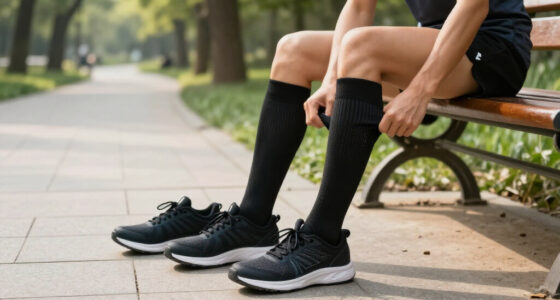
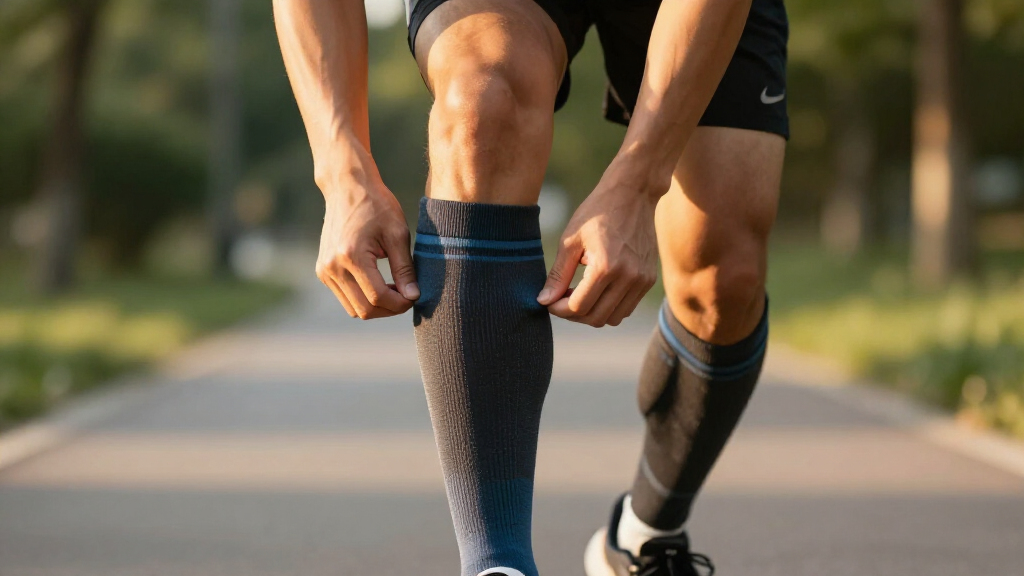
Compression running socks are snug socks designed to apply pressure around your foot and lower leg; the amount and pattern of pressure vary by product. Some are knee-high, while others stop at the ankle, and some use graduated pressure that feels firmer near the ankle. Check the product’s stated pressure and sizing details rather than assuming every sock marked “compression” works the same way.
They’re usually made from elastic, moisture-wicking fabrics and may include a cushioned sole, a smooth toe seam, or different knit zones. Those details can matter on a damp 10-kilometer run: a low-profile toe may reduce rubbing, while a thicker sole may feel too warm in snug shoes. The fit should feel close, not like a band cinched tight behind your knee.
Imagine pulling on a pair before an easy morning loop. The fabric stays in place as you climb a hill, and you like the steady feel around your calves. That’s a valid comfort preference. It doesn’t tell you whether the sock will improve your pace, just as a favorite shoe color doesn’t make the shoe faster.
Key distinction: Feeling supported is a personal comfort benefit. A proven improvement in race performance is a separate claim.
Compression levels may be listed in mmHg, or millimeters of mercury, but many athletic products don’t clearly state a measured pressure or standardized medical class. If you need compression for a health condition, a running sock’s marketing language isn’t enough to establish that it’s the right product for you.
Products Worth Considering

Garmin Forerunner 970 GPS Running Smartwatch Bundle, Soft Gold

Therabody JetBoots Prime Wireless Compression Boots – Short (Under 29 Inseam)

Garmin Forerunner 55 GPS Running Smartwatch, Black
As an affiliate, we earn on qualifying purchases.
What you can expect for comfort, soreness, and speed
Compression running socks may feel comfortable or supportive, and compression garments after exercise may modestly help perceived soreness or recovery for some people. Results vary. Research has not consistently shown that compression socks make runners faster or improve endurance, so you should treat a performance boost as unproven rather than a guaranteed result.
For a practical example, suppose you finish a long run and notice that your calves feel less achy when you wear compression socks afterward. That experience may make the socks worth keeping in your recovery drawer. It still doesn’t establish that the socks caused faster tissue recovery or improved your next race time; sleep, training load, hydration, and the run itself all shape how you feel.
Evidence about swelling also depends on the situation. Compression has established medical uses for some circulation and swelling conditions, but evidence for preventing swelling during ordinary runs is mixed. And an athletic sock should never be treated as a way to prevent blood clots or as a treatment for a medical problem.
Think of the socks like a foam roller: you may like the sensation and find it fits your routine, while the size of any broader benefit remains uncertain. In your running log, note how they feel, whether they slip or rub, and how your legs feel after comparable runs. That gives you a clearer personal comparison than a bold “faster recovery” claim on a package.
How to choose a pair that fits your run
Choose compression running socks by fit, height, cushioning, and fabric, then let comfort guide whether you keep wearing them. No single compression level suits every runner, and more pressure isn’t automatically better. If the brand requests ankle or calf measurements, use them; sizing charts vary from one maker to another.
- Measure first. Follow the brand’s size chart, especially if it uses calf circumference. A medium in one range may not match a medium from another.
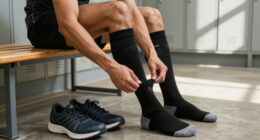
- Pick the coverage. Knee-high socks cover the foot and calf, sleeves cover the calf but leave the foot uncovered, and ankle socks offer less calf coverage. Choose what works with your shoes and the coverage you want.
- Match the cushioning and fabric to your conditions. A cushioned sole can feel pleasant on a cool, easy run; in hot weather or a close-fitting shoe, a lighter knit may feel better.
- Check the pressure claim. If pressure is listed in mmHg, compare the stated details and intended use. Don’t treat words like “firm” as a measured rating.
- Test before race day. Try the pair on a short, easy run, then check for wrinkles, bunching, numbness, pain, or a tight band.
For example, a runner trying knee-high socks for the first time might wear them on a 20-minute neighborhood jog before a half-marathon. The jog reveals the small things a store fitting can’t: whether the top rolls down, the toe rubs, or the calves feel comfortably snug by the last mile. Keep your regular socks in the race bag until you know how the new pair behaves.
The best pair is one that stays smooth, works with your shoes, and feels comfortable for the activity you have in mind. You don’t need to buy the highest-pressure option to get those basics right.
Know when tight compression is a poor fit
Remove compression socks if they cause pain, tingling, numbness, cold toes, unusual color changes, or worsening discomfort. A sock should feel snug and even, not painful or constricting. If symptoms persist after you take it off, seek medical advice rather than trying to fix the problem by choosing a different athletic label.
Some people should speak with a healthcare professional before using tight compression, including people with diabetes, reduced sensation, known circulation problems, significant swelling, or a history of vascular disease. Reduced sensation can make it harder to notice pressure or rubbing early. For instance, a runner who can’t reliably feel a sore spot on their foot may miss a warning sign that another runner would catch during the first mile.
Medical compression stockings and running socks are different product categories. Medical products may use defined pressure ranges and clinical fitting guidance; a running sock isn’t automatically equivalent even if its packaging says “compression.” If a clinician prescribed compression for a condition, ask which product, pressure, and wearing schedule they recommend before substituting an athletic sock.
Stop and reassess if your toes become numb, painful, unusually cold, or change color while you wear a pair.
Use compression during a run or afterward only if the product directions and your own comfort support that choice. Don’t assume an athletic pair is appropriate for sleeping or for everyday medical use. When a health need is involved, a clinician can help you select the right type and fit.
Get more useful wear from your socks over time
Compression socks work best as part of a comfortable running setup, not as a substitute for gradual training, recovery, or good footwear fit. Before a harder workout, check that the fabric lies flat and the cuff sits comfortably. If you’re new to running or increasing distance, build your training gradually and consider coaching so the sock doesn’t distract you from managing effort and load.
Picture a warm Saturday run in new shoes: the socks feel fine at the start, but by the sixth kilometer your foot feels crowded. That may point to the combined fit of shoe, sock thickness, and foot swelling during exercise. A thinner knit or a different shoe fit could help; simply increasing compression won’t fix crowded toes.
Care affects how long elastic fabric keeps its feel. Follow the label’s washing instructions and avoid high heat if the maker advises against it, since heat and repeated wear can reduce elasticity. Replace a pair when it becomes loose, slides down, bunches, or shows substantial wear. There’s no universal lifespan: use, washing, and fabric construction all matter.
Keep a simple note after the first few uses: the run distance, weather, how the socks fit in your shoes, and whether you noticed rubbing or pressure. After a few comparable runs, you can tell whether you prefer them for warm-weather training, long runs, or post-run comfort. That small check is more useful than assuming a new pair belongs in every run.
Decide whether compression socks belong in your kit
Keep compression running socks in your kit if they feel comfortable and serve a clear personal purpose, such as reducing fabric movement or giving your calves a snug feel. Skip them if they pinch, overheat your feet, or crowd your shoes. Either choice can be sensible; there’s no requirement to wear compression to be a serious runner.
Consider two runners finishing the same local 5K. One enjoys knee-high socks because the fabric stays smooth under a race bib and feels supportive. The other prefers ankle socks because the afternoon is hot and their shoes fit better with less material. Neither preference proves a pace advantage. Both runners can make a good choice based on fit and the conditions that day.
Before adding a pair to a race kit, run in it at least once at an easy effort and once in the shoes you plan to race in. That gives you a chance to catch slipping cuffs, toe rubbing, and excess warmth before the starting horn. If you’re comparing products, look at the size chart, stated pressure, height, cushioning, and intended use rather than relying on “performance” language alone.
- For comfort: Keep the pair if you like how it feels and it stays smooth.
- For recovery: Notice your own response, while remembering research results vary.
- For a medical condition: Ask a healthcare professional about a suitable product and fit.
Your training plan still does the heavy lifting. Think of the sock as the frame around a photograph: it may make the experience feel more polished, but the run itself supplies the substance.
Frequently Asked Questions
Do compression running socks make you faster?
Research has not consistently shown that compression socks improve running speed or endurance. Some runners find them comfortable, but a comfortable feel is different from a proven performance gain. Try them if you like the fit, and keep training as your main path to faster times.
Can compression socks help with soreness after a run?
Compression garments after exercise may modestly improve perceived soreness or recovery for some people, but results vary. If a pair feels good after a long run, you may choose to wear it according to its directions. Don’t assume that feeling better means the sock has changed your race performance.
Should I wear them while running or after?
Either is a personal choice. Wear them during a run if they fit comfortably, or follow product directions if you use them afterward. Take them off if they cause pain, tingling, numbness, unusual color changes, or worsening discomfort.
Are compression running socks the same as medical compression stockings?
No. Medical compression products may have defined pressure ranges and clinical fitting guidance, while an athletic sock isn’t automatically made or fitted for medical use. Ask a healthcare professional before replacing prescribed compression with a running product.
How tight should compression running socks feel?
They should feel snug and stay in place without wrinkles, painful pressure, or a constricting band. Remove them if your feet become numb, tingly, cold, painful, or change color. If discomfort continues after removal, seek medical advice.
Conclusion
Choose compression running socks for a comfortable fit and a benefit you can actually notice, not a promise of faster miles. Measure if the brand asks, test them on an easy run, and stop if they cause warning symptoms. If you need compression for a health condition, get advice from a healthcare professional first.
When you lace up, let the sock disappear into the run: smooth fabric, easy breathing, and the steady rhythm of your feet on the path.