TL;DR
Physical therapist Devin Trachman recommends the sit-to-stand exercise as a practical way to strengthen muscles used for walking and everyday activities. She suggests 2–3 sets of 8–10 repetitions, with chair arms or other sturdy support as needed; the source does not cite a study testing this exercise against alternatives.
Physical therapist Devin Trachman recommends the sit-to-stand exercise as a practical way to build strength that supports walking, according to a Fit&Well report. Her suggested routine is 2–3 sets of 8–10 repetitions, using a sturdy chair and support if needed; the report presents this as professional guidance, not as a result from a cited clinical trial.
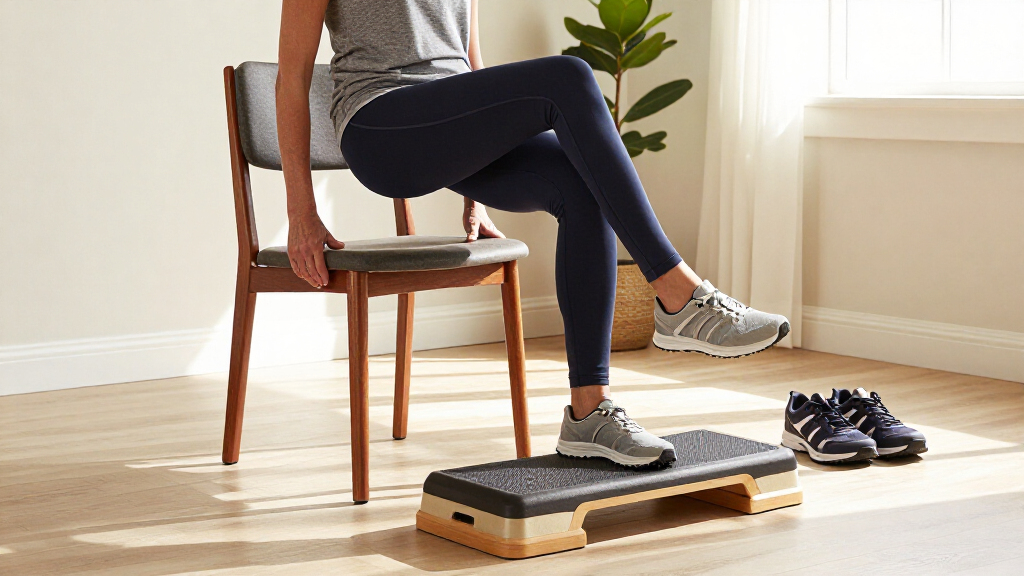
The exercise involves sitting near the front of a sturdy chair, placing both feet flat on the floor about shoulder-width apart, leaning the chest slightly forward while keeping the back straight, and standing by pushing through the heels. The person then lowers back into the chair slowly and with control. Trachman advises avoiding hand support if that can be done safely, while suggesting armrests or another sturdy support for people who need help as they build strength.
The movement works the quadriceps, gluteus maximus and core stabilizers, according to the report. Trachman describes standing from a chair as a functional movement used in daily life, with strength demands that also relate to walking, climbing stairs and getting up independently. The routine lists 60 seconds of rest between sets.
Trachman is identified by Fit&Well as a clinical director and physical therapist at Physical Therapy Central in West Edmond. The report says she earned a Doctor of Physical Therapy degree from the University of Oklahoma Health Sciences Center and became a board-certified orthopaedic clinical specialist in 2024. The available source does not provide a research paper, patient data or outcome measurements supporting a claim that this is the single best exercise for every person.
Strength for Everyday Mobility
The recommendation focuses on a common barrier to staying mobile: everyday movements can feel harder when strength and activity decline. A chair rise is recognizable and can be adjusted with support, which may make it a useful starting point for some people seeking to strengthen muscles involved in standing and walking. Trachman says that building strength and confidence may help people remain active and independent; these are her professional views as quoted in the report, not guaranteed outcomes for every individual.
The advice also distinguishes strength training from simply walking more. The report’s argument is that making walking feel easier may require attention to the physical capacity behind it, rather than relying only on increasing walking distance. That can matter for readers who find walking tiring, although the source does not establish that sit-to-stands alone improve walking ability or prevent loss of independence.
For people with pain, balance problems or difficulty rising from a chair, the suggested modifications matter as much as the repetition target. Using armrests or a stable support can reduce the demand of the movement. Anyone uncertain about safe technique or an appropriate starting level can seek advice from a physical therapist or other qualified clinician.
Why Chair Rises Support Walking
The Fit&Well report places the exercise in the context of age-related changes in muscle mass and mobility. It also quotes Trachman saying that people may become less active because life gets busy, pain develops or walking becomes more tiring. In her explanation, reduced activity can contribute to weaker muscles, lower balance and reduced endurance, which may make walking feel more difficult and encourage further inactivity.
Trachman says this pattern can be addressed with gentle strength training aimed at muscle, balance and confidence. She argues that stronger people may be more likely to stay active and continue activities they value. Those statements provide the rationale for her recommendation; the source material does not quantify how common the cycle is or report a specific intervention study.
The exercise instructions are straightforward, but individual ability varies. The report recommends beginning with a sturdy chair, feet planted on the floor and a controlled return to sitting. It offers hand support as a modification rather than requiring everyone to perform the movement hands-free from the outset.
““If I could only prescribe one exercise to improve walking, this would be it.””
— Devin Trachman, physical therapist and clinical director at Physical Therapy Central, as quoted by Fit&Well
Evidence and Individual Fit
The source presents Trachman’s clinical recommendation but does not identify a study showing that sit-to-stands outperform other exercises for improving walking. It also does not report how much walking ability might change, how long a person would need to follow the routine, or whether the suggested sets and repetitions were tested across different age groups or health conditions. The headline wording should therefore be understood as an expert’s recommendation, not proof that this is the best exercise for everyone.
The report does not specify who should avoid the movement or how to adapt it for particular injuries, chronic conditions or significant balance limitations. It says to use support when needed, but does not provide an individual assessment. Readers who have pain, feel unsteady, or cannot rise safely should ask a clinician about suitable modifications before attempting repeated chair rises.
How Readers Can Apply the Advice
The report offers no scheduled follow-up, new study or further announcement. Its practical guidance is to try 2–3 sets of 8–10 repetitions, resting 60 seconds between sets, while using a sturdy chair and support where needed. People should prioritize controlled movement and safe technique rather than treating the listed target as a requirement for every fitness level.
For readers who want to use the exercise to address walking difficulties, the next step may be to discuss their goals and limitations with a physical therapist. The source provides no evidence that a specific outcome or timeline can be expected, so progress and modifications would depend on the individual.
Key Questions
Which exercise does Devin Trachman recommend for walking?
Trachman recommends sit-to-stands: repeatedly standing up from a chair and lowering back down with control.
How many sit-to-stands does the report suggest?
The report lists 2–3 sets of 8–10 repetitions, with 60 seconds of rest between sets. It does not say that this target suits everyone.
What muscles does the exercise work?
The Fit&Well report lists the quadriceps, gluteus maximus and core stabilizers as muscles targeted by the movement.
What if I need my hands to stand up?
The report suggests using a chair with armrests for light support or a sturdy support in front of you while building strength. People who feel unsafe or have pain should seek guidance on an appropriate modification.
Has this been shown to be the best exercise for improving walking?
The source does not cite a study comparing sit-to-stands with other exercises. It reports Trachman’s clinical recommendation, not evidence that the exercise is best for every person.
Source: rss