
TL;DR

Get sports gear delivered free with Prime
- Fast, free delivery on millions of items
- Prime Video, Amazon Music and more included
- Member-only deals all year
A Fit&Well report explains that heels lifting during a squat may be related to restricted ankle movement, but can also reflect hip mobility or strength limitations. It recommends three scaled squat exercises to build control and gradually work toward squatting with heels planted; the report does not establish a diagnosis or a guaranteed fix.
Fit&Well has published a guide to what may cause someone’s heels to lift during a squat, along with three scaled exercises aimed at improving control, mobility and strength. The report says limited ankle movement is one possible factor, but hip mobility or strength may also contribute, so ankle and calf stretching alone may not address every case.
The report describes limited ankle dorsiflexion—the ability to move the shin forward over the foot—as a common explanation for heels rising during a squat. Tight calf muscles or restricted ankle joints can limit that movement. But the article says the same visible issue may have different causes, and in some people lifting the heels could be a protective response related to weakness or tightness around the hips. These are explanations offered by the report, not a diagnosis of any individual reader.
Its first suggested exercise is a suspension-trainer squat. Holding the straps provides support while the person bends the knees and lowers into a squat, with the report advising them to keep their knees open and pause at the bottom. As control improves, the suggested progression is to rely less on the straps.
The second option is a slow sit-to-stand from a sturdy chair, using the legs rather than the hands and controlling the descent. The third is a deep squat hold with the heels supported on thin weight plates or wedges. The article recommends gradually reducing the heel support as the person becomes more comfortable in the position. It suggests beginning with practice rather than a fixed repetition target; once technique feels confident, it proposes three sets of each move, working for one minute and resting for one minute.
Building a Squat Without Forcing Range
Heels lifting can be a visible sign that a person is having difficulty reaching or controlling a squat position, but the report cautions against assuming the ankles are always responsible. That distinction matters because repeatedly stretching the calves may not address a limitation that involves hip movement or strength. A supported, gradual approach can let people practise the movement while adjusting the depth and assistance to their current ability.
The exercises are presented as ways to build familiarity and strength through different parts of a squat, not as proof that a particular cause has been identified or that the movement will be corrected on a set schedule. People should avoid forcing a deep position or treating pain as a normal part of practice. If the movement causes pain, or if a person has an injury or a health condition affecting exercise, individualized advice from a qualified health professional or coach may be appropriate.
Products Worth Considering

Solo Stove Bonfire 2.0 Smokeless Wood-Burning Fire Pit with Stand, Silver

BowFlex Results Series SelectTech Adjustable Dumbbells, Pair

Coleman Heritage Big & Tall 10°F Flannel Sleeping Bag
As an affiliate, we earn on qualifying purchases.
Why Ankle and Hip Movement Matter
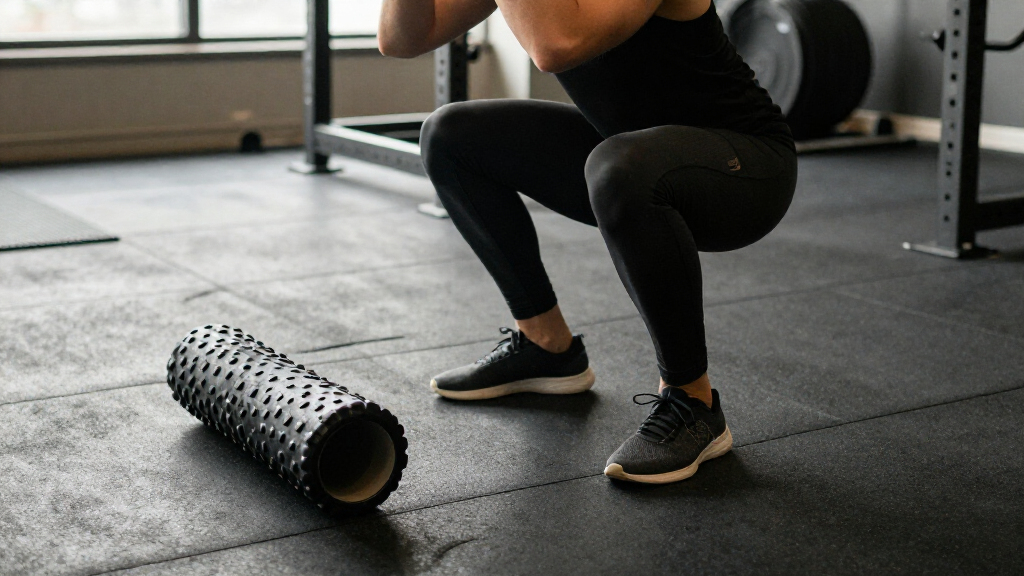
In a squat, the knees travel forward as the hips lower, and the ankle must allow the shin to move in that direction while the foot stays planted. If that motion is restricted, some people may raise their heels to descend further. The Fit&Well report says this is why calf tightness and ankle mobility are often blamed when a squat is difficult.
However, a squat also requires coordinated movement and strength at the hips, knees and ankles. The report’s alternative explanation is that some people lift their heels in response to hip-related limitations. It recommends reducing the difficulty of the unweighted squat with support, a chair or heel elevation rather than insisting on a full-depth, heels-flat version immediately. Its proposed progression is gradual practice over a few weeks, though it gives no tested timetable or outcome data.
““For some, however, especially those with particularly weak or tight hips, the heels lifting could actually be a protective mechanism to safeguard the body from injury.””
— Fit&Well report
The Cause Varies by Person
The report does not provide clinical evidence showing how often heel rise stems from ankle restrictions versus hip-related factors, nor does it describe a test that can identify the cause for a particular person. Its statement that heel lifting may be protective is a possibility, not a confirmed explanation for every case. The supplied material also does not give study results, a measured success rate or evidence that the exercises work for all readers.
It is not clear how much practice an individual needs, whether the suggested exercises are appropriate for people with pain or existing injuries, or how to distinguish a mobility limitation from other movement or balance issues. The article’s proposed schedule is general guidance, not a personalized assessment.
Progress Gradually and Recheck Form
The Fit&Well guide recommends starting with manageable versions of the movements, exploring a comfortable range and improving gradually. It suggests moving from strap-assisted squats toward less support, controlling the descent in sit-to-stands, and reducing heel elevation over time. For readers who choose to follow the suggested routine, the report says to work toward three one-minute sets per exercise, with one minute of rest between sets, once technique is confident.
There is no announced follow-up study or clinical guidance in the source material. Readers can monitor whether they can keep their feet stable and move with control as they progress, but the report does not set a deadline for improvement. Pain, persistent difficulty, or uncertainty about safe technique may warrant an assessment from a qualified professional rather than forcing greater depth.
Key Questions
Why do my heels lift when I squat?
Limited ankle dorsiflexion is one possible reason: tight calves or restricted ankle movement can make it difficult for the shin to travel forward over the foot. The Fit&Well report also says hip mobility or strength may contribute. Heel lift by itself does not identify the cause.
Will calf stretches fix heels that rise during squats?
Not necessarily. The report says calf or ankle restrictions may be involved, but ankle and calf stretches alone may not help when hip mobility or strength is part of the issue. It does not offer a diagnostic test to determine which factor applies to an individual.
What three exercises does the report recommend?
It describes suspension-trainer squats, slow sit-to-stands from a sturdy chair, and deep squat holds with the heels supported on plates or wedges. Each exercise is intended to be adjusted as control and comfort improve.
Should I force my heels flat in a deep squat?
The report recommends gradual practice rather than forcing a position. Its third exercise uses supported heel elevation, which can be reduced over time. Stop if an exercise causes pain, and seek individualized advice if you have an injury or are unsure how to perform it safely.
Source: fitandwell.com