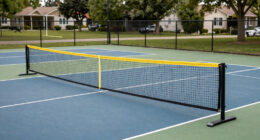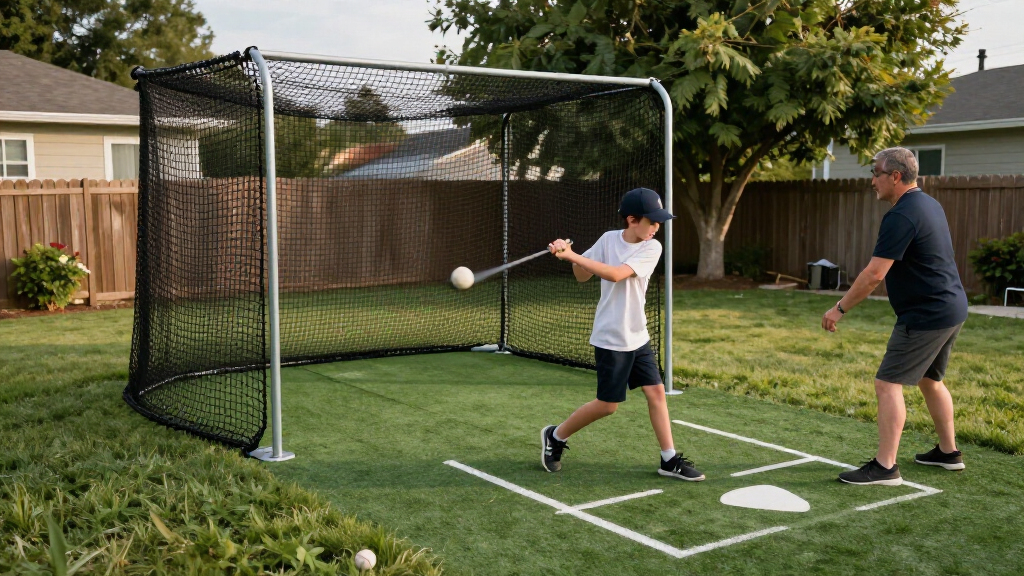
For most home players, I’d start with the DHUAFDD 30 × 10 × 10 ft cage: its enclosed footprint and zippered door offer a practical balance of usable space and containment. The VEVOR 55 ft net stands out for buyers with room for a longer hitting lane, while the IDEATRY cage with a pitching machine port is a more focused choice for machine-fed practice. Backyard batting cage nets differ most in footprint, setup demands, and how well their design suits the drills you actually run. A longer cage needs more yard space, while a portable or pop-up style may trade enclosure and stability for easier handling. Continue reading for the full breakdown and help matching a cage to your yard and training routine.
Complete the kit


Key Takeaways
- The 30-foot DHUAFDD cage is the most balanced starting point: its 30 × 10 × 10 ft dimensions and zippered entry make it a more contained home-practice option than a long lane-only net.
- Length changes the use case, not just the footprint: VEVOR’s 55 ft net suits buyers with room for extended ball travel, while 24- and 22-foot cages fit more limited practice zones.
- Frame-included and net-only choices serve different buyers: a metal-frame package can simplify setup planning, while a standalone net may require buyers to source or build a compatible support structure.
- Portability comes with design compromises: the 22 × 12 × 8 ft Apex and Vertura models prioritize a smaller footprint, while larger 30- to 40-foot options call for more space and setup planning.
- Special practice features can matter more than size: IDEATRY’s pitching machine port and the practice net with a blocking system address specific drills that a plain cage net may not support as directly.
| Baseball and Softball Batting Cage Net with Metal Frame |  | Best All-in-One Cage | Dimensions: 20 × 10 × 8 ft | Weight: 38.56 kg | Frame material: Metal | VIEW LATEST PRICE | See Our Full Breakdown |
| VEVOR 55 ft Baseball and Softball Batting Cage Net |  | Best for a Long Practice Lane | Dimensions: 55 × 12 × 12 ft | Weight: 22.9 lbs | Material: 30-strand knotted PE mesh | VIEW LATEST PRICE | See Our Full Breakdown |
| Baseball and Softball Practice Net with Blocking System |  | Best for Compact Backyard Drills | Size: 7 × 7 ft | Weight: 8.38 kg | Frame material: Metal | VIEW LATEST PRICE | See Our Full Breakdown |
| DHUAFDD Backyard Batting Cage, 30 × 10 × 10 ft, with Zippered Door |  | Best for Multi-Sport Practice | Dimensions: 30 × 10 × 10 ft | Net material: 4-ply polyester | Frame material: Fiberglass | VIEW LATEST PRICE | See Our Full Breakdown |
| Apex Sports Portable Baseball and Softball Batting Cage, 22 × 12 × 8 ft |  | Best for Pitching-Machine Drills | Dimensions: 22 × 12 × 8 ft | Netting: 3-ply, 1.25-inch yellow stretchable polyester | Pitching machine opening: 3.5 × 2 ft | VIEW LATEST PRICE | See Our Full Breakdown |
| DHUAFDD Baseball Batting Cage Net, 35 × 11 × 11 ft, 36-Ply PE Mesh |  | Best for Multi-Sport Practice | Listed size: 35 × 11 × 11 ft (title; dimensions vary in product details) | Mesh: 36-ply PE | Material: Polypropylene | VIEW LATEST PRICE | See Our Full Breakdown |
| DPFHDCIC Baseball Batting Cage Net, 40 x 11 x 11 ft |  | Best for Maximum Cage Length | Dimensions: 40 × 11 × 11 ft | Net material: 36-ply high-density polyethylene (HDPE) | Color: Black | VIEW LATEST PRICE | See Our Full Breakdown |
| ZivPlay Portable Baseball and Softball Batting Cage Net, 30 x 12 x 8 ft |  | Best for Tool-Free Setup | Dimensions: 30 × 12 × 8 ft | Net material: 3-ply stretchable polyester | Frame: 12.7 mm fiberglass poles | VIEW LATEST PRICE | See Our Full Breakdown |
| Vertura Portable Baseball and Softball Batting Cage, 22 x 12 x 8 ft |  | Best for Smaller Backyards | Dimensions: 22 × 12 × 8 ft | Netting: 3-ply Oxford, blue | Frame poles: 14 mm fiberglass | VIEW LATEST PRICE | See Our Full Breakdown |
| DPFHDCIC 24 ft Baseball and Softball Batting Cage |  | Best Complete Cage Kit | Dimensions: 288 × 120 × 120 in (24 × 10 × 10 ft) | Netting: 4-ply polyester | Door height: 5.2 ft | VIEW LATEST PRICE | See Our Full Breakdown |
| VEVOR Batting Cage, Baseball Softball Practice Net, Multiple Sizes |  | Best for Custom-Sized Permanent Setups | Listed dimensions: 35 × 10 × 10 ft | Net material: PE | Mesh construction: 30-strand knotted mesh | VIEW LATEST PRICE | See Our Full Breakdown |
| IDEATRY Portable Baseball Batting Cage Net with Pitching Machine Port |  | Best Complete Kit for Pitching-Machine Practice | Dimensions: 22 or 30 ft long × 12 ft wide × 8 ft high | Mesh: 1.25-inch, 4-strand polyethylene | Frame: 12.7 mm fiberglass poles | VIEW LATEST PRICE | See Our Full Breakdown |
| Baseball Batting Cage Net for Backyard Softball – Portable Pop-Up Cage |  | Best for Quick, Tool-Free Setup | Cage dimensions: 22 × 12 × 8 ft | Net material: Three-ply stretchable polyester | Pole material: 12.7 mm fiberglass | VIEW LATEST PRICE | See Our Full Breakdown |
| Portable 30 ft Baseball and Softball Batting Cage |  | Best for Longer, Multi-Sport Backyard Practice | Length: 30 ft | Netting: 4-ply polyester | Door: 5.2 ft zipper door | VIEW LATEST PRICE | See Our Full Breakdown |
| backyard batting cage net | Warranty | Dimensions | Net material |
|---|---|---|---|
| Baseball and Softball Batting | 1 year | 20 × 10 × 8 ft | 7-ply nylon mesh |
| VEVOR 55 ft Baseball and Softb | — | 55 × 12 × 12 ft | — |
| Baseball and Softball Practice | 1 year | — | Seven-layer nylon mesh |
| DHUAFDD Backyard Batting Cage | 1 year | 30 × 10 × 10 ft | 4-ply polyester |
| Apex Sports Portable Baseball | 1 year | 22 × 12 × 8 ft | — |
| DHUAFDD Baseball Batting Cage | One year | — | — |
| DPFHDCIC Baseball Batting Cage | One year | 40 × 11 × 11 ft | 36-ply high-density polyethylene (HDPE) |
| ZivPlay Portable Baseball and | — | 30 × 12 × 8 ft | 3-ply stretchable polyester |
| Vertura Portable Baseball and | One year | 22 × 12 × 8 ft | — |
| DPFHDCIC 24 ft Baseball and So | One year | 288 × 120 × 120 in (24 × 10 × 10 ft) | — |
| VEVOR Batting Cage | — | — | PE |
| IDEATRY Portable Baseball Batt | 1 year | 22 or 30 ft long × 12 ft wide × 8 ft high | — |
| Baseball Batting Cage Net for | — | — | Three-ply stretchable polyester |
| Portable 30 ft Baseball and So | 1 year | — | — |
More Details on Our Top Picks
Baseball and Softball Batting Cage Net with Metal Frame
For buyers who want a backyard cage with its support structure included, this 20 × 10 × 8 ft metal-frame setup is a more complete starting point than the VEVOR 55 ft net, which supplies mesh but leaves poles and a frame to the buyer. Its 7-ply nylon net and reinforced frame are designed to contain balls traveling up to 130 mph, while the zippered entry and pitching hole support both hitting and pitching practice. Pre-linked elastic cords allow tool-free assembly, a practical advantage when the cage needs to be set up without a dedicated installation crew. The tradeoff is its fair-weather focus: it should be protected from prolonged harsh conditions, and its 38.56 kg weight makes moving it less casual than handling a net alone. I’d choose it for a defined practice area, not a cage left outside year-round.
Pros:- Includes a reinforced metal frame rather than requiring the buyer to supply poles.
- Seven-ply nylon mesh is designed to contain balls traveling up to 130 mph.
- Tool-free assembly uses pre-linked elastic cords.
- Zippered entry and pitching hole support batting and pitching drills.
Cons:- Needs protection from prolonged rain, strong winds, snow, and intense sun.
- At 38.56 kg, it is heavier to relocate than a net-only option.
- The 20 ft length offers less hitting run-up than the 55 ft VEVOR net.
Best for: Backyard players who want a full framed cage for both batting and pitching without sourcing poles separately.
Not ideal for: Buyers who need a permanent, year-round outdoor installation or a lightweight cage they can move frequently.
- Dimensions:20 × 10 × 8 ft
- Weight:38.56 kg
- Frame material:Metal
- Net material:7-ply nylon mesh
- Entry door height:6.7 ft
- Pitching hole:3.5 × 2.5 ft
- Assembly:Pre-linked elastic cords; no tools required
- Warranty:1 year
Our verdict“Choose this if you want a framed, multi-purpose practice cage and can store or shelter it during harsh weather.”
VEVOR 55 ft Baseball and Softball Batting Cage Net
The defining advantage here is 55 ft of enclosed length, giving hitters and pitchers more room to work than the 20 ft metal-frame cage from WICTTISPOSI. This is a net-only option, though: poles and frame are not included, so it makes the most sense for buyers who already have a structure or are ready to build one. Its 30-strand knotted PE mesh, door with hook-and-loop closures, and storage bag make it a flexible choice for indoor or outdoor practice. The 1.75-inch mesh edge length is a useful detail for comparing net construction, but the supplied information does not establish a ball-speed rating. Installation takes two people, and the long span requires more space and support planning than a compact cage. I’d rank it for lane length, not convenience out of the box.
Pros:- 55 ft length provides substantially more practice-lane room than the WICTTISPOSI 20 ft cage.
- Enclosed design helps contain balls during batting and pitching.
- PE mesh is described as weather-resistant and tear-resistant.
- Includes a door, climbing buckles, and a 600D storage bag.
Cons:- Frame and poles are not included and must be supplied separately.
- Installation requires two people.
- Its length needs considerable space and a suitable support plan.
Best for: Players with a large backyard or existing support structure who want an extended enclosed lane for batting and pitching.
Not ideal for: Buyers seeking a ready-to-assemble cage with included frame, or anyone with limited room for a 55 ft setup.
- Dimensions:55 × 12 × 12 ft
- Weight:22.9 lbs
- Material:30-strand knotted PE mesh
- Mesh edge length:1.75 in
- Frame and poles:Not included
- Included components:Batting cage net, 600D storage bag, climbing buckles
- Door closure:Hook-and-loop closures
- Installation:Requires two people
Our verdict“Pick this net when a long practice lane matters more than having the frame included.”
Baseball and Softball Practice Net with Blocking System
This is a 7 × 7 ft practice station, not a tunnel-style cage, so its strength is containing nearby misses rather than giving a hitter room to track balls down a lane. Side and top netting form a blocking enclosure, while the central target pocket gives pitchers and hitters a specific drill target. Compared with the much longer VEVOR 55 ft net, it needs far less yard space and arrives with its metal frame; compared with the WICTTISPOSI cage, it is better suited to short, focused sessions than full batting-cage practice. Seven-layer nylon mesh and pre-assembled elastic cords support repeated setup, and a storage bag helps with packing. The compact format still weighs 8.38 kg, which may feel cumbersome if it is carried often, and the listed size does not clarify every assembled dimension.
Pros:- Side and top netting help contain stray balls around the practice area.
- Central target pocket adds a clear focus for pitching and hitting drills.
- Metal frame and seven-layer nylon mesh are designed for repeated impacts.
- Pre-assembled elastic cords and included storage bag aid setup and packing.
Cons:- The 7 × 7 ft format cannot replace a full-length batting cage.
- At 8.38 kg, it may be cumbersome to carry regularly.
- The product data does not specify assembled dimensions beyond the listed size.
Best for: Families and players who need a compact, enclosed target station for pitching accuracy and short-distance hitting drills.
Not ideal for: Hitters who need a full-length batting lane or a cage that accommodates a pitching machine.
- Size:7 × 7 ft
- Weight:8.38 kg
- Frame material:Metal
- Net material:Seven-layer nylon mesh
- Shape:Square
- Color:Blue
- Included items:1 practice net
- Warranty:1 year
Our verdict“Choose this compact station for contained target drills, but not as a substitute for a batting tunnel.”
DHUAFDD Backyard Batting Cage, 30 × 10 × 10 ft, with Zippered Door
Among these options, the DHUAFDD makes the clearest case for a shared backyard practice cage: its 30 × 10 × 10 ft enclosure is listed for baseball, softball, cricket, and tennis. The fiberglass poles, 4-ply polyester net, zippered access door, and 7 × 7 in pitching port give it a broader practice setup than the compact 7 × 7 ft blocking net, while its 30 ft length is more manageable than the VEVOR 55 ft lane. It also comes with stakes, wind ropes, repair patches, and a carry bag, so buyers receive more of the anchoring and maintenance kit than with a net-only purchase. The tradeoff is setup effort: installation is listed at 30 minutes and calls for two or more people. Its 5.2 ft door may also be restrictive for taller users entering upright.
Pros:- 30 × 10 × 10 ft enclosure supports a range of backyard practice drills.
- Pitching port and zippered door provide dedicated access for practice.
- Includes ground stakes, wind ropes, repair patches, and a carry bag.
- Listed for baseball, softball, cricket, and tennis.
Cons:- Installation requires two or more people.
- The 5.2 ft door height may be restrictive for taller users.
- Four-ply polyester differs from the seven-layer nylon netting on the compact practice net.
Best for: Households or teams sharing one backyard cage for baseball, softball, cricket, and tennis practice.
Not ideal for: Solo buyers who need a fast one-person setup or players who need a taller entry door.
- Dimensions:30 × 10 × 10 ft
- Net material:4-ply polyester
- Frame material:Fiberglass
- Fiberglass pole diameter:12.7 mm
- Pitching port:7 × 7 in
- Door:5.2 ft tall, double-sided zipper
- Included accessories:13 ground stakes, 13 wind ropes, 9 U-shaped stakes, 4 repair patches, carry bag, instruction manual
- Installation:About 30 minutes; 2 or more installers recommended
- Warranty:1 year
Our verdict“Choose this for a shared, multi-sport backyard cage if you have help for setup and can work with its shorter door.”
Apex Sports Portable Baseball and Softball Batting Cage, 22 × 12 × 8 ft
The Apex Sports cage is the most purpose-built choice here for teams or families using a machine: its 3.5 × 2 ft pitching-machine opening is designed to accommodate a pitching machine or screen. At 22 × 12 × 8 ft, it offers more enclosed hitting room than the 7 × 7 ft blocking net, while staying shorter than the DHUAFDD 30 ft cage. Its stretchable 3-ply polyester netting, fiberglass poles, supporting nets, stakes, and carry bag make it a portable kit rather than a bare net. That portability comes with setup work, and the cage needs staking for anchoring. Compared with the WICTTISPOSI metal-frame option, Apex emphasizes machine access and a lighter-style fiberglass structure rather than a stated high-speed containment specification. Buyers should not infer a ball-speed rating from the supplied details.
Pros:- Pitching-machine opening is sized at 3.5 × 2 ft.
- Can accommodate a pitching machine or pitching screen.
- Carry bag, supporting nets, and stakes are included for setup and storage.
- 22 × 12 × 8 ft dimensions provide more practice room than a compact blocking net.
Cons:- Requires setup and anchoring with stakes.
- Three-ply polyester has fewer listed layers than the WICTTISPOSI seven-ply nylon net.
- The supplied product data does not state a ball-speed containment rating.
Best for: Baseball and softball players who regularly practice with a pitching machine or pitching screen in a backyard setup.
Not ideal for: Buyers who want a fully tool-free, no-anchoring setup or need a published ball-speed containment rating.
- Dimensions:22 × 12 × 8 ft
- Netting:3-ply, 1.25-inch yellow stretchable polyester
- Pitching machine opening:3.5 × 2 ft
- Poles:12.7 mm fiberglass
- Included accessories:8 plastic stakes, supporting nets, carry bag
- Sports:Baseball and softball
- Warranty:1 year
Our verdict“Pick the Apex Sports cage if machine-assisted hitting is central to your practice and you can anchor it securely.”
DHUAFDD Baseball Batting Cage Net, 35 × 11 × 11 ft, 36-Ply PE Mesh
The DHUAFDD’s main advantage for a backyard setup is its enclosed 35-foot cage paired with 36-ply PE mesh, giving families room for more than batting practice: the listing also names cricket and tennis. Reinforced edges are intended to resist fraying, while the included ropes provide several anchor points. Compared with the shorter DPFHDCIC 24 ft cage, this net offers more length for ball flight and extended drills, but it does not include poles or a frame, so buyers need a suitable structure and anchors. I’d also check the dimensions before ordering: the title says 35 × 11 × 11 ft, while product details may list a different size. It suits buyers who can handle the setup and want a weather-resistant net for varied backyard practice, not those seeking a complete cage kit.
Pros:- 36-ply PE mesh and reinforced edges are designed to resist wear and fraying.
- Enclosed layout helps contain balls during practice.
- Includes six short and six long ropes for setup at multiple anchor points.
- Listed for indoor or outdoor use and several sports.
Cons:- Net only; poles and a supporting frame are not included.
- Product dimensions vary between the title and listing details.
- A 35-foot footprint requires substantial space and secure anchoring.
Best for: Households with existing poles or a frame that want a long enclosed net for baseball, softball, and other backyard sports.
Not ideal for: First-time cage buyers without anchor points, or anyone who needs confirmed dimensions and a complete frame kit before planning their space.
- Listed size:35 × 11 × 11 ft (title; dimensions vary in product details)
- Mesh:36-ply PE
- Material:Polypropylene
- Door:6.6 × 3.3 ft
- Included ropes:Six 5 ft ropes and six 21 ft ropes
- Color:Black
- Package weight:11.86 kg
- Warranty:One year
Our verdict“Choose this net if you already have a frame and want a long, multi-sport enclosure, but verify its dimensions before setting aside space.”
DPFHDCIC Baseball Batting Cage Net, 40 x 11 x 11 ft
For buyers whose backyard can accommodate a full-length enclosure, the 40 × 11 × 11 ft footprint sets this DPFHDCIC apart from the shorter DHUAFDD 35-foot net. Its 36-ply, UV-stabilized HDPE is specified for weather-resistant baseball and softball practice, and the hook-and-loop entrance makes it easier to get in and out than a simple opening. Ropes, straps, and a carry bag are included, but the frame is not; that distinction matters because the listed 30-minute setup estimate still assumes at least two people and a suitable support structure. I’d favor it over the DPFHDCIC 24 ft portable cage when extra length matters more than an all-in-one kit. Buyers should skip it if their yard is tight or they need poles included.
Pros:- 40-foot length provides more room for extended batting practice than the 35-foot DHUAFDD net.
- 36-ply UV-stabilized HDPE is specified for outdoor weather exposure.
- Hook-and-loop entrance allows straightforward access.
- Includes extension ropes, straps, and a carry bag.
Cons:- Frame and poles are not included.
- Assembly calls for two or more people.
- Its 40-foot length limits suitability for smaller backyards.
Best for: Baseball and softball households with a large yard, existing support structure, and a preference for a long weather-resistant enclosure.
Not ideal for: Buyers who need a complete portable cage with poles, or who cannot spare a 40-foot practice lane and assemble with another person.
- Dimensions:40 × 11 × 11 ft
- Net material:36-ply high-density polyethylene (HDPE)
- Color:Black
- Door:6.6 × 3.3 ft
- Included components:Net, six 21 ft extension ropes, nine hook-and-loop straps, carry bag
- Frame:Not included
- Setup:About 30 minutes; two or more people recommended
- Warranty:One year
Our verdict“Pick this for the longest practice lane in this group if you already have a frame and enough yard space to support it.”
ZivPlay Portable Baseball and Softball Batting Cage Net, 30 x 12 x 8 ft
The ZivPlay is the most ready-to-assemble option among these five: fiberglass poles, ropes, and ground pegs come with the cage, and setup is listed as tool-free and under 30 minutes. That makes it a different proposition from the DHUAFDD and 40-foot DPFHDCIC nets, which leave the frame to the buyer. Its 20 × 40-inch pitching-machine opening and detachable door also let teams switch between machine-fed and pitcher-led practice without relying on a net-only design. The tradeoff is a 3-ply stretchable polyester net rather than the heavier 36-ply mesh specified for those two alternatives, and the cage still needs a clear 30 × 12 ft area. I’d choose ZivPlay for convenience and flexible drills, but not for buyers prioritizing the thickest listed mesh or a compact footprint.
Pros:- Includes fiberglass poles, support ropes, and ground pegs rather than requiring a separate frame.
- Tool-free assembly is listed at under 30 minutes.
- Pitching-machine opening and detachable door support two practice setups.
- Portable design is suited to backyard or field use.
Cons:- Requires a clear 30 × 12 ft practice area.
- 3-ply polyester netting is a lighter listed construction than the 36-ply mesh on two net-only alternatives.
- Package weighs 16.33 kg, which may be cumbersome to move frequently.
Best for: Families and coaches who want a complete portable cage for machine-fed or pitcher-led baseball and softball practice, with quick setup.
Not ideal for: Buyers with limited yard space or those who prefer the 36-ply mesh construction listed for the DHUAFDD and DPFHDCIC net-only cages.
- Dimensions:30 × 12 × 8 ft
- Net material:3-ply stretchable polyester
- Frame:12.7 mm fiberglass poles
- Pitching-machine opening:20 × 40 in
- Included supports:Eight ropes and ground pegs
- Setup:Tool-free; under 30 minutes
- Package weight:16.33 kg
- Color:Black
Our verdict“Choose ZivPlay for a quick-setup portable cage with machine and pitcher options, provided your yard can fit its full footprint.”
Vertura Portable Baseball and Softball Batting Cage, 22 x 12 x 8 ft
At 22 × 12 × 8 ft, the Vertura asks for less length than the ZivPlay 30-foot cage, making it the more realistic portable choice for some backyards. It still includes fiberglass poles, ground ropes, metal anchors, and a carry bag, plus a pitching-machine opening and detachable door for different practice formats. Its 3-ply Oxford netting is a lighter construction than the 4-ply polyester on the DPFHDCIC 24 ft cage, while the Vertura saves two feet of length. That smaller footprint does not make setup effortless: the listing estimates about an hour and calls for two or three people. I’d choose it when space is the main constraint and a portable frame matters; skip it if you need quick solo assembly or want the more substantial listed netting of the DPFHDCIC.
Pros:- 22-foot length takes less yard space than the 30-foot ZivPlay.
- Includes fiberglass poles, ropes, metal anchors, and a carry bag.
- Pitching-machine opening and detachable door support varied drills.
- Listed for baseball, softball, cricket, and multi-sport practice.
Cons:- Assembly is listed at about an hour and requires two or three people.
- 3-ply Oxford netting is lighter than the 4-ply polyester listed for the DPFHDCIC 24 ft cage.
- Still requires a clear 12-foot width and 8-foot height.
Best for: Backyard players who need a framed portable cage with a shorter footprint than the 30-foot ZivPlay and want both machine and pitcher practice.
Not ideal for: Solo buyers seeking a fast setup, or teams who want a heavier listed net construction and can accommodate the DPFHDCIC 24 ft cage.
- Dimensions:22 × 12 × 8 ft
- Netting:3-ply Oxford, blue
- Frame poles:14 mm fiberglass
- Pitching-machine opening:3.3 × 1.6 ft
- Included components:Net, fiberglass poles, supporting ropes with metal anchors, carry bag
- Weight:28 lb
- Setup:About one hour; two to three people
- Warranty:One year
Our verdict“Pick the Vertura when you need a portable cage that is shorter than the ZivPlay, but can arrange a small team for setup.”
DPFHDCIC 24 ft Baseball and Softball Batting Cage
Unlike the 40-foot DPFHDCIC net, which leaves buyers to supply a frame, this 24-foot cage kit includes fiberglass poles, stakes, ropes, and a carry bag. That makes it the easier starting point for a backyard without existing supports. The 4-ply polyester net, zipper door, and 7 × 7-inch pitching port give it a practical mix of containment and access, while the shorter length takes less room than the ZivPlay 30-foot cage. It is still a full outdoor structure, and its 24-foot length needs a clear lane; the small pitching port is not the same as a wide machine opening. I’d choose it for a self-contained setup and multi-sport drills, but buyers who want a larger machine-feed opening or more cage length should compare the portable ZivPlay or the 40-foot net.
Pros:- Includes fiberglass poles, stakes, ropes, pins, repair patch, and carry bag.
- 4-ply polyester netting is a heavier listed construction than the 3-ply nets on the ZivPlay and Vertura.
- Zipper door and pitching port provide separate access points for practice.
- Tool-free setup is described in the product details.
Cons:- Requires outdoor space for a 24-foot length and 10-foot width.
- The 7 × 7-inch pitching port is smaller than the dedicated machine openings on the ZivPlay and Vertura.
- Its included frame kit adds components to assemble and store.
Best for: Backyard players who need a complete framed cage kit with included ground hardware and a moderate-length practice lane.
Not ideal for: Buyers seeking a wide pitching-machine opening, or those with too little outdoor space for a 24-foot cage and its supporting footprint.
- Dimensions:288 × 120 × 120 in (24 × 10 × 10 ft)
- Netting:4-ply polyester
- Door height:5.2 ft
- Pitching port:7 × 7 in
- Included frame:Three fiberglass pole sets and one extra fiberglass pole
- Ground hardware:Nine ground stakes and seven U-shaped pins
- Other included items:Nine wind ropes, repair net patch, carry bag, user manual
- Package weight:15.45 kg
- Warranty:One year
Our verdict“Choose this kit if you want a framed, ready-to-build cage with sturdier listed netting and can fit its 24-foot footprint.”
VEVOR Batting Cage, Baseball Softball Practice Net, Multiple Sizes
The VEVOR stands out for buyers who want an enclosed net in a longer format and already have a frame or plan to build one. Its listed 35 × 10 × 10 ft size gives hitters room to work on full swings, while the one-piece PE net and 30-strand knotted mesh are aimed at taking repeated ball impact and outdoor exposure. The entry door with hook-and-loop closure also makes frequent drills less awkward than climbing through a net opening.
Compared with the IDEATRY portable cage, this is less of a ready-to-set-up backyard package: the VEVOR listing says poles and frame are not included. That omission gives buyers more freedom to choose their structure, but adds planning and setup work. I’d choose it for an existing frame, not for a family expecting a complete cage kit straight out of the bag.
Pros:- 35 ft listed length provides room for extended batting and pitching drills.
- One-piece enclosed net helps contain balls and reduce retrieval between repetitions.
- 30-strand knotted PE mesh is specified for ball impact and outdoor exposure.
- Hook-and-loop entry door offers easier access than climbing over the net.
Cons:- Poles and frame are not included with the described net-only configuration.
- A 10 ft wide, 10 ft high cage needs a substantial clear area and suitable support structure.
- The description gives no setup time or frame-compatibility details.
Best for: Backyard coaches or players who already own a compatible frame and want a long, enclosed net for batting and pitching practice.
Not ideal for: Buyers who need poles, anchors, and a complete portable frame included; the listed net-only version requires a separate support structure.
- Listed dimensions:35 × 10 × 10 ft
- Net material:PE
- Mesh construction:30-strand knotted mesh
- Design:One-piece enclosed net
- Entry:Door with hook-and-loop fastening
- Included storage:Storage bag
- Frame and poles:Not included in the described net-only configuration
- Intended use:Baseball and softball; indoor and outdoor use
Our verdict“Choose the VEVOR if you have a frame and want a roomy replacement net, but pick a complete portable kit if you need a ready-made structure.”
IDEATRY Portable Baseball Batting Cage Net with Pitching Machine Port
The IDEATRY is the more practical pick for a buyer who wants a portable cage kit with its support and anchoring parts included. Its 22 or 30 ft length options, 12 ft width, and 8 ft height create a sizable practice lane, while the closable pitching port lets a coach or machine feed balls without leaving an open gap during batting. The carry bag and spare fiberglass pole are useful details for a cage that will be taken down and moved.
Against the ZivPlay portable cage, IDEATRY offers a stated 30 ft option and lists a broad set of ground anchors, stakes, and ropes. ZivPlay instead specifies a three-ply polyester net and tool-free setup. IDEATRY’s four-strand, 1.25-inch PE mesh is clearly described, but the fiberglass-pole frame and roughly 30-minute assembly still require care and a large open area.
Pros:- Selectable 22 or 30 ft length accommodates different backyard layouts.
- Closable pitching port supports feeding balls while keeping the enclosure closed.
- Kit includes stakes, U-shaped anchors, ropes, connectors, and a spare pole.
- Carry bag supports transport and storage between practice sessions.
Cons:- The 12 × 8 ft footprint still requires a large, open practice area.
- Assembly is required and is reported to take about 30 minutes.
- Fiberglass poles may be less suited to buyers seeking a rigid, permanent frame.
Best for: Families or coaches with a spacious yard who want a portable, anchored cage for machine-fed or coach-pitched batting practice.
Not ideal for: Players with compact yards or buyers who want a quick pop-up setup with minimal assembly; this cage is large and takes about 30 minutes to assemble.
- Dimensions:22 or 30 ft long × 12 ft wide × 8 ft high
- Mesh:1.25-inch, 4-strand polyethylene
- Frame:12.7 mm fiberglass poles
- Pitching port:Closable curtain
- Assembly time:About 30 minutes
- Included poles:5 fiberglass poles, including 1 spare
- Ground hardware:10 iron stakes, 10 U-shaped anchors, hooks, rope connectors, and 10 ropes
- Warranty:1 year
Our verdict“Pick IDEATRY if you want a portable, fully supplied cage with a closable pitching port and have room for its larger setup.”
Baseball Batting Cage Net for Backyard Softball – Portable Pop-Up Cage
The ZivPlay makes the most sense for households that want a portable 22 ft cage without a tool-based build. Its 22 × 12 × 8 ft dimensions give players a defined lane for backyard batting, and the listed tool-free setup takes under 30 minutes. A 20 × 40 in pitching opening with a detachable door can suit either a pitcher or a machine, while the three-ply stretchable polyester net is designed to handle repeated impact.
Compared with the 30 ft DPFHDCIC cage, ZivPlay is shorter and easier to fit into a typical yard, though it gives less length for ball flight and approach drills. Its 12.7 mm fiberglass poles and included ropes and pegs make it a portable package, not a fixed-frame solution. Buyers should also expect to check net tension after heavy sessions and set it on a sufficiently flat surface.
Pros:- Tool-free setup is reported to take under 30 minutes.
- Three-ply stretchable polyester net is designed to resist tearing under repeated use.
- Detachable pitching-port door supports pitcher or machine practice.
- Ropes, pegs, and visual instructions are included for setup.
Cons:- At 22 ft long, it offers less practice depth than the 30 ft DPFHDCIC option.
- Large package and cage dimensions call for dedicated storage and an open installation area.
- Net tension may need readjustment after heavy use.
Best for: Families with a medium-to-large yard who want a portable batting lane that can be set up without tools and used with a pitcher or machine.
Not ideal for: Teams needing a 30 ft or longer cage, or buyers seeking a permanent rigid installation; the 22 ft length and portable fiberglass frame are better suited to flexible backyard use.
- Cage dimensions:22 × 12 × 8 ft
- Net material:Three-ply stretchable polyester
- Pole material:12.7 mm fiberglass
- Pitching opening:20 × 40 in
- Pitching-port door:Detachable
- Setup:Tool-free; under 30 minutes
- Included setup items:Ropes and pegs
- Package weight:13.29 kg
Our verdict“Choose ZivPlay for a tool-free, medium-length backyard cage with flexible pitching access, rather than for maximum lane length.”
Portable 30 ft Baseball and Softball Batting Cage
For buyers who have room for a longer lane, this DPFHDCIC cage pairs a 30 ft length with four-ply polyester netting designed to absorb impact and limit rebound. The enclosed layout helps keep balls contained, while a 5.2 ft zipper door provides a more substantial entry than the small pitching opening alone. Its 7 × 7 in port is intended for feeding practice, and the included stakes, ropes, pins, repair patch, and carry bag make the package more complete than the VEVOR net-only option.
The tradeoff is footprint: this is a harder fit for a compact yard than the 22 ft ZivPlay cage, and the smaller pitching port may not suit every machine or throwing setup. Tool-free assembly cuts out tool requirements, but the multiple poles and ground anchors still mean a meaningful setup and storage commitment.
Pros:- 30 ft length allows more room for batting practice than the 22 ft ZivPlay cage.
- Four-ply polyester netting is designed to absorb impact and reduce rebound.
- Zipper door, pitching port, and enclosed net support contained practice.
- Includes stakes, ropes, U-shaped pins, repair patch, and carry bag.
Cons:- The 30 ft length requires a substantial clear area and more storage space than shorter cages.
- The 7 × 7 in pitching port may be restrictive for some machines or feeding arrangements.
- Multiple poles and ground anchors still require time and space to set up, despite tool-free assembly.
Best for: Players or families with a large, open yard who want a 30 ft enclosed lane for baseball, softball, or other listed net sports.
Not ideal for: Small-yard buyers or anyone who needs a wide pitching-machine opening; the 30 ft footprint and 7 × 7 in port may limit fit and feeding options.
- Length:30 ft
- Netting:4-ply polyester
- Door:5.2 ft zipper door
- Pitching port:7 × 7 in
- Setup:Tool-free
- Included poles:4 fiberglass pole sets plus 1 extra fiberglass pole
- Ground hardware:13 ground stakes, 13 wind ropes, and 9 U-shaped pins
- Included accessories:Repair net patch, carry bag, and user manual
- Warranty:1 year
Our verdict“Choose this DPFHDCIC model if a long practice lane and impact-focused netting matter more than compact storage or a larger pitching port.”
How We Picked
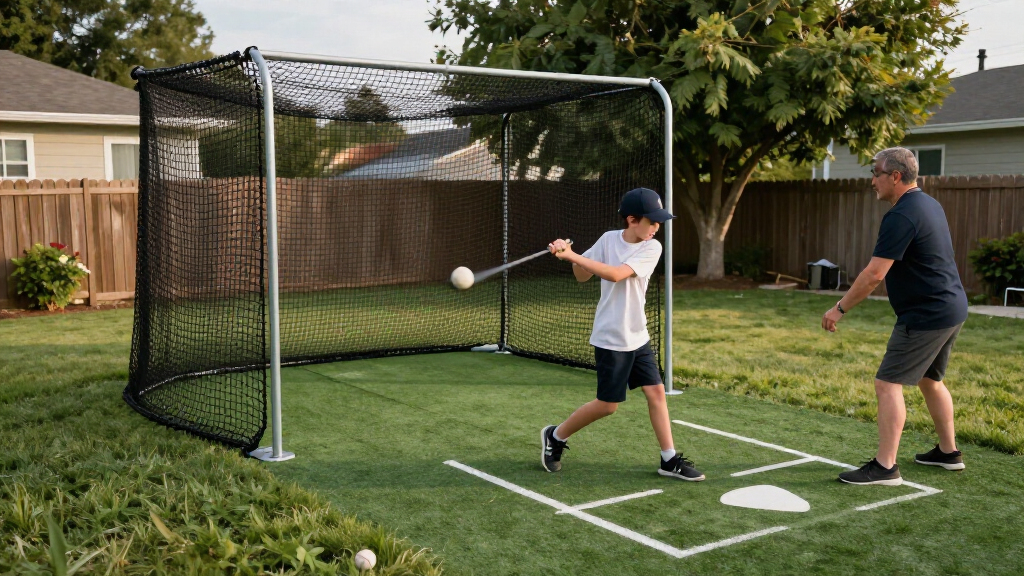
I compared these backyard batting cage nets by how well their stated designs match home practice: usable dimensions, enclosure style, portability cues, and support or practice features. I also looked at buyer workload: whether a product includes a frame, calls out a zippered door or machine port, or appears to require a separate structure. These details affect how much planning a buyer must do before the net can serve its intended role.
The ranking favors versatile home setups that balance practice space with a manageable footprint and clear use case. Longer cages rank well for buyers who have room, but they do not automatically outrank compact models: yard fit and setup burden matter. Specialized options rise for buyers who need their distinct feature, while products with limited supplied detail are positioned more cautiously. I do not infer durability or weather performance from dimensions alone, so buyers should confirm material, anchoring, and included hardware before choosing.
Factors to Consider When Choosing Backyard Batting Cage Nets
Choosing a cage is partly a net decision and partly a yard-planning decision. I’d settle the space, support, and practice questions before comparing small feature differences; those choices determine whether a cage is usable week after week.
Measure the Full Practice Zone, Not Just the Net
Measure the intended cage footprint and leave room around it for access, setup, and safe movement. A listed 30-foot length does not tell you whether the full lane fits between a fence, trees, and the house. Check overhead clearance too, especially if the structure uses a tall frame or your yard has branches or utility lines. Mark the dimensions on the ground before ordering; this simple check can expose awkward gates, slopes, or blocked walkways. A shorter cage can be the better purchase if it lets the player practice more often without taking over the yard.
Match Cage Length to the Drill
Longer lanes provide more room for ball travel and can suit full swings or pitching practice, but they are not automatically better for every backyard. Shorter cages may work for tee work, controlled front toss, or limited-space sessions, depending on the player’s age and the practice plan. Decide whether you need a full enclosure or simply a barrier behind a hitter before paying for extra length. A common mistake is choosing the longest option available and then discovering that installation, ball retrieval, or routine access is inconvenient. Let the drills and available yard space set the length, rather than treating maximum dimensions as a quality ranking.
Check What Supports the Net
Some listings pair a net with a frame, while others may require a separately sourced support system. Confirm exactly which poles, connectors, stakes, and anchoring pieces are included; similar product names do not guarantee similar packages. A net that fits your yard can still become a poor match if you need to design a frame or adapt existing supports. Before buying a net-only option, check its attachment method and whether your planned structure can keep the net taut without creating gaps. This extra compatibility check can prevent unexpected setup work and mismatched components.
Treat Portability as a Setup Tradeoff
Portable designs can make it easier to reclaim yard space, but portability does not tell you how fast a cage is to assemble or how stable it will be once erected. Look for clear information about assembly, takedown, storage dimensions, and anchoring rather than relying on the word “portable.” If the cage will stay up between sessions, prioritize a support and anchoring plan suited to your site. If you intend to take it down regularly, consider who will handle the task and where the net and frame will be stored. A setup that is easy to put away may get used more often than a larger cage that is cumbersome to manage.
Choose Features Around the Practice Routine
A zippered entry, blocking system, or pitching machine port can make a specific routine easier, but each feature matters only if it matches how the player trains. Machine-fed practice calls for attention to port placement and the machine’s position, while a blocking system may help with drills that need an added barrier. A door can simplify entry and exit without requiring the net to be moved. Before choosing a feature-rich design, write down the drills you expect to run and check whether the layout supports them. Paying for a specialized opening or enclosure detail makes less sense if practice will mainly use a tee or soft toss.
Verify Materials, Anchoring, and Weather Plans
Dimensions and feature names do not establish how a net will hold up to repeated impact or outdoor exposure. Check mesh material and construction, frame details, attachment points, and whether ground anchors are included or recommended. Consider how wind moves through your yard and whether the cage can be taken down when conditions call for it. Leaving a net exposed can add wear and create a hazard if the structure is not secured appropriately. When product information is unclear, ask the seller for specific care and installation guidance rather than assuming that “outdoor” means it can remain assembled in every condition.
Frequently Asked Questions
How much yard space should I leave around a backyard batting cage?
Start with the product’s stated length, width, and height, then add room for access, assembly, and safe movement around the structure. Check the whole area for branches, fences, buildings, and overhead obstructions rather than measuring only the open ground. Also think about where balls may travel during setup or when retrieving them. If your usable space is tight, a shorter cage such as a 22- or 24-foot option may be more practical than a longer lane. Confirm that the planned footprint still leaves a usable path through the yard.
Should I buy a cage with a frame or a net-only model?
A frame-included setup can reduce the work of finding compatible supports, but you still need to check the package contents and anchoring plan. A net-only model may make sense if you already have a suitable frame or have a specific support structure in mind. Do not assume a net will fit any frame: attachment points, dimensions, and tensioning methods need to match. Factor in the time and materials required to source missing parts before deciding that a standalone net is the simpler option. If you want a ready-to-plan package, prioritize listings that clearly identify the frame and hardware included.
Is a 55-foot batting cage too long for typical backyard practice?
It depends on the available yard and the drills, not on a universal ideal length. A long lane can give more room for ball travel, but it also takes more space to install and may complicate access or storage. For tee work and short-distance drills, a more compact cage could meet the need without occupying as much of the yard. Measure the entire usable area and account for nearby obstacles before selecting a long model. If you cannot use the full length safely and conveniently, its extra space may not deliver much benefit.
What should I prioritize for pitching-machine practice?
Look for a layout that supports the machine’s position and the hitter’s safe area, then check whether a dedicated machine port is included and where it sits. The IDEATRY model is the specifically identified option in this lineup for that feature, but buyers should still verify compatibility with their machine and setup. A port alone does not answer questions about anchoring, ball retrieval, or how the net handles the planned drill. Confirm the opening dimensions and intended use with the product details before purchase. If machine work is occasional, a general cage may be more flexible for other practice routines.
Can I leave a backyard batting cage net outside all season?
Do not assume that a net or frame is suited to continuous outdoor exposure just because it is marketed for backyard use. Check the manufacturer’s guidance for wind, rain, sun exposure, anchoring, and seasonal storage. Local weather and the cage’s position in the yard can change the risks, especially if the site is exposed to gusts. A portable design may be easier to take down, but portability alone does not confirm weather resistance. If care instructions are missing, get clarification before leaving the structure assembled for long periods.
Conclusion
For the best overall balance, I’d choose the DHUAFDD 30 × 10 × 10 ft cage when its footprint fits and a zippered entry suits the routine. The best value in practical terms is the DPFHDCIC 24 ft cage for buyers who want a shorter lane and do not need the extra length of the 30- to 55-foot options; confirm the included support components before ordering. For a best premium-style, long-lane pick, the VEVOR 55 ft net makes sense only for buyers with ample room and a clear need for extended practice space. Beginners should favor a compact, clearly specified setup such as the Apex Sports or Vertura 22 × 12 × 8 ft cages, after checking assembly and anchoring details. For specific practice needs, choose IDEATRY for a pitching-machine port, the blocking-system net for drills that benefit from an added barrier, or a frame-included metal-frame model if a complete support structure is the priority. Match the purchase to your yard and routine first; extra length or features only help when you can use them.