
TL;DR
NASM-certified trainer and nutrition coach Kylie Hansen told Fit&Well that using a GLP-1 has changed how she thinks about exercise: she prioritizes building muscle and strength over exercising mainly to move the scale. She shared three exercises she enjoys—goblet squats, walking lunges and light dumbbell punches—while emphasizing that her experience is personal, not a medical or universal workout plan.
Personal trainer Kylie Hansen, who says she has had bariatric surgery and currently uses a GLP-1 medication, told Fit&Well that her approach to exercise now centers more on building strength and muscle than on trying to make the number on the scale fall. She recommended goblet squats, walking lunges and light dumbbell punches as movements she personally enjoys, while stressing that people can adapt exercises to their abilities.
Hansen is a NASM-certified personal trainer and nutrition coach. In the interview, she described her own weight-loss history and said the medication helps her eat less, which can allow the scale to move without what she experiences as a large increase in effort. She also said that effect can make it harder to feel motivated to exercise. Her account is a personal description; the article does not establish how GLP-1 medications affect exercise motivation for other people.
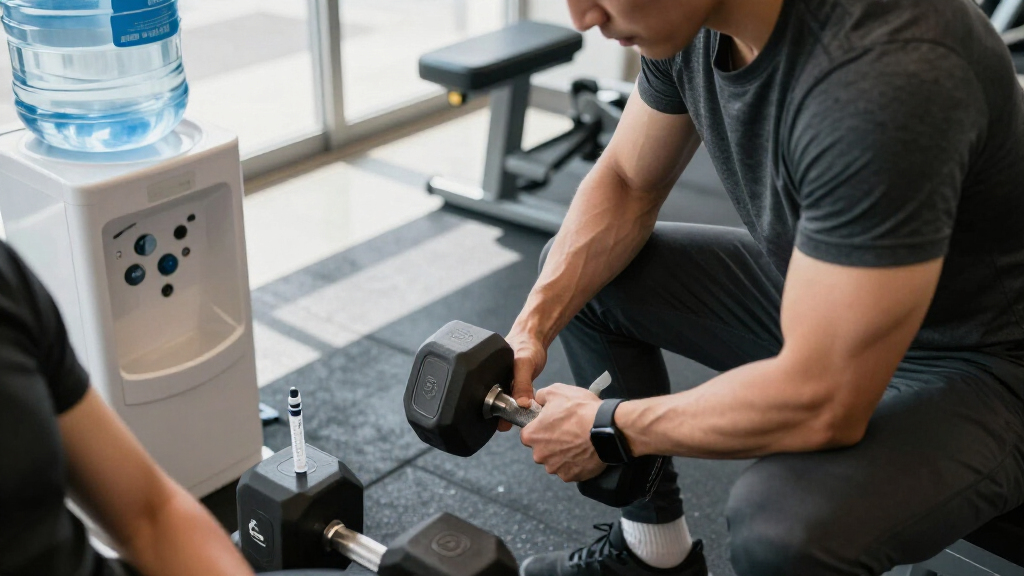
Hansen said she now wants to build muscle rather than exercise mainly to burn calories. She described muscle as support for an active life as she gets older and said she wants to remain strong and capable. She favors dumbbells and gym strength machines, saying the stability of machines gives her confidence to lift heavier weights. She also noted that, following spinal surgery, dumbbells let her move in a way that feels more natural to her.
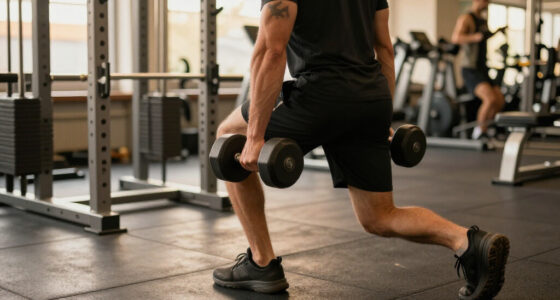
Her three selections were a goblet squat, which she says can be adjusted from standing up from a chair to holding a weight; a walking lunge, which works each side independently and challenges balance; and a controlled dumbbell punch, performed with light weights. Hansen characterized punches as a lighter resistance movement, not a substitute for progressively loaded exercises such as squats, lunges, presses or rows. The article suggests example sets and repetitions, but those are not presented as a prescription for every reader.
Strength Goals Beyond the Scale
The interview highlights a practical distinction in Hansen’s experience: losing weight and building strength are different goals. Her perspective may be useful to readers who are using, or considering, weight-loss medication and want to think about exercise beyond calorie expenditure. Hansen’s emphasis is on maintaining the capacity to move and progressively challenging the body, rather than treating a falling scale number as the only measure of progress.
The recommendations also show how strength work can be modified. Hansen describes options ranging from chair sit-to-stands to weighted squats and suggests supported or stationary lunges for people who find walking lunges uncomfortable or unsteady. That flexibility is relevant for people returning to exercise, although the source does not assess individual medical needs or establish that these movements are suitable for everyone.
Her comments should be understood as one trainer’s personal experience and preferences, not evidence that GLP-1 users should follow a particular program. The article offers no clinical findings, outcome data or comparisons of exercise plans. Anyone with health concerns, a history of surgery or medication-related symptoms may need individualized advice from a qualified health professional.
Hansen’s Exercise Approach
Hansen told Fit&Well that her own experience includes bariatric surgery and current GLP-1 use. She also has a history of spinal surgery, which informs how she selects and performs strength exercises. She said she does not believe there is one perfect way to strength train and urged people to find movements that work for their bodies, begin at their current ability and look for ways to get stronger over time.
For goblet squats, the source gives an example of two to three sets of eight to 12 repetitions, with 60 to 90 seconds of rest. For walking lunges, it lists two to three sets of eight to 10 repetitions per side, with the same rest period; supported or stationary lunges are offered as easier alternatives. For dumbbell punches, it suggests two to three rounds of 20 to 30 seconds, resting 45 to 60 seconds. These are the article’s workout examples, not an individualized training plan.
“Seeing the scale go down and building a strong, healthy body are not the same thing.”
— Kylie Hansen, speaking to Fit&Well
Limits of One Trainer’s Account
The source is an interview, not a clinical study or a survey of people taking GLP-1 medications. It does not establish how common Hansen’s experience is, whether medication generally changes motivation to exercise, or which exercise program produces particular health outcomes for GLP-1 users. It also does not identify the medication Hansen uses, her dosage, or how long she has taken it.
The article does not provide a full assessment of readers’ health, fitness levels or injury risks. Its sample movements and workout ranges cannot determine what is appropriate for an individual, including someone with prior surgery or medication side effects. Hansen’s comments about her own spinal surgery and exercise choices are not individualized clinical guidance.
Applying the Advice Safely
The Fit&Well report presents Hansen’s three preferred movements and her broader focus on building strength; it does not announce a new program or a future medical development. Readers interested in strength training can use the examples as a starting point for questions about form, suitable modifications and gradual progression. Hansen’s own advice is to start at an appropriate level and choose movements that feel workable.
People taking GLP-1 medication who have health concerns, difficulty exercising or a history of surgery should seek guidance from a qualified health professional or appropriately credentialed trainer familiar with their circumstances. The source provides no follow-up on Hansen’s training or additional evidence about how GLP-1 use affects workout habits more broadly.
Key Questions
Who is Kylie Hansen?
Hansen is a NASM-certified personal trainer and nutrition coach. She told Fit&Well that she has had bariatric surgery and currently uses a GLP-1 medication.
Which exercises does Hansen recommend?
She named goblet squats, walking lunges and light dumbbell punches as exercises she personally enjoys. The source describes them as her preferences, not as a required routine for everyone.
How did Hansen say GLP-1 use affected her exercise motivation?
Hansen said the medication helps her eat less and that the scale can move without her feeling she has done much extra work. She said this can lead her to feel she does not need to exercise, so she has to challenge that thought. This is her personal account.
Are the workout sets and repetitions right for every reader?
No. Fit&Well lists example sets, repetitions and rest periods, but the interview does not tailor them to individual health or fitness needs. People who are new to exercise, returning after a break or managing health concerns should seek qualified guidance and adapt movements appropriately.
Does the report show that GLP-1 medications change exercise habits generally?
No. It reports one trainer’s experience and does not provide research or broader data showing how GLP-1 medications affect exercise motivation among users as a group.
Source: rss