TL;DR
Fit&Well published a personal trainer’s proposed 15-minute dumbbell circuit for people short on exercise time. The routine pairs four compound movements, with 12 repetitions per exercise and three rounds; the trainer says beginners can take longer, rest as needed and prioritize technique over speed.
Fit&Well has published a personal trainer’s 15-minute dumbbell circuit built around four compound exercises, offering a time-limited option for working the upper body, lower body and core. The trainer recommends 12 repetitions of each movement for three rounds, while stressing that newer exercisers should take the time they need and keep good form rather than rush.
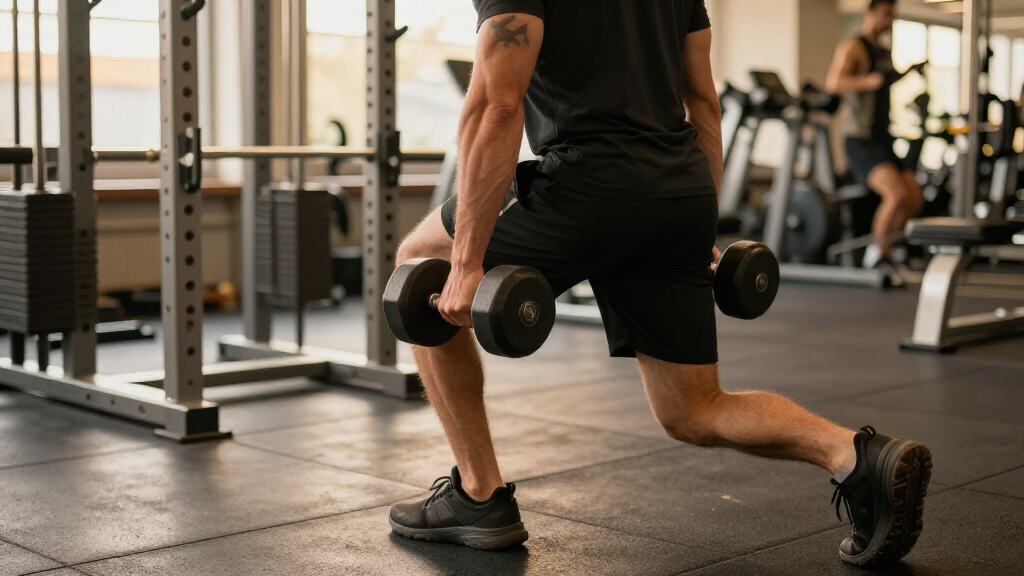
The proposed circuit combines a dumbbell squat to press, a deadlift to row, a lateral lunge to curl, and a glute bridge to chest press. Each exercise joins a lower-body movement with an upper-body action, and the sequence moves through squatting, hinging, lunging, pulling and pressing patterns. The report presents the routine as a way to cover several major movement types within a short session.
The trainer’s instructions call for 12 repetitions per exercise and three sets. In the circuit format described, users complete each exercise before moving to the next, then return to the beginning and repeat the sequence. The report does not specify a rest interval or state how the 12 repetitions should be divided between sides for the lateral lunge.
Form guidance runs through the exercise descriptions. The trainer advises using lighter dumbbells if the squat to press causes the back to round or the torso to tip forward. For the deadlift to row, the report recommends a neutral spine and controlled shoulder position; beginners are advised to practise the deadlift movement without weights first. For the glute bridge press, the trainer cautions against excessive arching in the lower back.
A Short Session With Technique Limits
The trainer says work and family commitments can make it difficult for clients to find time to exercise. The circuit brings together several resistance movements in a session Fit&Well describes as lasting 15 minutes. The report does not provide evidence that this particular workout produces a specific strength result.
The 15-minute estimate may vary with load, rest periods, experience and pace. The trainer says beginners may need longer and should not trade technique for speed. The report does not provide a fixed rest schedule or say that participants must complete the circuit within 15 minutes.
The article says the movements should feel challenging but not cause sharp pain. It advises stopping if pain goes beyond muscle fatigue and checking with a doctor. The circuit is a general workout suggestion, not an individualized program or a substitute for professional advice where health conditions or injuries affect exercise choices.
How the Four Moves Fit Together
The four exercises combine familiar dumbbell patterns into paired movements. The squat to press links a squat with an overhead press, while the deadlift to row combines a hip hinge with a pulling action. The lateral lunge to curl adds side-to-side leg work with an arm curl; the glute bridge to chest press pairs hip extension with a press from the floor.
The source describes a three-set, 12-repetition format for each exercise and frames the complete sequence as a circuit. It does not provide details such as the recommended dumbbell weight, a warm-up, a cooldown, a weekly schedule or a progression plan. Those omissions mean the article is best read as a short workout template, rather than a complete strength-training program.
Time, Weights and Individual Fit
The report does not identify a specific dumbbell weight, rest duration or exact timing method behind the 15-minute estimate. It also does not give research results showing how much strength a person can expect to gain from this circuit, or how often to repeat it. The routine’s effects will depend on factors including the person’s starting fitness, technique, chosen load and consistency.
Fit&Well’s source text does not give the trainer’s name or the report’s publication date. It also does not explain whether all repetitions in the lateral lunge are counted individually or as left-right pairs. Readers should not assume the same load, range of motion or exercise selection suits everyone; the article advises stopping for pain beyond muscle fatigue and consulting a doctor.
Progress at a Controlled Pace
The source offers no announced follow-up or scheduled next development. For someone using the workout, the trainer’s guidance is to begin at a comfortable pace, rest when needed and focus on correct movement. Beginners can practise the deadlift without weights and reduce the dumbbell load if they cannot maintain the advised position.
As strength and endurance improve, the trainer suggests gradually shortening rest periods or moving at a quicker tempo, while maintaining technique. The report does not set out a formal progression schedule or specify when to increase weight. Anyone with pain, an injury or a medical concern should seek appropriate professional guidance before continuing or changing the routine.
Key Questions
What exercises are in the 15-minute circuit?
The four movements are a dumbbell squat to press, deadlift to row, lateral lunge to curl, and glute bridge to chest press.
How many repetitions and rounds does the trainer recommend?
The report specifies 12 repetitions per exercise and three sets, performed circuit-style. It does not define a rest interval.
Does the workout have to take exactly 15 minutes?
No. The trainer says beginners may take longer and should move at a comfortable pace and rest as needed. The source does not explain how the 15-minute estimate was calculated.
What should someone do if an exercise causes pain?
The trainer says the exercises may feel challenging but should not cause sharp pain. If pain goes beyond muscle fatigue, the report advises stopping and checking with a doctor.
Source: rss