TL;DR

Get sports gear delivered free with Prime
- Fast, free delivery on millions of items
- Prime Video, Amazon Music and more included
- Member-only deals all year
Yoga teacher Alina Boyett has shared a beginner-friendly, four-movement recovery flow designed for home use without equipment. The sequence targets the legs, hips, back and shoulders; Boyett advises moving slowly, avoiding pain and seeking professional guidance for injuries or relevant medical conditions.
Yogalina Studios founder and yoga teacher Alina Boyett has shared a four-pose recovery flow for people looking to stretch after exercise or a day of sitting. Published by Fit&Well, the routine is intended for beginners, requires no equipment and focuses on gentle movement rather than intense stretching.
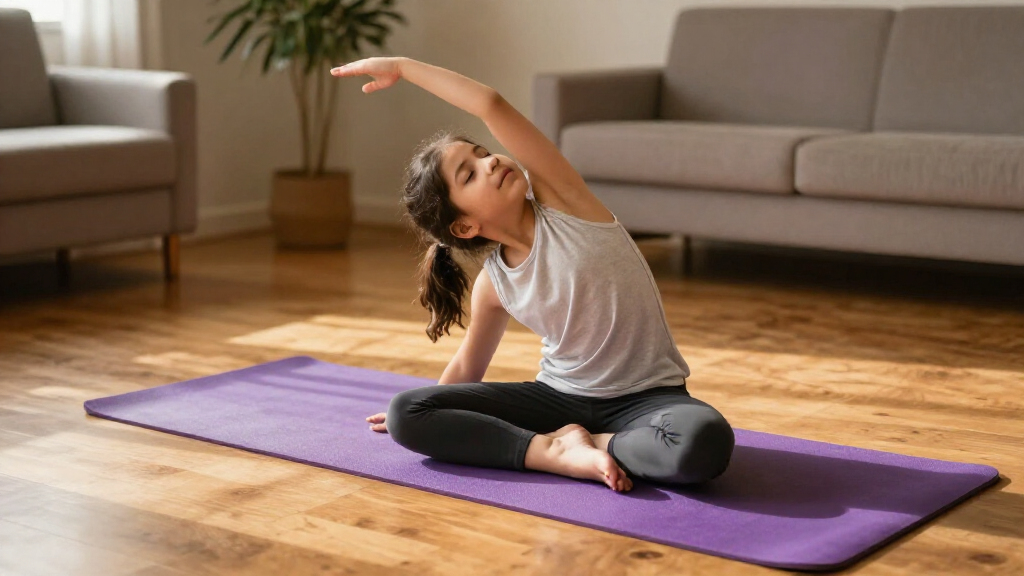
The sequence includes Waterfall pose with the legs raised against a wall, Child’s pose, a standing Ragdoll forward fold and a seated spinal twist. Boyett says the poses were selected to address areas that commonly feel tense after activity, including the legs, hips, spine and shoulders. The routine’s instructions call for short holds of roughly two to five breaths, depending on the movement.
Boyett describes the flow as suitable after a challenging workout, a run or prolonged desk work. She says the combination of restorative positions, forward folds and gentle twists is designed to be accessible without prior yoga experience or advanced flexibility. Yogalina teacher Misha Clarke demonstrates the sequence in a video accompanying the Fit&Well report.
The article gives a specific method for each movement: rest on your back with your legs supported by a wall; move from hands and knees into Child’s pose; fold forward with softened knees; and sit for a controlled twist on each side. Boyett’s central instruction is to move slowly within a comfortable range, rather than force a position or treat the flow as a test of flexibility.
A Lower-Intensity Option for Recovery
The routine offers readers a structured way to add gentle movement to a rest period, rather than assuming recovery means either another demanding workout or doing nothing. Its short holds and equipment-free format may make it easier to try at home, including for people who are new to yoga. That is the practical value of the report: it sets out four accessible movements and frames them as an alternative to pushing harder when the body needs a slower session.
Boyett presents the sequence as a way to stretch and reconnect with the body, not as a treatment for injury or a guaranteed way to improve flexibility. The distinction matters: the article provides general exercise guidance, while individual comfort and mobility can differ. Readers should stop if a movement causes pain and should not take the routine as a substitute for medical advice.
Products Worth Considering

Garmin Varia RearVue 820 Cycling Rearview Radar and Tail Light

Garmin inReach Mini 2 Satellite Communicator Orange

Coleman SaluSpa Hawaii Energy-Efficient Inflatable Hot Tub, 4–6 Person
As an affiliate, we earn on qualifying purchases.
Recovery After Exercise or Sitting
Boyett’s comments in the Fit&Well report focus on balancing training with recovery. She tells the publication that exercise habits often emphasize how much or how intensely a person moves, while recovery also plays a part in maintaining a healthy body. Her suggested flow is positioned as a brief, gentle option after exercise or prolonged sitting, rather than as a complete workout or a requirement for everyone.
The article describes each posture as targeting a different area. Waterfall pose is presented as a resting position for tired legs; Child’s pose as a gentle stretch for the back, hips and shoulders; the forward fold as a way to ease tension along the back of the body; and the seated twist as a mild rotation for the torso. These are Boyett’s explanations of the poses, not reported findings from a clinical study.
Limits of the Routine’s Claims
The supplied report does not include clinical evidence testing this particular sequence, nor does it establish that the poses prevent injury, speed recovery or produce a measurable improvement in flexibility. Boyett’s descriptions of how the movements may feel or what areas they target should be understood as her guidance as a yoga teacher, rather than proven results for every person.
The article also does not specify how often readers should repeat the flow, whether it is appropriate for particular injuries or medical conditions, or how to adapt every pose for different mobility needs. Boyett advises people with an injury or relevant medical condition to seek appropriate professional guidance before trying it.
Try the Poses Within Your Range
The Fit&Well report provides the instructions and video demonstration for readers who want to follow the sequence at home. No further study, clinical assessment or scheduled follow-up is mentioned in the supplied material. Anyone trying the flow can begin with the supported or modified version of a pose that feels comfortable, keep movements controlled and stop if pain occurs.
For people with an injury, a medical condition or uncertainty about whether a movement is suitable, the next step is to ask a qualified health professional or yoga instructor for individual guidance. The routine is presented as an optional, gentle recovery practice—not a replacement for professional care.
Key Questions
What poses are in Alina Boyett’s yoga flow?
The four movements are Waterfall pose with the legs supported by a wall, Child’s pose, a Ragdoll forward fold and a seated spinal twist.
Does the routine require equipment or yoga experience?
Boyett describes it as a home routine that requires no equipment or previous yoga experience. Waterfall pose uses a wall for support.
How long should each pose be held?
The instructions generally call for two to five breaths, depending on the pose. The source does not give a total duration for completing the full sequence.
Is the yoga flow suitable for someone with an injury?
Boyett advises anyone with an injury or relevant medical condition to seek appropriate professional guidance before trying the sequence. She also says not to force a stretch or push through pain.
Source: fitandwell.com