
TL;DR
A Fit&Well writer tried carrying two 10kg dumbbells between rooms whenever moving around the home, continuing the habit for two weeks. The writer reported less neck stiffness, a stronger-feeling grip and a side-plank time that increased by 15 seconds, but said the experiment cannot show that carrying the weights caused those changes.
A Fit&Well writer says carrying two 10kg dumbbells between rooms whenever leaving a room for two weeks coincided with less neck stiffness, an improved-feeling grip and a 15-second increase in a side-plank hold. The account is a personal experiment, not evidence that the habit caused the reported changes or that others should expect the same results.
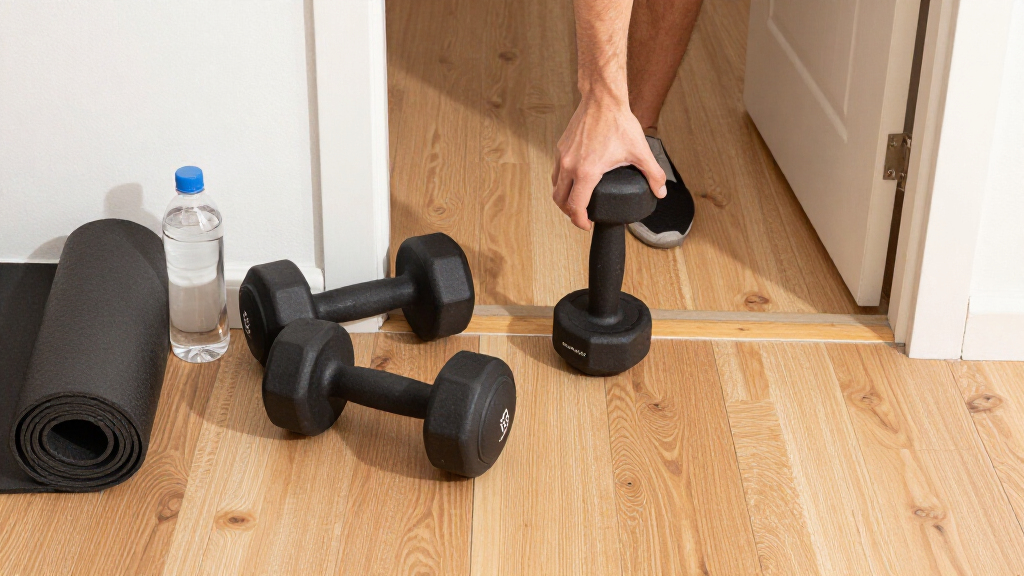
The writer adapted an idea shared on Instagram by personal trainer Kate Rowe-Ham, who suggested leaving weights near stairs and carrying them on trips between floors. Rowe-Ham credited nutrition consultant Laurel Seabrook with a version involving a 25-pound kettlebell. Because the writer rarely went upstairs while working, they instead carried two 22-pound (10kg) dumbbells between a kitchen desk and the living room.
Over two weeks, the writer carried the dumbbells whenever a task meant moving between those rooms, then brought them back on a later trip. They reported that the weights felt easier to carry by the end of the first week and that exercises where grip tends to tire, including wood chops, felt easier in the second week. The writer also said heavy grocery bags seemed easier to manage and they dropped things less often; these are personal observations, not measured outcomes.
The writer timed a side plank on the first day and held it for 1 minute 33 seconds. At the end of the experiment, the hold lasted 1 minute 48 seconds, a 15-second difference. They also described feeling steadier during the later test. The report does not establish how much, if any, of that difference came from carrying the weights.
Small Carries, Everyday Movement
The report offers an example of how someone used routine movement around the home to add brief bouts of activity to a desk-based day, rather than scheduling a separate workout. That may interest readers looking for practical ways to interrupt long periods of sitting, although this single-person account does not test whether the strategy improves health or fitness for a wider group.
The reported changes are also a reminder to distinguish a personal impression from a demonstrated effect. The writer linked carrying the dumbbells with greater posture awareness and a change in side-plank performance, but several factors could have contributed, including normal variation between tests. The report provides no comparison group, standardized activity tracking or evidence about lasting results.
From Stair Carries to Room-to-Room
The original idea was to leave a weight at the bottom of a staircase and carry it upstairs, then take it back down on a return trip. Rowe-Ham shared that suggestion on Instagram and attributed it to Seabrook, who had used a 25-pound kettlebell. The Fit&Well writer changed the setup to suit a home where trips upstairs were uncommon during work.
The writer chose two dumbbells weighing 22 pounds (10kg) each and moved them between the kitchen and living room. The experiment was presented as a way to build movement into ordinary tasks. It was not described as a formal training program, and the account does not give a total number of carries, distance walked or total time spent carrying the weights.
“I can’t say the carries alone were responsible”
— Fit&Well writer
What the Experiment Cannot Show
The account does not establish that carrying the dumbbells caused the reported changes in neck stiffness, grip or side-plank endurance. It describes one person’s experience over two weeks and gives no control period, comparison group or independent assessment. The writer specifically acknowledged that the carries alone may not explain the side-plank result.
Several practical details are also not reported, including how many trips were made each day, whether the weights were carried for comparable distances, and whether other exercise or work habits changed during the same period. The account does not report any injuries, but it also does not assess safety for people with pain, balance concerns or limited strength. Readers should not treat the personal results as a training prescription.
The Writer Plans to Continue
The writer said they intended to keep carrying weights between rooms and might try single-arm carries to track progress over time. No later results or follow-up measurements were included in the report, so whether the perceived changes continue is unknown.
Anyone considering a similar habit should choose a load they can carry with control and avoid rushing while walking. People new to strength training, or those with pain or health concerns, can seek guidance from a qualified professional. The report does not set out a tested progression plan or claim that its specific weights are appropriate for other people.
Key Questions
What did the Fit&Well writer do?
For two weeks, the writer carried two 22-pound (10kg) dumbbells between a kitchen desk and the living room when moving between those rooms.
What changes did the writer report?
The writer described less neck stiffness, an improved-feeling grip and easier carrying of grocery bags. Their side-plank hold increased from 1 minute 33 seconds to 1 minute 48 seconds. These were personal observations, not proof of cause and effect.
Does the experiment prove that carrying weights improves posture or strength?
No. It was a single-person, two-week account without a comparison group. The writer said they could not tell whether carrying the weights alone caused the changes.
What does the writer plan to do next?
The writer said they would continue the habit and may try single-arm carries. The report does not provide follow-up results.
Source: rss