
TL;DR

Get sports gear delivered free with Prime
- Fast, free delivery on millions of items
- Prime Video, Amazon Music and more included
- Member-only deals all year
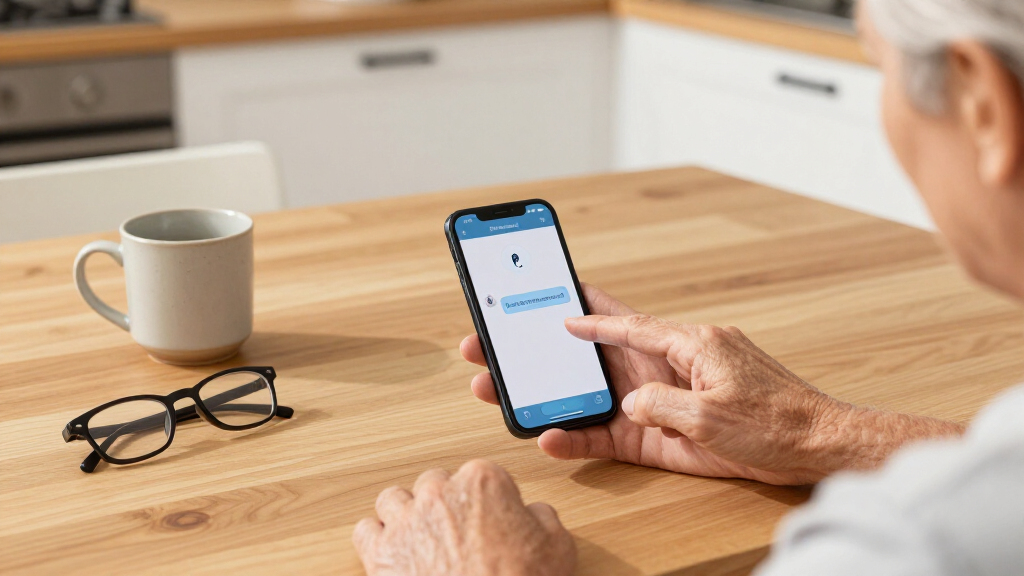
A Medical Xpress report says older adults are using chatbots and voice assistants for health information, while warning that AI answers can be inaccurate and difficult to verify. The researcher recommends “informed skepticism”: use source-checking tools, cross-check health advice and avoid sharing identifying details.
Older adults are using AI chatbots and voice assistants to get health information, but a researcher says the tools are safest when users approach their answers with “informed skepticism”—remaining open to help while checking response quality and credibility. The guidance appears in an October 2026 Medical Xpress report, which describes both the appeal of rapid, plain-language answers and the risks of inaccurate advice and privacy exposure.
The researcher, who studies how people interact with technology, says chatbots can help explain complex medical topics, summarize information and answer sensitive questions quickly. Those features may appeal to people who face a wait for a medical appointment or want to prepare questions before speaking with a clinician. The report stresses that these tools can supplement access to information, but their answers should not automatically be treated as reliable medical guidance.
A 2025 survey of 300 adults found that about one in five respondents used AI chatbots to ask health questions. In a separate poll conducted by the researcher and colleagues, one in two older adults reported using AI chatbots or voice assistants, and about 14% of that group said they used them to access health information. These are survey findings, not estimates of all older adults’ use.
The report lists risks that include incorrect emergency advice, misclassification of health conditions and “sycophancy”—a tendency to give answers that appear to agree with what a user wants to hear. It also cites the 2025 survey: four in five respondents who had used a health chatbot said they never checked its output. The report recommends checking chatbot-provided sources and avoiding personally identifying details in prompts, since public chatbot providers may retain prompts for training.
Checking AI Before Acting
AI tools can make health information easier to access, particularly when someone wants a quick explanation or is unsure how to describe a concern. For older adults managing chronic conditions or new diagnoses, that convenience may help them understand terminology and prepare for a clinical conversation. It does not establish that a chatbot can diagnose, triage or replace a health professional.
The gap between a confident-sounding answer and a reliable one is a practical concern. Chatbots generate text by predicting likely word patterns, the report explains, so an answer may read as authoritative while containing errors. Checking cited sources, comparing information with trusted health resources and taking urgent symptoms to appropriate medical services can reduce the chance that a chatbot response is mistaken for a clinical decision. Privacy also matters: users should avoid including details that identify them or someone else.
Products Worth Considering

GoPro Hero12 Black Waterproof Action Camera with 5.3K60 Video and 27MP Photos

Coleman Montana 8-Person Camping Tent with Rainfly

GoPro Fluid Pro AI 3-Axis Gimbal Stabilizer
As an affiliate, we earn on qualifying purchases.
How Older Adults Use AI
The report challenges the stereotype that older adults are uniformly unfamiliar with technology. It describes older people using voice assistants such as Siri and Alexa for questions, including health-related searches, and notes that chatbots may offer more control from home than conversations in which an older patient feels left out or a caregiver takes the lead.
However, the researcher’s earlier work found that older participants using voice assistants often preferred to start and finish a search on the same device. Younger adults in that research were more likely to treat AI as one step and continue to another source, such as a search engine. The report says this difference may make verification harder if checking an answer requires switching tools.
The report also points to the Aging with AI Act, introduced in the U.S. Senate in 2026, as an example of growing policy attention to research on AI’s benefits and risks for older adults. The supplied material does not describe the bill’s provisions or legislative status beyond its introduction.
““informed skepticism””
— The researcher quoted in the Medical Xpress report
Limits of the Available Evidence
The report gives survey figures but the supplied material does not provide full details on how respondents were recruited, how representative they were, or the exact wording of the questions. The findings should not be read as definitive measures of AI use across the wider population of older adults. It also does not identify which chatbot systems were tested or compare their accuracy for specific health questions.
The report’s advice does not establish that any particular checking feature will catch every error. It remains unclear how often older users encounter harmful answers, how chatbot use affects health outcomes, and how providers handle prompts across different products and settings. The article also ends mid-discussion of information-quality features, so it does not supply the full set of the researcher’s recommendations.
More Research and Safer Use
The report points to the Aging with AI Act, introduced in the Senate in 2026, as a sign of interest in studying the effects of AI on older adults. The source material does not say whether the bill has advanced or identify a next legislative step.
For users, the researcher’s immediate guidance is to learn how to control AI features in search tools, check sources provided with chatbot answers and avoid entering personal identifying information. The report notes that some services offer opt-in controls, while Google Search can show AI-generated summaries by default; it says adding “-ai” to a Google query removes AI content. Users with urgent symptoms should seek appropriate medical care rather than rely on a chatbot. Further research is needed to determine how older adults use these tools across products and whether verification guidance changes behavior.
Key Questions
What does “informed skepticism” mean when using a health chatbot?
It means treating the chatbot as a possible information aid, not an automatic authority: check its sources, compare its answer with trusted health information and consult a professional when a medical decision is involved.
How many older adults in the cited poll used AI for health information?
In a 2025 poll conducted by the researcher and colleagues, one in two older adults said they used AI chatbots or voice assistants, and about 14% of that group said they accessed health information through them. The report does not present this as a population-wide estimate.
Can an AI chatbot replace a doctor?
The report describes chatbots as a source of explanations and information, while warning that they can give incorrect advice or misclassify conditions. It does not support using them as replacements for medical professionals, especially in emergencies.
What information should users avoid sharing with chatbots?
Researchers cited in the report generally recommend not entering personally identifying information. The report says public chatbot providers may retain prompts for training future models.
Source: medicalxpress.com