
TL;DR

Get sports gear delivered free with Prime
- Fast, free delivery on millions of items
- Prime Video, Amazon Music and more included
- Member-only deals all year
Health Secretary Robert F. Kennedy Jr. said at a Michigan campaign event that Arabs do not produce science or win major prizes. The claim conflicts with the records of Arab and Arab-descended Nobel laureates, including chemist Ahmed Zewail and 2025 chemistry laureate Omar Yaghi. Kennedy’s office had not responded to an Associated Press request for comment in the report.
Health and Human Services Secretary Robert F. Kennedy Jr. said Arabs “don’t produce science” and do not win major prizes at a campaign event in Grand Rapids, Michigan, a broad assertion contradicted by the records of Arab and Arab-descended Nobel laureates. The comments, made while campaigning for Republican Senate candidate Mike Rogers, drew criticism just days before the midterm elections.
“There’s 500 million Arabs in the world and yet they don’t produce science,” Kennedy said Monday, according to MedPage Today. He also said Arabs do not win the Nobel, Fields or Wolf prizes and do not produce literature. The remarks came during a discussion of the Muslim Brotherhood and its alleged influence on Arab societies; Kennedy argued that it had destroyed a tradition of cultural and scholarly contributions.
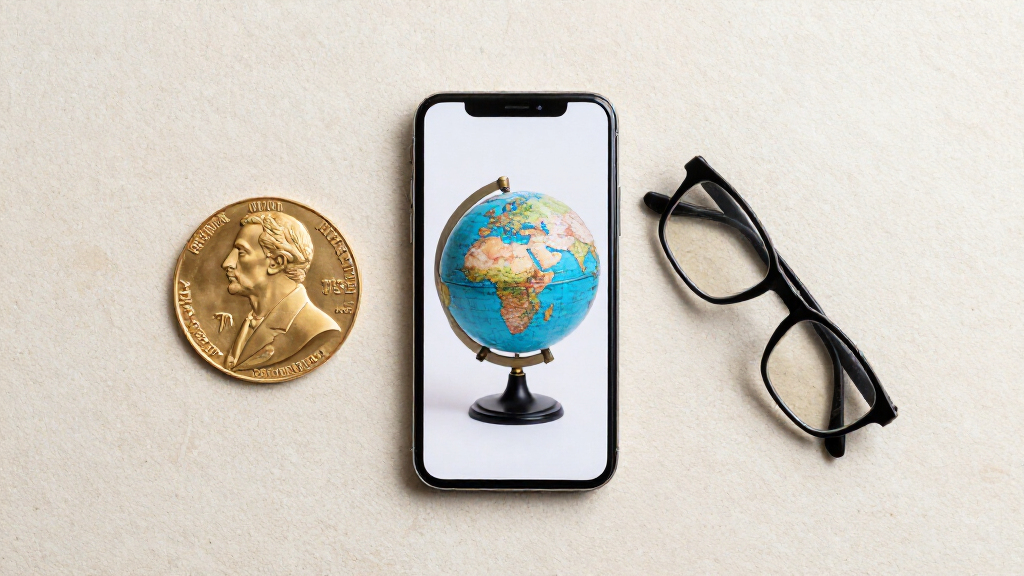
The award record includes Egyptian-American scientist Ahmed Zewail, who received the 1999 Nobel Prize in Chemistry for work on femtochemistry, and Egyptian writer Naguib Mahfouz, awarded the 1988 Nobel Prize in Literature. In 2025, Jordanian-born chemist Omar Yaghi was one of three recipients of the Nobel Prize in Chemistry and had previously won the 2018 Wolf Prize in Chemistry.
Other Arab recipients include Egyptian diplomat Mohamed ElBaradei, co-recipient of the 2005 Nobel Peace Prize, and Yemeni journalist and activist Tawakkol Karman, who shared the 2011 prize. The report also identifies Lebanese-descended mathematician Michael Atiyah as a 1966 Fields Medal recipient. These examples directly contradict Kennedy’s categorical claim that Arabs do not win such awards.
Award Records Challenge Kennedy’s Claim
The remarks matter because they were made by the head of a major federal department on the campaign trail in Michigan, which has a large Arab American population, and because they describe an entire ethnic and linguistic group in sweeping terms. The documented laureates show that the statement about Arabs not winning major prizes is inaccurate; the awards span science, literature and peace.
The episode also brings a cultural claim into a closely contested political setting. Kennedy was campaigning for Rogers, whose campaign has criticized Democratic candidate Abdul El-Sayed, a physician who has rejected allegations that he has ties to the Muslim Brotherhood. The report says President Donald Trump has also accused El-Sayed of membership. The claims about El-Sayed are separate from Kennedy’s remarks about Arab achievement and should not be treated as evidence for them.
Products Worth Considering

Garmin Instinct E Rugged GPS Smartwatch, 45 mm, Charcoal

Solo Stove Bonfire 2.0 Smokeless Wood-Burning Fire Pit with Stand, Silver

YETI Trailhead Collapsible Camp Chair
As an affiliate, we earn on qualifying purchases.
Michigan Campaign and Brotherhood Debate
Kennedy made the remarks while speaking for Mike Rogers in Grand Rapids. According to the report, Rogers has accused his Democratic opponent Abdul El-Sayed of having ties to the Muslim Brotherhood; El-Sayed has disavowed the group. Kennedy said he could discuss the Brotherhood because Rogers had raised it, then connected the organization to what he described as a decline in Arab cultural and scientific contributions.
The report distinguishes Arab identity, an ethnic and linguistic identification, from Muslim identity, which is religious. Arabs may be Muslim, Christian, Jewish or of another faith, while most Muslims worldwide are not Arab. The Muslim Brotherhood was founded in Egypt in 1928. The source also notes that several governments in the region have banned or designated the organization, but those political actions do not substantiate Kennedy’s generalization about Arab people or their achievements.
““There’s 500 million Arabs in the world and yet they don’t produce science.””
— Robert F. Kennedy Jr., at the Michigan campaign event, as quoted by MedPage Today
Response and Further Explanation Pending
An HHS representative did not immediately respond to an Associated Press request for comment, according to MedPage Today. The report does not include a subsequent explanation from Kennedy or the department, so it remains unclear whether he would qualify or amend his statement in response to the listed laureates.
Kennedy’s remarks also do not specify what he meant by “Arabs” in the context of awards, or how he links the Muslim Brotherhood to scientific and literary output across a diverse population. The award examples establish that his categorical claims about prize winners are false; they do not, by themselves, assess the broader historical argument he made about the Brotherhood.
Kennedy’s Scheduled Iowa Appearance
Kennedy was scheduled to appear Wednesday as a special guest at the “Make Iowa Healthy Again Rally” in Des Moines. The report does not say whether he planned to address the controversy there. Any further statement from Kennedy, HHS or the campaign could clarify whether he stands by the comments, but no response was available in the source report.
Key Questions
What did RFK Jr. say about Arabs?
At a Michigan campaign event, Kennedy said Arabs do not produce science, win major prizes or produce literature. The remarks were reported by MedPage Today on October 27, 2026.
Do Arab scientists and writers appear among Nobel Prize recipients?
Yes. Examples in the report include chemist Ahmed Zewail, writer Naguib Mahfouz, diplomat Mohamed ElBaradei, activist Tawakkol Karman and chemist Omar Yaghi, a 2025 laureate.
What was Kennedy discussing when he made the comments?
He was campaigning for Republican Senate candidate Mike Rogers and discussing the Muslim Brotherhood. Kennedy linked the organization to what he described as the loss of Arab cultural and scientific contributions.
Did Kennedy or HHS respond to the criticism?
The report says an HHS representative had not immediately responded to an Associated Press request for comment. It provides no later response from Kennedy or the department.
Source: rss