TL;DR
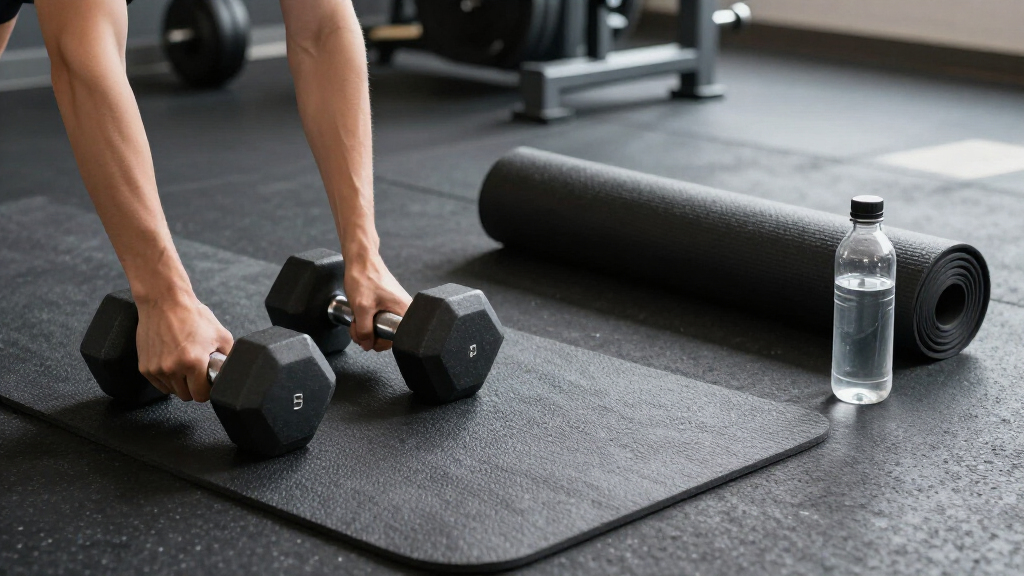
Fit&Well reports that personal trainer Pippa Sealey designed a dumbbell workout for people seeking to build strength at home. The routine pairs seven exercises into supersets and uses controlled tempos, but the source does not specify a weekly schedule, dumbbell weight or a complete final exercise description.
Fit&Well has published a home dumbbell workout devised by personal trainer Pippa Sealey for people who want to build strength without going to a gym. The routine uses paired exercises, set-and-repetition targets and timed lowering phases to add challenge with limited equipment; the report does not give a required dumbbell weight or a weekly schedule.
The program is organized into four exercise pairs. For each pair, the instructions say to complete exercise A and then exercise B without resting between them, repeating the pair for the prescribed sets. Rest is listed after exercise B: generally 60–90 seconds before the next round. The opening calf-raise and bridge pair lists no rest after the calf raises and 60–90 seconds after the bridges.
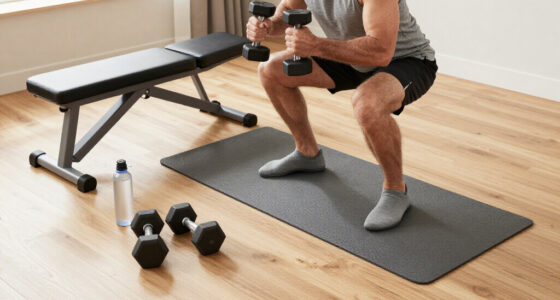
The listed movements are deficit calf raises and single-leg bridges; goblet squats and Romanian deadlifts; half-kneeling single-arm presses and reverse lunges; and dumbbell side bends. The first pair is prescribed for three sets, the squat and deadlift pair for four, and the final two pairs for three each. Repetition ranges vary by movement and include one-sided work.
Sealey recommends making the session harder by adding sets, repetitions or a more challenging tempo. The goblet squat and Romanian deadlift both use a 3111 tempo: three seconds to lower, one second at the bottom, one second to rise and one second at the top. That instruction increases the time spent performing each repetition; it does not specify a particular load or guarantee a particular result.
How the Routine Adds Home Training Challenge
The workout offers readers a structured alternative when gym access is inconvenient or unavailable. Its mix of lower-body, pressing and trunk exercises covers several movement patterns using a pair of dumbbells and a step for the deficit calf raise. Supersets and measured repetitions give the session a clear order without requiring a range of gym machines.
That is a practical option, not evidence that the routine is equivalent to every gym program. Results depend on factors the report does not quantify, including the trainee’s starting point, the weights available, consistency and recovery. Sealey’s stated progression options—more sets, reps or a slower tempo—provide ways to adjust difficulty, but readers still need to choose a level they can perform with sound technique.
For beginners, a lighter load and controlled practice are sensible starting points. Anyone new to strength training or uncertain about form can seek guidance from a qualified trainer. People with pain, an injury or relevant medical concerns should get individualized advice before starting or modifying a workout. The report presents an exercise plan, not individualized medical or training advice.
A Gym-Inspired Plan With Dumbbells
The report’s author says they switched to home dumbbell workouts after moving to an area where they had not found a gym they liked, and were surprised by their progress. They then asked Sealey to create a session that would mimic the variety of a gym-based workout with just a pair of dumbbells. That personal experience is the article’s premise, not a controlled comparison of home and gym training.
Sealey explains that tempo refers to the time spent in different parts of a repetition, while a superset means performing two exercises consecutively without rest. In this plan, rest is taken after the second movement in each pair. These methods shape how the routine is performed; the source does not report measured outcomes or compare this session with a gym program.
Load, Schedule and Final Moves
The supplied report does not specify how heavy the dumbbells should be, how often to perform the workout, or how long to rest between different exercise pairs beyond the listed intervals. It also does not provide a progression schedule, a warm-up, or outcome data showing how much strength a person might gain.
The source text ends partway through the instructions for the dumbbell side bend. It identifies the movement and gives three sets of 10–12 repetitions per side, but the remaining exercise description and any movements that may follow are not included in the supplied material. The article therefore cannot establish from this text alone whether the side bend is the final movement or provide a complete account of its technique.
What Readers Need Before Starting
Readers considering the plan will need to select a manageable dumbbell load and confirm the full exercise instructions, particularly for the side bend, before attempting the complete session. The source provides no stated publication date or announced follow-up, so no further update can be confirmed. Any later reporting would be needed to clarify the missing details, including the recommended schedule and whether the published workout includes additional instructions.
As a general training precaution, people should use a weight they can control through the listed range of motion and stop if they experience sharp or unusual pain. Beginners can start conservatively and increase the workload gradually; a qualified coach can help adapt movements and check technique.
Key Questions
Who designed the workout?
Personal trainer Pippa Sealey put together the routine for Fit&Well, according to the report.
What equipment does the plan require?
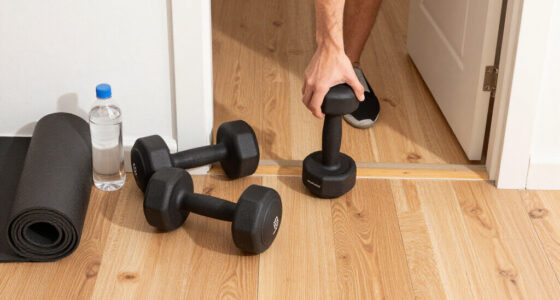
The report describes it as a workout using a pair of dumbbells. The deficit calf raise also calls for standing with the balls of the feet on the edge of a step.
How do the supersets work?
Complete all prescribed repetitions of exercise A, then exercise B without resting between the two. Rest after the second exercise for the interval listed before repeating the pair.
How often should someone do the workout?
The supplied report does not give a weekly frequency or a full training schedule. Readers should not infer one from the sets and repetitions alone; beginners may want individualized advice from a qualified trainer.
Does the report say what dumbbell weight to use?
No. It lists sets, repetitions and tempo for several movements but does not prescribe a load. Choose a weight that can be controlled with good technique, and seek professional guidance if unsure.
Source: rss