TL;DR
A Fit&Well writer says he introduced his 73-year-old father to a brief strength routine built around goblet squats, single-arm rows and overhead presses. The article describes the exercises and easier variations, but does not report measured results or establish that the routine is suitable for every older adult.
Fit&Well has published a first-person report describing how one writer adapted a three-move dumbbell routine for his 73-year-old father, who had let strength training slip while caring for his wife, who has Parkinson’s. The plan uses a goblet squat, a single-arm row and an overhead press, with lighter or supported versions suggested for people who need them.
The writer says his father had been active but had recently neglected strength work because caregiving left him with limited time. In response, the writer—who describes himself as a personal trainer—bought him light-to-medium dumbbells and reviewed basic lifting form, including holding a weight close to the chest, bracing the core and keeping an upright position. They spent a few weeks practicing bodyweight patterns before adding the three weighted exercises.
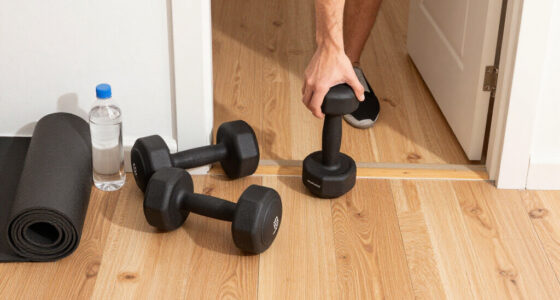
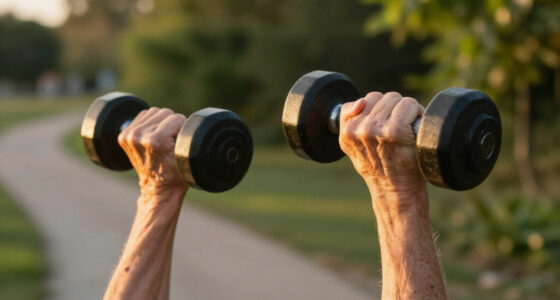
The proposed routine lists three sets of 8 to 12 repetitions for each move. The goblet squat holds one dumbbell at the chest while the exerciser bends the knees and hips, then pushes back to standing. The single-arm row uses one hand for support on a sturdy surface as the other pulls a dumbbell toward the rib cage. The overhead press starts with dumbbells at shoulder level and presses them upward before lowering them with control.
The article offers modifications rather than presenting one version as appropriate for everyone. It suggests bodyweight or chair-assisted squats, a kneeling position for rows, and a seated press with back support or pressing one arm at a time. A heavier weight or push press is offered as a progression, but the report does not say which versions the father used, how often he performed the routine or what measurable changes followed.
Three Moves Linked to Daily Tasks
The routine is framed around movements that support ordinary activities, not only gym performance. Fit&Well’s account connects squatting with rising from a chair or toilet and bending to pick something up; rowing with pulling objects, such as bags; and pressing overhead with reaching for shelves or lifting items. Those examples explain why the writer selected the exercises for a time-limited plan.
The report also reflects a practical challenge for caregivers: finding time for personal exercise while providing support to someone else. Still, this is a personal account and suggested program, not a clinical study. It supplies no test results showing that the father gained strength, improved balance or reduced injury risk, and it cannot show that the same plan will work for other people in their 70s.
For readers considering similar training, the article’s progression—from bodyweight practice to light-to-medium weights—offers a cautious structure. Exercise choice and loading may need to change based on a person’s health, mobility, balance and experience. Anyone unsure about safe movement or managing a health condition should consult a qualified health professional or fitness coach before starting or increasing resistance.
Practice Came Before Dumbbells
The writer says his father had been active before a recent period with less strength training. The account identifies his caregiving responsibilities, rather than an injury or diagnosed limitation, as the reason he had little time for himself. It does not give details about his medical history, previous training experience or any professional assessment of his fitness.
Before using weights, father and son practiced bodyweight versions of four basic patterns: the squat, hip hinge, lunge and push. The writer says this technique-focused period lasted a few weeks. He then narrowed the plan to three exercises, describing them as a way to work the lower body, back and shoulders while addressing mobility and functional strength within a limited schedule.
Each exercise description includes form cues and a lower-difficulty option. For example, the squat instructions advise keeping the chest upright and knees tracking over the toes, while the row calls for a flat back and controlled lowering. The press instructions emphasize an engaged core and controlled movement. These are the article’s coaching directions; the source does not provide independent evaluation of the program.
“He cares for my mother, who has Parkinson’s, so he ends up with little time for himself.”
— Fit&Well writer describing his father
Results and Training Schedule Unreported
The report does not state how frequently the father completed the exercises, how long each session took, what dumbbell weights he used or whether he followed the listed sets and repetitions. It also gives no follow-up measurements of strength, mobility, balance, pain or other outcomes. The headline describes the routine as a way to build functional strength, but the article provides an individual training account, not evidence of a measured result.
It is also unclear whether the father had medical conditions or movement restrictions beyond the caregiving circumstances described. No clinician’s assessment or advice specific to him appears in the supplied report. The exercise variations are options in the article, not individualized recommendations for every older adult, and the source does not establish that all three movements are safe or suitable for every reader.
Progress Gradually and Check Form
The article sets out a progression from bodyweight practice to light-to-medium dumbbells, then gives simpler alternatives and a harder press variation. It does not announce a follow-up, a new program or a later check of the father’s progress. The next reported milestone is therefore unknown.
Readers using the account as a starting point can focus on controlled movement and a manageable load rather than assuming they should immediately complete every listed set. A stable chair or support surface is specified for some modifications. People with concerns about balance, pain, past injuries or health conditions should seek individualized guidance from a qualified professional, and beginners can benefit from coaching on form before adding weight.
Key Questions
What are the three exercises in the routine?
The routine described by Fit&Well consists of a dumbbell goblet squat, a single-arm dumbbell row and a dumbbell overhead press.
How many sets and repetitions does the article suggest?
The report lists three sets of 8 to 12 repetitions for each exercise. It does not say how often the father performed the workout or confirm that he completed the full prescription.
What easier options does the article describe?
It suggests starting with a bodyweight or chair-assisted squat, doing a row in a kneeling position for added stability, and using a seated overhead press with back support. The press can also be done one arm at a time.
Did the report show that the routine improved the father’s strength?
No measured results are included. The article explains the writer’s plan and the exercises’ intended everyday uses, but does not report before-and-after strength or mobility assessments.
Is this routine appropriate for every older adult?
The report does not establish that it is. A person’s health, balance, mobility and experience can affect which exercises and weights are suitable; readers with concerns should ask a qualified health professional or fitness coach for individualized guidance.
Source: rss