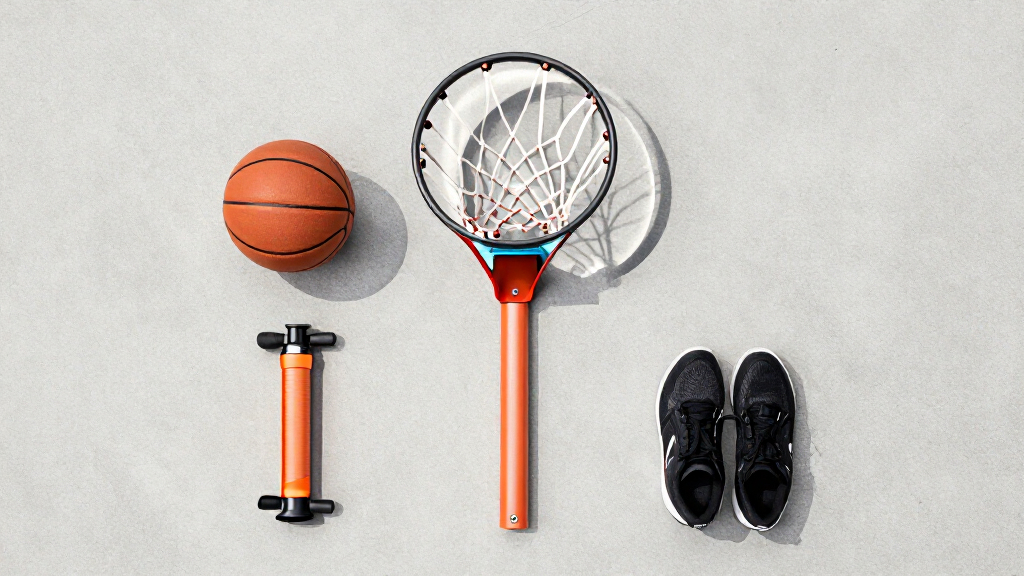

For home practice, the IGL Portable Basketball Hoop with a 52-inch backboard is my best overall pick because its larger target suits more ages and skill levels than the smaller options. The Lifetime NBA League Edition stands out for its shatterproof polycarbonate backboard and 7.5-to-10-foot range, while the Yohood 3-to-7-foot hoop better fits younger beginners who need a lower basket. The main tradeoffs are adjustment range, backboard size, portability, and stability: a hoop that grows with a player may take up more space, and a compact kids’ model won’t offer the same practice feel as a larger system. Read on for how all 11 options compare and which type of player each one suits best.
Complete the kit


Key Takeaways
- The IGL 52-inch model leads for shared use: its larger backboard is a stronger fit for a household with players at different ages than the 40- and 44-inch options.
- Low starting height changes who can practice independently: the Yohood adjusts from 3 to 7 feet, while several full-height models start above 5 feet or at 6.1 feet.
- The Lifetime NBA League Edition is the clearest material-focused pick: its shatterproof polycarbonate backboard and steel frame distinguish it from options whose listed details emphasize portability and adjustment.
- Several listings overlap closely: the DUMOS 6.1-to-10-foot, 44-inch models appear twice, as do IGL 40-inch options; compare the exact listing and included components before choosing between near-matches.
- Backboard dimensions and height range tell different parts of the story: a wider target can help with varied practice, while a low minimum height matters more for younger players learning to shoot.


| adjustable basketball training hoop | Height range | Warranty | Backboard | Rim |
|---|---|---|---|---|
| IGL Portable Basketball Hoop | 5.6–10 ft | 1 year | 40-inch polypropylene | — |
| IGL Adjustable Portable Basket | 7.5–10 ft | 1 year | 52 × 32 inches, shatter-resistant | 18-inch breakaway |
| Lifetime NBA League Edition Po | 7.5–10 ft | 5-year limited | 44-inch shatterproof polycarbonate | Powder-coated steel |
| DUMOS Adjustable Portable Bask | 6.1–10 ft | 1 year | 44-inch shatterproof | Shock-absorbing |
| Yohood Adjustable Portable Bas | 3–7 ft | 1 year | — | — |
| DUMOS Portable Adjustable Bask | 6.1 to 10 feet | 1 year | Shatterproof | Shock-absorbent |
| IE Sports Portable Basketball | 7.5 to 10 feet | 2 years for metal parts; 1 year for plastic parts | 50-inch shatterproof polycarbonate | Breakaway |
| IGL Portable Adjustable Basket | 3 to 10 feet | 1 year | — | — |
| CYFIE Adjustable Basketball Ho | — | — | — | — |
| DUMOS Adjustable Portable Bask | 6.1 to 10 feet | 1 year | — | Shock-absorbent |
| IGL Portable Basketball Hoop w | 5.5–10 feet | 1 year | — | — |
More Details on Our Top Picks
IGL Portable Basketball Hoop, Adjustable 5.6–10 FT, 40/44 Inch Outdoor Goal for Kids, Youth & Adults
The 5.6-to-10-foot adjustment range gives this IGL a wider starting point than the 7.5-foot minimum on the IGL 52-Inch model, so younger players can practice at a reachable height before moving up. Its 40-inch polypropylene backboard and steel rim suit everyday driveway play, while built-in wheels make it possible to reposition the hoop without a permanent installation. The base takes up to 77 pounds of water or 100 pounds of sand, with a separate optional anchor for added stability. That flexibility comes with a setup tradeoff: filling the base adds weight, and assembly involves multiple components. Compared with the DUMOS 6.1–10 ft hoop, this model starts lower, but its backboard is smaller. I’d choose it for a household prioritizing a long height range over a larger rebound surface.
Pros:- Adjusts from 5.6 to 10 feet, accommodating younger beginners and taller players.
- Main base accepts water or sand, with an optional anchor for additional support.
- Built-in wheels allow relocation without permanent installation.
- Shatterproof polypropylene backboard and weather-resistant net suit outdoor play.
Cons:- The 40-inch backboard offers less playing surface than the IGL 52-Inch model.
- A filled base is heavy to move, and assembly can take time.
- The listed 40-pound unit weight does not include the water or sand used for stability.
Best for: Families with children at different stages who want one freestanding hoop that can start below regulation height and later reach 10 feet.
Not ideal for: Players who prioritize a large backboard or need to move the hoop frequently after filling the base.
- Brand:IGL
- Model:40GLT4-B
- Height range:5.6–10 ft
- Backboard:40-inch polypropylene
- Main base capacity:77 lb water or 100 lb sand
- Anchor capacity:30 lb water or 40 lb sand
- Pole material:Powder-coated RECC steel
- Unit weight:40 lb
- Warranty:1 year
Our verdict“Choose this IGL if your family needs a low starting height and room to grow, and accept a smaller backboard and heavier moves once the base is filled.”
IGL Adjustable Portable Basketball Hoop with 52-Inch Backboard
The IGL 52-Inch model prioritizes a broader rebound surface over a low beginner setting. Its 52 × 32-inch shatter-resistant backboard is substantially larger than the 40-inch board on the other IGL in this group, making it the stronger fit for older children and adults practicing shots and rebounds. A quick-adjust handle makes height changes more convenient, but the range begins at 7.5 feet, so younger beginners cannot lower it as far as they could on the IGL 40-inch model or the DUMOS 6.1–10 ft hoop. The 50-inch base can hold up to 300 pounds of sand or 200 pounds of water; that capacity supports a stable setup, but filling and moving a 91-pound unit takes effort. I’d put this ahead of smaller-board options when playing surface matters more than easy relocation.
Pros:- Large 52 × 32-inch backboard provides more rebound and target area than the smaller IGL model.
- Quick-adjust handle supports convenient height changes within its range.
- High-capacity base accepts up to 300 pounds of sand or 200 pounds of water.
- 18-inch breakaway rim adds flexibility during play.
Cons:- The 7.5-foot minimum is too high for some young beginners.
- At 91 pounds before filling, the system is cumbersome to reposition.
- The base needs sand or water added for stability.
Best for: Older kids, teens, and adults who want a larger practice backboard and plan to keep the filled hoop in one main location.
Not ideal for: Families with very young players who need a low hoop setting, or anyone who expects to move a filled 91-pound system often.
- Brand:IGL
- Model:52GLZ2
- Height range:7.5–10 ft
- Backboard:52 × 32 inches, shatter-resistant
- Base dimensions:50 inches
- Base capacity:25 gallons; up to 300 lb sand or 200 lb water
- Rim:18-inch breakaway
- Unit weight:91 lb
- Warranty:1 year
Our verdict“Pick this IGL for its larger backboard and substantial base if your players are tall enough for a 7.5-foot minimum and the hoop will mostly stay put.”
Lifetime NBA League Edition Portable Basketball Hoop, Adjustable Height 7.5–10 Ft, 44-Inch Shatterproof Polycarbonate Backboard, Steel Frame, Black/Clear
The Lifetime NBA League Edition earns its place through a five-year limited warranty, longer than the one-year coverage listed for the IGL and DUMOS options here. Its 44-inch polycarbonate backboard, powder-coated steel rim, and weather-resistant frame make it a well-rounded choice for outdoor practice, while NBA graphics give it a distinct court-inspired appearance. The telescoping pole adjusts from 7.5 to 10 feet, matching the IGL 52-Inch model’s minimum but not the lower starting points of the IGL 40-inch or DUMOS hoops. That limits its usefulness for very young players. A wheeled base supports relocation, though the 50-pound unit and assembly work make it less appealing for someone seeking a lightweight, quick setup. I’d favor Lifetime for buyers who value longer stated warranty coverage more than a lower training height or a larger board.
Pros:- Five-year limited warranty exceeds the one-year coverage listed for the other featured models.
- 44-inch shatterproof polycarbonate backboard suits regular outdoor practice.
- Adjusts from 7.5 to 10 feet for teen and adult play.
- Wheeled portable base allows the hoop to be repositioned.
Cons:- The 7.5-foot minimum is less accommodating for young children than the IGL 40-inch and DUMOS options.
- Assembly can be time-consuming for first-time owners.
- At 50 pounds before any base fill, it may take two people to move.
Best for: Families and driveway players who want a recognizable NBA-style design, a 44-inch board, and longer stated warranty coverage.
Not ideal for: Households with young beginners who need a sub-7.5-foot setting, or buyers who want a lightweight hoop with minimal assembly.
- Brand:Lifetime
- Model:92000
- Height range:7.5–10 ft
- Backboard:44-inch shatterproof polycarbonate
- Rim:Powder-coated steel
- Frame:Weather-resistant steel
- Unit weight:50 lb
- Dimensions:69 × 44 × 146 inches (D × W × H)
- Warranty:5-year limited
Our verdict“Choose the Lifetime NBA Edition if a longer warranty and NBA styling matter more than a low starting height or effortless setup.”
DUMOS Adjustable Portable Basketball Hoop, 6.1–10 ft, 44-Inch Backboard
The DUMOS bridges the gap between kid-focused hoops and models that start at 7.5 feet: its 6.1-to-10-foot range accommodates younger players while still reaching regulation height. The 44-inch shatterproof backboard is larger than the 40-inch board on the IGL 40GLT4-B, making this a stronger choice for households that want a lower training setting without giving up as much board area. A shock-absorbing rim and fillable base add practical play features, and included tools and instructions are intended to simplify assembly. The tradeoff is that the supplied information does not state the base’s fill capacity or the hoop’s weight, so buyers have less detail for judging stability and portability than with the IGL 52-Inch model. I’d choose DUMOS for varied-age practice, not for a buyer who needs precise base specifications.
Pros:- 6.1–10-foot adjustment range suits both younger players and regulation-height practice.
- 44-inch shatterproof backboard is larger than the 40-inch IGL 40GLT4-B board.
- Shock-absorbing rim is designed to soften impact during play.
- Two wheels, assembly instructions, and tools support setup and repositioning.
Cons:- The base must be filled with water or sand for added stability.
- Base capacity and unit weight are not provided in the supplied specifications.
- Assembly is still required despite the included instructions and tools.
Best for: Families with children and teens who need a hoop that starts below 7.5 feet, reaches regulation height, and offers a 44-inch board.
Not ideal for: Buyers who want published base-capacity and unit-weight figures to plan stability and frequent relocation.
- Brand:DUMOS
- Height range:6.1–10 ft
- Backboard:44-inch shatterproof
- Rim:Shock-absorbing
- Base:Fillable with water or sand
- Wheels:2
- Frame:Metal
- Mount type:Floor mount
- Warranty:1 year
Our verdict“Pick the DUMOS for mixed-age households that want a 44-inch board and a lower setting than 7.5 feet, provided the missing base and weight details are not deal-breakers.”
Yohood Adjustable Portable Basketball Hoop for Kids, 3–7 ft
Unlike the full-height IGL and DUMOS hoops, the Yohood is built around early-stage practice: its 3-to-7-foot range lets young children work on shooting without starting at a height designed for older players. At 19 pounds, it is also much lighter than the IGL 52-Inch system, and wheels make it practical to reposition between indoor and outdoor play. Its polycarbonate backboard, alloy-steel frame, triangular support, and all-weather net provide a kid-oriented freestanding setup. The clear limitation is its 7-foot maximum: it cannot serve as a regulation-height training hoop, while both IGL models and the Lifetime reach 10 feet. I’d treat this as a starter hoop for children, not a long-term family system for teens and adults. Assembly is required, and the supplied data does not give a base-fill capacity.
Pros:- 3–7-foot adjustment range is far more accessible to young beginners than the adult-height models.
- At 19 pounds, it is lighter than the IGL 52-Inch hoop and easier to reposition.
- Suitable for indoor and outdoor play.
- Triangular support, alloy-steel frame, and all-weather net suit casual kids’ practice.
Cons:- The 7-foot maximum rules out regulation-height practice and adult play.
- Assembly is required.
- The supplied specifications do not state a base-fill capacity.
Best for: Parents of young children who want a low, lightweight hoop for basic shooting practice indoors or outdoors.
Not ideal for: Families seeking a hoop that will support teen or adult practice at regulation height, or buyers who need stated base-fill capacity.
- Brand:Yohood
- Height range:3–7 ft
- Dimensions:29 × 29 × 98 inches
- Unit weight:19 lb
- Backboard material:Polycarbonate
- Frame material:Alloy steel
- Mount type:Freestanding
- Use:Indoor and outdoor
- Warranty:1 year
Our verdict“Choose the Yohood as a lightweight first hoop for young children, but skip it if you need a system that grows into regulation-height practice.”
DUMOS Portable Adjustable Basketball Hoop with 44-Inch Backboard
I’d choose this DUMOS for households that want a conventional portable hoop with enough adjustment for growing players and adult-height shooting. Its 6.1-to-10-foot range reaches lower than the IE Sports hoop’s 7.5-foot minimum, giving younger players more room to build form before moving up. The 44-inch shatterproof backboard and shock-absorbent rim provide a straightforward practice setup, while two wheels help when the play area needs to serve another purpose.
The tradeoff is that its backboard is smaller than IE Sports’ 50-inch panel, and it still needs water or sand in the base before play. Assembly is required as well. Compared with the IGL hoop that lowers to 3 feet, this DUMOS is less adaptable for very young children, but its listed range is a practical fit for older kids and mixed-age family use.
Pros:- Height adjusts from 6.1 to 10 feet for a broad range of older players
- Shatterproof 44-inch backboard suits routine shooting practice
- Two wheels make repositioning easier
- Fillable base supports a freestanding setup
Cons:- Base must be filled with water or sand to add stability
- Assembly is required
- Backboard is smaller than the IE Sports 50-inch option
Best for: Families with school-age children and adults who want one wheeled hoop that adjusts to regulation height for driveway or indoor practice.
Not ideal for: Households with very young beginners who need a hoop below 6.1 feet, or players who want a larger backboard than 44 inches.
- Backboard size:44 inches
- Height range:6.1 to 10 feet
- Backboard:Shatterproof
- Rim:Shock-absorbent
- Base:Fillable with water or sand
- Wheels:2
- Usage:Indoor and outdoor
- Warranty:1 year
Our verdict“I’d pick this DUMOS for family practice when a 6.1-to-10-foot adjustment range matters more than having a larger backboard or a very low starting height.”
IE Sports Portable Basketball Hoop with Adjustable Height
The IE Sports hoop is the pick I’d favor when a larger target matters more than a low starting height. Its 50-inch shatterproof polycarbonate backboard gives players more surface for bank shots than the 44-inch panels on both DUMOS models. The 18-inch breakaway rim also makes it better suited to varied shooting practice, including play that puts more movement through the rim. Height adjusts from 7.5 to 10 feet, so older children, teens, and adults can practice at familiar heights.
That range is narrower at the low end than the DUMOS options, and it cannot accommodate younger beginners as well as the IGL hoop that drops to 3 feet. The base still needs sand or water for stability, and the warranty differs by material: two years for metal parts, one for plastic. I’d choose it for a bigger target, not maximum height flexibility.
Pros:- 50-inch shatterproof polycarbonate backboard offers more target area than the DUMOS 44-inch models
- Breakaway rim supports varied shooting and play
- Height adjusts up to 10 feet
- Warranty covers metal parts for two years
Cons:- 7.5-foot minimum height limits use for younger beginners
- Base needs sand or water ballast for stability
- Plastic parts have a shorter, one-year warranty
Best for: Teenagers and adult recreational players who want a portable hoop with a larger backboard and a breakaway rim for varied shooting practice.
Not ideal for: Families with younger children who need a hoop below 7.5 feet, or buyers who prefer a simple 44-inch backboard setup.
- Backboard:50-inch shatterproof polycarbonate
- Height range:7.5 to 10 feet
- Rim size:18 inches
- Rim:Breakaway
- Overhang distance:13.3 inches
- Frame material:Alloy steel
- Base:Fillable with sand or water
- Warranty:2 years for metal parts; 1 year for plastic parts
Our verdict“I’d choose the IE Sports hoop for older players who value a larger backboard and breakaway rim more than a low adjustment range.”
IGL Portable Adjustable Basketball Hoop, 3–10 ft, with 40 × 24 in Shatterproof Backboard
This IGL stands apart from the two DUMOS hoops because its adjustment range starts at just 3 feet. That makes it the most adaptable choice here for a child learning to shoot at a reachable height, with room to raise the rim as skills develop and eventually practice at 10 feet. Its 40 × 24-inch shatterproof backboard is smaller than the IE Sports 50-inch panel, but the exceptionally broad height range is the more distinctive advantage for a family buying for several ages.
The dual-fill base can take up to 77 pounds of water or 100 pounds of sand in the main base, plus ballast in the anchor base. That added stability comes with setup work: assembly is listed at about 45 minutes, and the 40-pound hoop still needs filling before use. I’d favor this over the DUMOS models for height flexibility, but not for a larger backboard.
Pros:- 3-to-10-foot range accommodates beginners through adult-height practice
- Dual-fill base offers separate main and anchor ballast capacity
- Built-in wheels aid movement and storage
- Shatterproof polycarbonate backboard supports regular practice
Cons:- 40 × 24-inch backboard is smaller than the IE Sports 50-inch panel
- Assembly takes about 45 minutes according to the product description
- Base requires water or sand ballast
Best for: Families with young children who want a freestanding hoop that can start low and rise as players grow toward adult-height practice.
Not ideal for: Players who prioritize a larger backboard or want to avoid assembly and filling multiple base sections.
- Height range:3 to 10 feet
- Backboard size:40 × 24 inches
- Backboard material:Polycarbonate
- Main base capacity:77 lb water or 100 lb sand
- Anchor base capacity:30 lb water or 40 lb sand
- Item weight:40 lb
- Frame material:Metal
- Warranty:1 year
Our verdict“I’d choose this IGL for a growing family that needs a very low starting height and can accept a smaller backboard and more involved setup.”
CYFIE Adjustable Basketball Hoop
Unlike the freestanding DUMOS and IGL models, the CYFIE is designed to mount on a door or wall, so I’d shortlist it when floor space is the main constraint. Its 7-foot maximum height makes it a recreational practice hoop rather than a full-height driveway substitute, but that can suit teens and beginners working on close-range shots indoors. The choice of door-mounted or wall-mounted installation gives buyers more placement options than a portable base, and the package includes a ball, pump, net, and mounting accessories.
The limitation is the fixed mounting context: it does not offer the wheels or fillable base of the DUMOS hoops, and the supplied information does not state a height adjustment range or backboard dimensions. Buyers should check that their door or wall suits the mounting hardware before choosing it. I’d pick it for compact practice, not for full-court-style driveway play.
Pros:- Door or wall mounting avoids taking up floor space with a freestanding base
- Suitable for indoor and outdoor practice
- Package includes a ball, pump, net, and mounting accessories
- Anti-slip pads are included
Cons:- Maximum height is 7 feet, below the 10-foot height offered by the DUMOS and IGL hoops
- Requires a compatible door or wall and installation
- Backboard dimensions and a specific adjustment range are not provided
Best for: Teens and recreational beginners who need an indoor-friendly hoop for a compatible door or wall and want basic practice accessories included.
Not ideal for: Players seeking a portable freestanding hoop, regulation-height practice, or a clearly specified broad height-adjustment range.
- Recommended age:12 and above
- Maximum height:7 feet
- Mounting options:Door-mounted or wall-mounted
- Usage:Indoor and outdoor
- Frame material:Alloy steel
- Materials:Metal and plastic
- Included components:Ball, backboard, pump, rim, net, riser plates, mounting accessories, anti-slip pads
- Model:L056-LQJ
Our verdict“I’d choose the CYFIE for compact beginner practice where mounting is practical and a 7-foot maximum is enough.”
DUMOS Adjustable Portable Basketball Hoop, 6.1–10 ft, 44-Inch Backboard
This second DUMOS listing offers much the same core setup as the DUMOS Portable Adjustable Basketball Hoop with 44-Inch Backboard: a 6.1-to-10-foot range, 44-inch shatterproof panel, shock-absorbent rim, fillable base, and two wheels. I’d give it a distinct place for buyers comparing the specific LQJ-P10FT-V3-RD model, since the supplied model number makes identification clearer than the other DUMOS listing. Its height span suits older children through adults, but neither DUMOS model lowers as far as the IGL’s 3-foot minimum.
The practical drawbacks are also similar: the base needs water or sand ballast, and assembly is required. The IE Sports option offers a larger 50-inch backboard, while this DUMOS keeps to a more familiar 44-inch format. I’d treat this as a simple portable practice choice, not an upgrade over the other DUMOS without a model-specific reason.
Pros:- Adjusts from 6.1 to 10 feet for older children and adults
- 44-inch shatterproof backboard and shock-absorbent rim suit routine shooting
- Two wheels make repositioning easier
- Fillable base supports a portable freestanding setup
Cons:- Base requires water or sand ballast for stability
- Assembly is required
- Offers no stated advantage over the other listed DUMOS 44-inch model
Best for: Buyers who want a clearly identified DUMOS model with 6.1-to-10-foot adjustment, wheels, and a 44-inch backboard for family practice.
Not ideal for: Families needing a low starting height for small children, or buyers seeking a larger backboard or a clearly distinct feature set from the other DUMOS option.
- Height range:6.1 to 10 feet
- Backboard size:44 inches
- Rim:Shock-absorbent
- Base:Fillable with water or sand
- Wheels:2
- Frame material:Alloy steel
- Usage:Indoor and outdoor
- Warranty:1 year
- Model number:LQJ-P10FT-V3-RD
Our verdict“I’d choose this DUMOS when its listed model number matches your buying needs, while comparing it closely with the otherwise similar DUMOS 44-inch option.”
IGL Portable Basketball Hoop with 40-Inch Backboard, Adjustable Height
The 5.5-to-10-foot hand-crank range gives this IGL hoop room to serve younger players as they grow and adults practicing at regulation height. Its 40 × 24-inch polycarbonate backboard is more compact than the 44-inch board on the Lifetime NBA League Edition, so it takes up less space but offers a smaller target for bank shots. For a portable hoop, the fillable base plus a separate sand-fillable anchor is a useful stability setup; when filled, the system weighs over 140 pounds. Wheels make repositioning possible, though the 57-pound unfilled unit and required assembly mean moving or setting it up still takes effort. I’d choose it for a household that values adjustable height and a more secure base over a larger backboard, but not for players who want the broadest rebound surface.
Pros:- Hand-crank adjustment spans 5.5 to 10 feet for a wide range of player heights.
- Fillable base and separate sand-fillable anchor add stability.
- Rolling wheels help with repositioning between indoor and outdoor spaces.
- Reinforced polycarbonate backboard and dual-spring rim support regular practice.
Cons:- The 40 × 24-inch backboard is smaller than the 44-inch boards on some alternatives.
- At 57 pounds before filling, the hoop may be strenuous to move or position.
- Assembly is required.
Best for: Families with teens and adults who want one hoop for different skill levels and need to roll it between practice areas.
Not ideal for: Players prioritizing a larger backboard for bank shots, or buyers who need a lightweight hoop that is easy to carry and assemble.
- Backboard size:40 × 24 inches
- Backboard material:Polycarbonate
- Height range:5.5–10 feet
- Rim size:18 inches
- Base:Fillable with sand or water
- Additional anchor:Fillable with 40 lb of sand
- Product weight:57 pounds
- Mobility:Rolling wheels
- Warranty:1 year
Our verdict“Choose this IGL for adjustable-height practice with added base stability, but pick a larger-backboard model if rebound target area matters more.”
How We Picked
I compared the 11 listed hoops on the details most likely to affect everyday training: adjustable height and minimum setting, backboard size and stated material, portability, and suitability across age groups. A broad height range matters when a hoop needs to serve growing players; a low starting point matters most for young beginners. Backboard size and construction help distinguish systems intended for varied practice from compact setups built around basic shooting.
The ranking favors models with a clear advantage for a defined buyer, not simply the longest feature list. The IGL 52-inch hoop ranks first for its larger backboard and broad household appeal; the Lifetime model follows for its specified backboard material and conventional 7.5-to-10-foot range. Lower-height options earn their place for younger players, while listings with sparse or overlapping specifications rank lower because buyers have less information to compare. I do not infer unlisted details such as base capacity, assembly difficulty, or weather performance.
Factors to Consider When Choosing Adjustable Basketball Training Hoops
Choosing a hoop is less about finding the widest adjustment range and more about matching its limits to the players and space you actually have. I’d compare the minimum height, backboard dimensions, portability, and the listing’s construction details before treating two similar-looking models as interchangeable.
Match the Minimum Height to the Youngest Player
Buyers often focus on whether a hoop reaches regulation height and overlook how high it starts. For a young child, a 3-foot minimum can make independent practice possible; a model starting above 5 or 6 feet may be frustrating even if it eventually reaches 10 feet. If several ages will share the hoop, check both ends of the range rather than choosing by the top setting alone. A low setting also has limits: children can outgrow it, so think about how long the hoop needs to serve them. Pick the lowest range that fits the youngest regular player without sacrificing a useful upper setting for older users.
Choose Backboard Size for the Kind of Practice You Want
A larger backboard gives players more target area for bank shots and can feel more forgiving during varied practice. Smaller boards can suit a driveway where space is tight or a child who is learning basic shooting, but they offer a different experience from a larger household system. Don’t compare dimensions without checking what the measurement describes; listings may give one overall width or separate height-and-width figures. Backboard material matters too, but only treat it as a differentiator when the listing identifies it clearly. If close practice feel matters, favor a model with stated dimensions and material over one with vague specifications.
Treat Portability as a Space and Stability Tradeoff
A portable hoop can be moved out of the way, but “portable” does not tell you how easy it is to reposition or how firmly it stays put during play. Check the product information for base design, recommended filling, and any placement guidance instead of assuming all wheeled systems behave alike. A bigger backboard and a full-height setting may call for more room around the hoop and a suitable surface. Measure the practice area, including space behind and beside the basket, before ordering. If the hoop will stay in one spot, portability may matter less than a stable setup and a clear space plan.
Pay for Specifications That Solve Your Actual Problem
A higher-spec model makes sense when its feature addresses a real need: a bigger backboard for family practice, a lower minimum for a child, or a stated shatterproof material for a buyer prioritizing that construction detail. Extra features are less useful if the hoop won’t fit the driveway or its adjustment range doesn’t suit the player. Compare listings with the same backboard size and height range closely, especially when product names are nearly identical. Don’t assume a repeated model name guarantees the same package or components; verify the exact listing details. This keeps the decision centered on usable differences rather than small wording changes.
Check Assembly, Care, and Outdoor Exposure Before Buying
Outdoor use adds practical questions that product names alone cannot answer. Look for the manufacturer’s assembly instructions, maintenance guidance, and limits on weather exposure, then judge whether those demands fit your routine. A hoop that is moved or adjusted often may need more hands-on upkeep than a fixed practice setup. Avoid assuming a backboard described as shatterproof makes every part of the system weatherproof or maintenance-free. If those details are not clear in the listing, check the product documentation before making the final choice.
Frequently Asked Questions
Which adjustable hoop is the best fit for a household with both children and adults?
I’d start with the IGL 52-inch model because its larger backboard and adjustable format make it the broadest match in this group for shared use. Check that its lowest setting works for the youngest player, though; backboard size cannot make up for a basket that is too high to reach comfortably. The Lifetime NBA League Edition is another strong candidate if its 7.5-foot minimum suits everyone who will use it. For a child who needs a much lower setting, the Yohood’s 3-to-7-foot range is a better fit, but it won’t serve adult-height practice in the same way.
Is a 40- or 44-inch backboard too small for serious practice?
Not automatically: either size can work for basic shooting drills and a compact home setup. The difference becomes more noticeable if players want a larger target for bank shots or expect a more spacious practice area around the basket. This roundup includes options with 40-, 44-, and 52-inch backboards, so the larger IGL model has a clear size advantage for that use. A smaller board may still be the sensible choice when space is limited or the primary user is a beginner. Compare the dimensions with your available area and practice goals rather than treating any one size as universally right.
Should I choose a hoop that adjusts down to 3 feet or one that reaches 10 feet?
Choose based on who needs the hoop now and who is likely to use it later. A low minimum, like the Yohood’s 3-foot setting, can help young beginners shoot without an adult resetting the basket to a more reachable height. A 10-foot maximum supports taller-player practice, but it does not make a high minimum comfortable for a small child. If multiple ages will share the hoop, look for a range that covers both the youngest player’s reach and older players’ practice needs. Confirm the exact adjustment range in the listing, since similar names can refer to different specifications.
How can I compare two hoops with nearly identical product names?
Compare the details that change the playing experience: height range, backboard dimensions, stated material, and the included frame or support components. This roundup contains repeated or closely overlapping DUMOS and IGL listings, so the name alone is not a reliable way to tell them apart. Read the specifications for the exact product page you plan to buy and check whether the dimensions and included parts match the version you expect. If important details are missing, consult the manufacturer’s documentation rather than filling in gaps from a similarly named model. That extra check can prevent choosing a hoop with the wrong starting height or board size.
What should I check before placing a portable hoop on a driveway?
Measure the available playing area and the path the hoop may need to travel, then check the product instructions for base filling, placement, and movement guidance. A portable label does not tell you the base’s capacity or how well the system suits your surface, so verify those details for the specific model. Keep enough open space for players to approach the basket and move around it safely. Also review the manufacturer’s care guidance for outdoor exposure, since a portable design does not by itself establish weather resistance. When the listing leaves these points unclear, consult the product manual before setting up the hoop.
Conclusion
For a shared home setup, my best overall pick is the IGL 52-inch model, which stands apart from the smaller-board options. The best premium-leaning choice is the Lifetime NBA League Edition for buyers who value its specified shatterproof polycarbonate backboard and steel frame. For beginners, especially younger children, the Yohood 3-to-7-foot hoop offers the lowest stated starting height in this lineup. The best value depends on the exact listing: compare the DUMOS and IGL near-matches by height range, backboard dimensions, and included components rather than assuming the similar names mean the same setup. For a compact practice area, start with a 40- or 44-inch model; for a wider target shared by different ages, look first at the 52-inch IGL. Choose the hoop whose minimum height, footprint, and listed construction fit your players and space.