
TL;DR
Boston-based Pilates instructor Julie Erickson recommends a three-move sequence—roll up/roll down, swan prep and spine twist—to work on mobility and back strength. The Fit&Well report describes potential benefits but provides no study or timeline showing that the routine is the quickest way to improve posture or reduce stiffness.
A three-move Pilates routine recommended by Boston instructor Julie Erickson combines a roll up/roll down, swan prep and spine twist for people looking to work on posture and stiffness, according to Fit&Well. Erickson says practicing the sequence regularly can support mobility and back strength, but the report does not establish that it is the quickest method or provide evidence of how quickly results may appear.
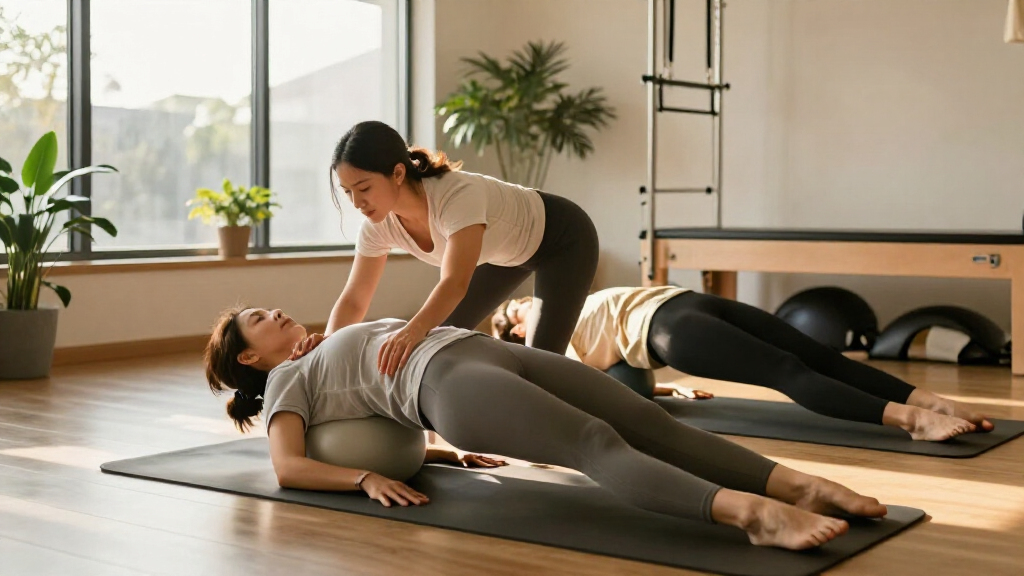
The sequence is presented as a short series of controlled movements that involve the spine, trunk and back. For the roll up/roll down, the instructions call for sitting with the legs straight, then rolling the torso toward the floor and curling back up to sitting. The suggested amount is 8 to 10 repetitions. People who find the movement difficult can roll down only halfway or secure their feet under a strap or couch, the report says.
The second exercise, swan prep, starts lying face down with the hands beside the ribcage and elbows bent. The person presses into the hands to lift the chest while drawing the shoulders back, then lowers slowly. The report suggests five repetitions; lifting higher or straightening the arms is offered as a harder variation for those able to do it.
For the spine twist, the instructions are to sit with legs extended, arms out to the sides and shoulders relaxed, then rotate the ribcage without turning the hips or lower back. The movement is repeated five times on each side. The supplied report does not give a total session length or say how often, beyond regular practice, to do the full sequence.
A Short Sequence, Not a Proven Shortcut
The routine gives readers specific movements and repetition counts rather than a broad promise to “fix” posture. Its exercises involve spinal movement, back-muscle effort and trunk control, which may make them useful options for someone wanting to add varied movement to a day spent sitting. That practical detail is different from evidence that the sequence produces a particular health outcome.
Readers should treat “quickest way” as the framing of the headline, not a conclusion established in the material provided. There is no comparison with other exercise plans, no measurement of posture or stiffness, and no stated timeframe for improvement. The report attributes the recommendation to Erickson, but it does not cite a clinical trial or independent assessment of this exact three-move routine.
The distinction matters because posture and stiffness can have different causes, and a brief exercise sequence may not address every cause. The routine is best understood as an instructor’s suggested practice, not a guaranteed remedy or substitute for individualized medical advice.
Desk Habits Behind the Recommendation
Fit&Well introduces the sequence in relation to long hours at a desk and looking down at a phone, habits that can involve sustained positions and limited movement. The report says the exercises may help restore mobility and strengthen the back, making it easier to sit or stand upright. Those effects are presented as the instructor’s rationale, not as measured results from the article.
Erickson is identified as a Boston-based Pilates instructor and founder of Endurance Pilates and Yoga. The source material provides exercise instructions and easier or harder variations, but no additional reporting on her assessment of individual readers, the routine’s testing, or how it compares with other ways of addressing discomfort.
“The three-move sequence is suggested for improving posture and reducing stiffness.”
— Julie Erickson, Pilates instructor and founder of Endurance Pilates and Yoga, as reported by Fit&Well
Results and Practice Schedule Remain Unspecified
The source does not establish how quickly the exercises might change posture or stiffness, whether the routine was tested, or whether it works better than other approaches. It also does not define “regularly” with a weekly schedule, specify a minimum duration of practice, or provide results for different age groups or fitness levels. The claim that it is the quickest way is therefore not supported by comparative evidence in the supplied report.
There is also no guidance in the source for people with pain, injuries or conditions that affect movement. The exercise descriptions offer modifications, but they do not amount to an individual assessment. Anyone who experiences pain or has a health concern should seek advice from a qualified health professional before attempting movements that aggravate symptoms.
Readers Can Judge Their Own Tolerance
The report provides a sequence and repetition counts, but it does not announce a follow-up study, measured results or a formal program. Anyone considering the exercises can start with the easier options described and stop if a movement causes pain. Beginners may benefit from guidance from a qualified Pilates instructor, particularly when learning controlled spinal movements.
Whether the routine helps an individual remains a personal outcome rather than a confirmed result of the report. The next useful evidence would be information on how often and for how long people practiced the sequence, along with measured changes in mobility, stiffness or posture.
Key Questions
What are the three Pilates moves in the routine?
The sequence is roll up/roll down, swan prep and spine twist, as described in the Fit&Well report.
How many repetitions does the report suggest?
It suggests 8 to 10 roll ups/roll downs, five swan preps and five spine twists on each side. The report does not specify how often to complete the full sequence.
Is this proven to be the quickest way to improve posture?
No comparative evidence is included in the supplied report. “Quickest” is not established by study results or a timeframe in the source material.
What modifications are mentioned?
For the roll up/roll down, the report suggests rolling only halfway or securing the feet under a strap or couch. It describes lifting higher or straightening the arms as harder options for swan prep.
Should someone do the routine if the movements hurt?
The source does not provide individualized medical advice. Stop movements that cause pain, and ask a qualified health professional for guidance if you have an injury, ongoing symptoms or concerns about exercising.
Source: rss