
TL;DR

Get sports gear delivered free with Prime
- Fast, free delivery on millions of items
- Prime Video, Amazon Music and more included
- Member-only deals all year
Certified personal trainer Francesco Zen told Fit&Well that shifting weight toward the outer edges of the feet and pressing the knees outward helped him engage his glutes during the overhead squat. He recommends building up through mobility and easier variations before trying the advanced movement with a barbell.
Certified personal trainer Francesco Zen says a small change in foot pressure and knee position helped him engage his glutes more effectively in the overhead squat, an advanced exercise that requires mobility and stability across the body. In advice published by Fit&Well, Zen recommends shifting weight toward the outer parts of the feet and pressing the knees outward, while building up with easier variations before attempting the movement under a barbell.
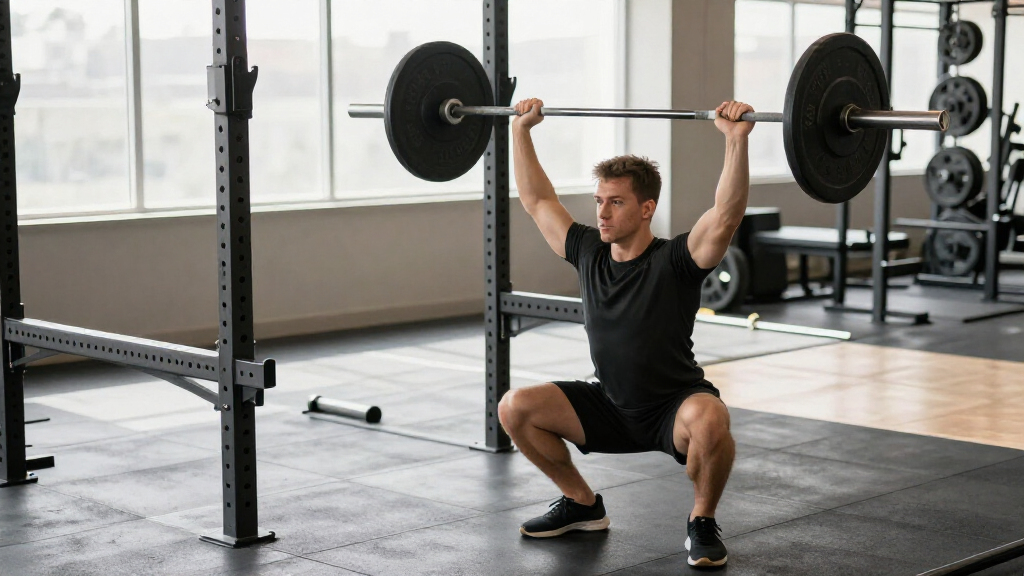
Zen, founder of ZLIFE, described the overhead squat as a full-body movement that calls for mobility, core activation and flexibility. In the exercise, a person holds a pipe or bar overhead while lowering into a squat. Zen said the glutes help support the movement throughout, and that engaging them was central to improving his own form.
His main cue is to direct pressure toward the outer edges of the feet and keep the knees pressing outward as the body lowers. Zen said the change in stance angle can alter how the movement feels. This is his coaching advice, not a reported clinical finding, and the source does not provide comparative measurements or research showing how much the cue improves performance.
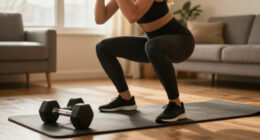
Fit&Well advises learning the movement first with bodyweight and raised arms, then using a gym dowel, plastic pipe or broomstick to practise alignment. Zen also recommends the Frankenstein squat, with the arms held forward at shoulder height, as a less demanding way to work on stability, glute and core engagement, and mobility. The article advises working with a qualified exercise professional or spotter when progressing to the overhead squat.
A Safer Path to Overhead Squats
The overhead squat places a load or training implement above the body while the lifter moves through a squat. That makes control, range of motion and shoulder positioning relevant alongside leg strength. Zen’s cue gives readers a specific adjustment to test, but it does not replace preparation or establish that every person should use the same stance.
The staged approach matters because the exercise can be demanding even before weight is added. Practising with bodyweight or a light dowel lets someone work on keeping the trunk upright and the implement stable without immediately adding a barbell. The guidance may also help readers decide when to seek coaching rather than forcing a position their mobility does not support.
For people who do not plan to lift a bar overhead, the preparatory variations still offer a way to practise squat mechanics and coordination. However, the report does not claim that the overhead squat is necessary for general fitness, nor does it quantify benefits from Zen’s particular cue.
gymnastics training dowel for overhead squat mobility practice
As an affiliate, we earn on qualifying purchases.
As an affiliate, we earn on qualifying purchases.
From Bodyweight to Barbell
The Fit&Well report presents Zen’s advice as part of a series asking certified trainers about movements they once found difficult and the cues that helped them progress. The development covered here is practical coaching guidance, rather than a new study, formal training standard or announcement from a sports organization.
The progression described begins with bodyweight squats while reaching overhead. Wall-based squat-and-reach drills and wall-facing squats with raised arms are offered as ways to practise spinal and shoulder mobility. A dowel or plastic pipe can then provide a reference for overhead alignment before someone considers a loaded version.
In the Frankenstein squat, the arms extend forward at shoulder height rather than overhead, making the position easier to stabilize, according to Zen. The report’s overhead-squat instructions then call for a shoulder-width stance, a slightly turned-out foot position, a braced core and a steady implement overhead. These are the article’s stated coaching steps, not a substitute for individualized instruction.
“The glutes support the whole movement, top to bottom.”
— Francesco Zen, as quoted by Fit&Well
lightweight plastic exercise pipe for squat form training
As an affiliate, we earn on qualifying purchases.
As an affiliate, we earn on qualifying purchases.
What the Advice Does Not Establish
The report does not give a publication date, describe Zen’s personal training history in detail, or provide testing that compares his cue with other techniques. It is not clear whether the advice has been assessed in a study or how its effects may differ among people with different mobility, proportions or training experience.
The source also does not set out individualized criteria for deciding when a person is ready to add weight. It recommends mastering the movement with a stick or pipe first and suggests seeking an exercise professional or spotter for the advanced version. Anyone experiencing pain or struggling to maintain control should not treat the cue as a way to push through those problems.
overhead squat mobility training equipment
As an affiliate, we earn on qualifying purchases.
As an affiliate, we earn on qualifying purchases.
Progress Through Unloaded Variations
Fit&Well’s guidance points readers toward a gradual sequence: practise bodyweight squats with arms raised, work on mobility, use a dowel or pipe to check alignment, and try a Frankenstein squat before attempting the full overhead version. The next step for an individual depends on whether they can maintain a stable, controlled position; the report does not prescribe a timetable or a weight target.
Readers considering a loaded overhead squat can seek guidance from a qualified trainer, as the article recommends. The source reports no planned follow-up, additional research or further announcement from Zen, so any broader evidence about the cue’s effectiveness remains outside the report.
squat wedge blocks for ankle mobility and squat practice
As an affiliate, we earn on qualifying purchases.
As an affiliate, we earn on qualifying purchases.
Key Questions
What squat cue did Francesco Zen recommend?
Zen told Fit&Well to shift weight toward the outer parts of the feet and press the knees outward while lowering, a cue he says helped him engage his glutes.
Should beginners start overhead squats with a barbell?
No. Fit&Well’s report says to practise first with bodyweight and then a dowel or plastic pipe. It describes the overhead squat as advanced and recommends mastering the movement with a light implement before using a barbell.
What is a Frankenstein squat?
It is a squat variation with the arms extended forward at shoulder height rather than held overhead. Zen says this position is easier to stabilize while working on related core, glute and mobility foundations.
Does the report prove this cue improves squat performance?
No. It presents Zen’s coaching experience and advice but does not cite a study, performance measurements or a comparison with other cues.
Source: rss
Evergreen bestsellers Picks
bestsellers
As an affiliate, we earn on qualifying purchases.