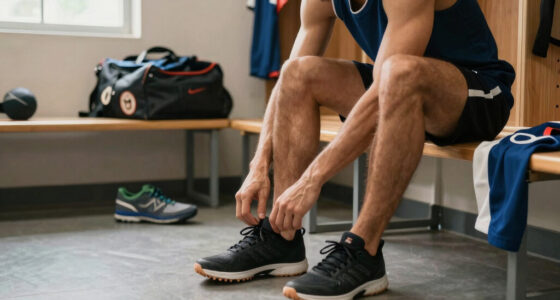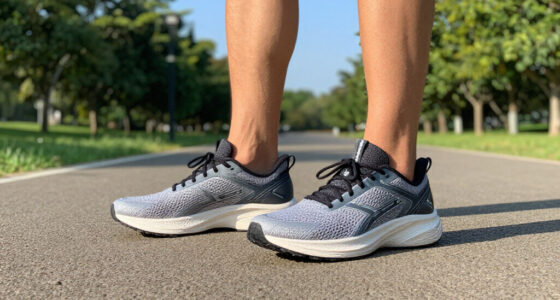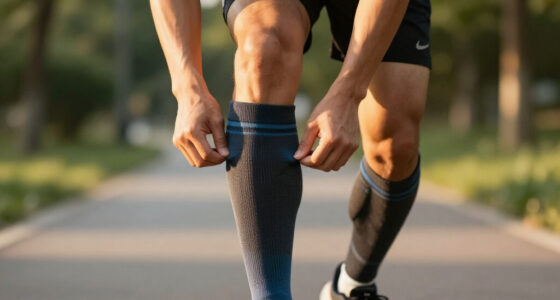
Use this guide to choose compression running socks, check that they fit, and wear them for a run without uncomfortable bunching or pressure. It is for beginner runners who want to try socks that apply gentle pressure around the foot and lower leg. Plan for about 20-30 minutes to review sizing and try them on, then assess comfort during a short run.

Get sports gear delivered free with Prime
- Fast, free delivery on millions of items
- Prime Video, Amazon Music and more included
- Member-only deals all year

Fitrell 3-Pair Compression Socks for Women and Men, 20–30 mmHg Circulation Support
- ✔ Compression: 20–30 mmHg
- ✔ Support design: Graduated, five-zone
- ✔ Fabric: 72.1% polyamide, 18.4% polyester, 9.5% spandex

Compression Running Socks, 3 Pairs, Cushioned Crew
- ✔ Compression: 15–20 mmHg
- ✔ Style: Crew
- ✔ Fabric: 35% CoolMax polyester, 30% nylon, 25% cotton, 10% spandex

ROCKBROS Knee-High Compression Socks for Women and Men
- ✔ Length: Knee-high
- ✔ Compression: Graduated, decreasing from ankle to calf; numeric level not specified
- ✔ Fabric: Nylon and spandex
Difficulty: Beginner | Time: 20-30 minutes to choose and fit; allow extra time for a first run
What You’ll Need
Tools & Materials:
- A flexible measuring tape
- The shoe size you usually wear for running
- The brand’s sizing chart
- Clean, dry feet
Knowledge:
- How to measure your calf circumference
- How to recognize numbness, pain, or unusual swelling
Compression levels and sizing labels vary by brand. Use the sizing chart for the exact sock model rather than choosing by shoe size alone. If you have circulation problems, reduced sensation, a history of blood clots, significant leg swelling, or a medical condition affecting your feet or legs, ask a healthcare professional before using compression garments. Do not use a running sock to treat an injury or medical condition.
Fitrell 3-Pair Compression Socks for Women and Men, 20–30 mmHg Circulation Support
Fitrell takes the top position because it combines the highest stated compression level in this group, 20–30 mmHg, with a cushioned sole and seamless toe. That pairing makes it the most clearly specified choice for runners who want firmer compression and extra protection where the sock meets the shoe. Its five-zone graduated design also sets it apart from the Cushioned Crew option, whose stated level is lighter at 15–20 mmHg.Breathable mesh and a moisture-wicking fabric blend are intended to help manage heat and sweat, while the cushioning may appeal to runners who find thin compression socks uncomfortable. Fitrell also offers S/M and L/XL calf options, including two calf-length choices according to the description. The catch is that choosing correctly depends on accurate calf measurement; the listed overlapping calf ranges may make selection less intuitive. Compared with ROCKBROS, Fitrell supplies a specific compression figure and more fabric detail, but it does not offer the same explicit knee-high description. Three pairs may also be limiting for runners who wear compression socks frequently.
Pros:
- Graduated five-zone design with a stated 20–30 mmHg compression level.
- Moisture-wicking blend and breathable mesh are designed to manage heat and sweat.
- Seamless toe and cushioned sole target friction and underfoot comfort.
- Men’s and women’s fit with two calf-size options.
Cons:
- Sizing depends on accurate calf measurements, which can be difficult to take or interpret.
- Three pairs may not be enough for frequent rotation.
- The firmer stated compression may not suit runners who prefer a lighter feel.
Best for: Runners who want a clearly stated 20–30 mmHg level, cushioned soles, and a multipair option and can measure their calves before selecting a size.
Not ideal for: Runners who prefer light or uncompressed socks, want minimal cushioning, or cannot confidently choose between the listed calf sizes.
Bottom line: For runners seeking the firmest quantified support in this lineup with built-in cushioning, Fitrell is the most complete choice if its calf sizing works for you.
“For runners seeking the firmest quantified support in this lineup with built-in cushioning, Fitrell is the most complete choice if its calf sizing works for you.”
Compression Running Socks, 3 Pairs, Cushioned Crew
For runners who want a lighter stated compression level, this cushioned crew is the most direct alternative to Fitrell. Its 15–20 mmHg gradient compression is lower than Fitrell’s 20–30 mmHg, which may suit shoppers seeking moderate support rather than the firmest option in this roundup. The description also names CoolMax fiber and mesh knitting, giving buyers more specific breathability cues than the general nylon-spandex description supplied for ROCKBROS.Cushioning at the toes, soles, and heels, plus a seamless toe, focuses this design on reducing rubbing in the shoe. That makes it a practical middle ground for everyday running and other activities, though it may feel bulkier than a lightweight, minimally padded sock. The listing provides a shoe-size range of 3.5–16, broader fit information than the calf measurements supplied for Fitrell or the S–L sizing noted for ROCKBROS. Still, the compression fit itself will not suit everyone, and the available care information only specifies machine washing.
Pros:
- Stated 15–20 mmHg gradient compression provides a clear moderate-support option.
- CoolMax polyester and mesh knitting are designed to wick moisture and encourage breathability.
- Cushioned toe, sole, and heel target friction in key contact areas.
- Seamless toe and broad listed shoe-size range.
Cons:
- Compression fit may feel too restrictive for runners who prefer ordinary socks.
- Cushioning may be more than runners seeking a thin, close-to-shoe feel want.
- The supplied care guidance only specifies machine washing.
Best for: Runners who want a stated 15–20 mmHg level, crew-height coverage, and cushioning across the toe, sole, and heel.
Not ideal for: Runners who want firm 20–30 mmHg support, a knee-high sock, or a low-bulk feel with little padding.
Bottom line: Choose this crew when moderate stated compression, breathable materials, and cushioning matter more than firm support or knee-high coverage.
“Choose this crew when moderate stated compression, breathable materials, and cushioning matter more than firm support or knee-high coverage.”
ROCKBROS Knee-High Compression Socks for Women and Men
ROCKBROS is the coverage pick: its knee-high length and graduated ankle-to-calf support make it the option for runners who want a taller sock than either crew-style description provides. Ribbed cuffs are intended to help it stay in place, while a lightweight nylon-spandex blend aims to keep the design flexible and breathable. The textured, reinforced sole adds cushioning and grip inside shoes, giving it a more structured underfoot feel than a simple lightweight sock.The tradeoff is that the compression is described as graduated but no mmHg level is provided. Fitrell and Cushioned Crew both state a range, so buyers who are comparing support by number have less information here. ROCKBROS also lists unisex S–L sizing, which is narrower guidance than the broad shoe-size range given for Cushioned Crew, and may make the fit harder to judge. Choose it for coverage and cuff design; skip it if a measurable compression level or more detailed sizing is central to your decision.
Pros:
- Knee-high length covers more of the lower leg than the crew options.
- Graduated ankle-to-calf design and ribbed cuffs focus on supportive, secure coverage.
- Lightweight nylon-spandex blend is designed for stretch and breathability.
- Textured, reinforced sole adds cushioning and grip inside shoes.
Cons:
- No numeric compression level is supplied, making support harder to compare with the other picks.
- Sizing is listed only as unisex S–L.
- Knee-high coverage may feel excessive for runners who prefer crew socks.
Best for: Runners and hikers who prefer knee-high coverage, a stay-put cuff, and a textured sole for use across activities.
Not ideal for: Shoppers who need a stated mmHg level to compare support, want a crew sock, or need more sizing detail than S–L.
Bottom line: ROCKBROS is the most suitable pick for runners prioritizing knee-high coverage and secure cuffs, as long as the unspecified compression level is acceptable.
“ROCKBROS is the most suitable pick for runners prioritizing knee-high coverage and secure cuffs, as long as the unspecified compression level is acceptable.”
As an Amazon Associate we earn from qualifying purchases.
Before You Start
Decide whether you want a knee-high sock or a shorter style, then check where the compression is meant to sit. Many running styles cover the foot and calf, while some sleeves leave the foot uncovered. Compression socks are not a substitute for well-fitting running shoes. If you already have persistent calf pain, one-sided swelling, skin changes, or numbness, pause and seek medical advice instead of trying to solve the problem with socks.
Step-by-Step Instructions
Step 1: Measure your calf
Sit with your foot flat and your leg relaxed. Wrap the measuring tape around the widest part of your calf without pulling it tight. Record the measurement, then check the brand’s chart alongside your shoe size. If the chart asks for ankle circumference or leg length too, take those measurements as directed by the brand.
Tip:Measure both calves if they differ noticeably, and follow the brand’s instructions for choosing a size. Do not guess based on your usual clothing size.
Check: You have the measurements the chart requests and can identify the size range that includes them.
Step 2: Choose a size and style
Select a size that matches the chart for the specific sock. Choose a height that suits your run and clothing: knee-high socks cover the calf, while a compression sleeve may leave the foot free. Check that the product is intended for running, feels appropriate for your needs, and has no seams or features likely to rub in your shoes.
Tip:If your measurements fall between sizes, use the brand’s fit guidance or contact its support team. Do not size down to make the sock feel more compressive.
Check: The selected size fits the chart, and the sock style covers the areas you want without interfering with your running shoes.
Step 3: Inspect the socks
Before putting them on, check the label for washing and care instructions. Look over the fabric, seams, heel pocket, and toe area for damage or rough spots. Confirm that each sock is for the correct foot if the pair is shaped left and right.
Tip:Try them on with the running shoes and socks you plan to use. A fit that feels fine barefoot can feel crowded inside a snug shoe.
Check: The socks are intact, correctly oriented, and compatible with your running shoes.
Step 4: Put the socks on smoothly
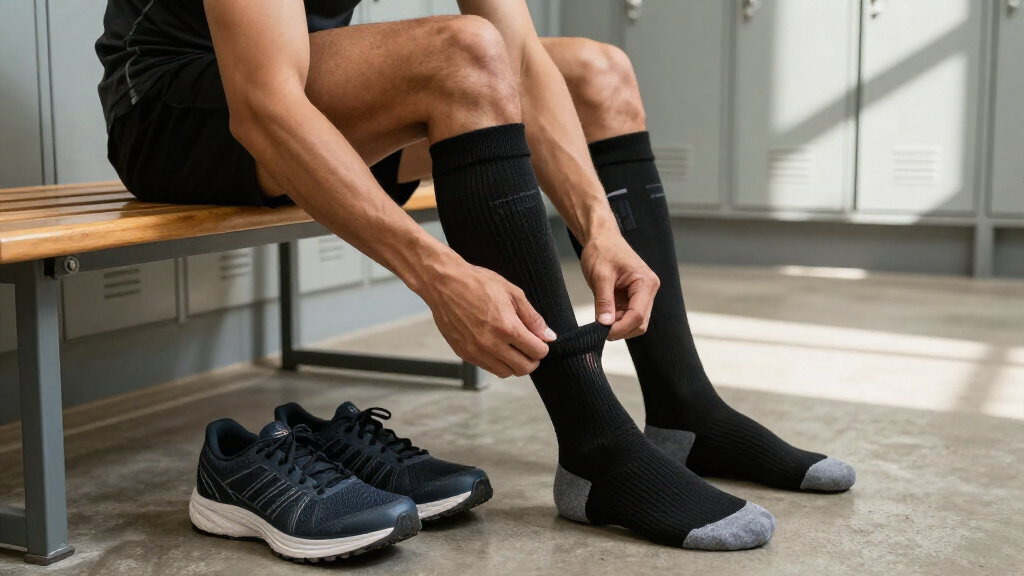
Gather the sock down toward the toe instead of pulling it up by the cuff. Slide your foot in, settle the heel into its pocket, and gradually unroll the fabric up your lower leg. Smooth out folds as you go. Set the top band flat below the knee, following the product’s design, and do not fold or roll it over.
Tip:Use a donning aid if the sock is difficult to put on, and follow the aid’s directions. Avoid yanking hard on the fabric or top band.
Check: The heel and toe sit in place, the fabric lies flat, and the top band is not doubled over.
Step 5: Check the fit while standing
Stand up and walk around for a few minutes. Check that the sock feels snug and evenly supportive without sharp pressure, pinching, burning, or tingling. Look for wrinkles behind the ankle or knee, and make sure the toe area does not pull your toes together. Put on your running shoes and confirm that your feet still have enough room.
Tip:Snugness is expected; pain, numbness, cold toes, color changes, or a deep band cutting into the skin are signs to remove the sock.
Check: You can walk comfortably, move your toes freely, and wear your shoes without new pressure or rubbing.
Step 6: Test them on a short run
Wear the socks for an easy, shorter run before relying on them for a long session or race. Pay attention to your feet and calves during the run. Stop and remove the socks if you notice pain, tingling, numbness, unusual tightness, or worsening swelling. Afterward, check for persistent marks, irritation, or blisters.
Tip:Try the socks on a familiar route and avoid changing shoes, socks, and training intensity all at once. That makes rubbing or discomfort easier to identify.
Check: You complete the test run without discomfort that persists, skin irritation, or a change in normal foot sensation.
Step 7: Wash and store them
Follow the care label after wearing the socks. Wash them as directed, avoid heat or products the label warns against, and let them dry fully before storing. Check the fabric and elastic regularly; replace the pair if it becomes damaged, stretched out, or no longer fits as intended.
Tip:Compression garments can lose their fit with repeated use and washing. Use the brand’s care and replacement guidance.
Check: The socks are clean, dry, intact, and stored without stretching the cuff.
Common Mistakes to Avoid
- Choosing a smaller size for stronger compression. — Use the model’s chart and measurements. A sock that is too tight can cause pain, numbness, or restricted movement.
- Leaving wrinkles or folding the top band. — Settle the heel, smooth the fabric, and keep the cuff flat. Folds can create pressure points and rub during a run.
- Wearing a new pair for a long race or run right away. — Test the socks on a short, easy run and check your skin afterward before using them for longer sessions.
- Ignoring discomfort because compression is supposed to feel snug. — Remove the socks if you feel pain, tingling, numbness, coldness, or notice color changes. Snugness should not affect normal sensation or movement.
Troubleshooting
Problem: The sock is very difficult to pull on.
Solution: Recheck the size chart and your measurements. Gather the sock down to the toe and unroll it gradually; consider a donning aid. Do not keep pulling forcefully or size down.
Problem: The top band digs into your leg or leaves deep marks.
Solution: Remove the sock and check that it is not folded or positioned incorrectly. If the band still digs in when flat, the size or style may not suit you; consult the brand’s fit guidance.
Problem: Your toes feel numb, cold, or squeezed.
Solution: Stop running and remove the socks. Check for bunching and confirm that your shoes have adequate toe room. Do not wear the socks again until the fit issue is resolved; seek medical advice if symptoms persist.
Problem: The socks rub or cause a blister.
Solution: Stop using them until the skin heals. Check for wrinkles, rough seams, moisture, and shoe fit. Try a different size or model only after identifying and correcting the source of friction.
What Success Looks Like
The socks match the brand’s size chart, sit flat with the heel and toe in position, and feel evenly snug without pain or loss of sensation. You can wear them in your running shoes and complete a short test run without persistent irritation, unusual marks, or discomfort. If symptoms appear, remove the socks and address the fit before another run.
Next Steps
Use the socks for another easy run only if the test felt comfortable. Check your skin and the sock’s fit after each early use, and follow the care label to preserve the fabric. If discomfort returns, stop wearing them and reassess the size, shoe space, or style. Seek medical guidance for persistent pain, swelling, numbness, or skin changes.
Frequently Asked Questions
Should compression running socks feel tight?
They should feel snug and supportive, but should not cause pain, numbness, tingling, cold toes, or color changes. Remove them if those symptoms occur.
How do I choose the right size?
Measure the areas listed by the manufacturer, usually the calf and sometimes the ankle, then compare them with the chart for that exact sock. Check the shoe size too if the chart requests it.
Can I wear compression socks with any running shoes?
They can be worn with running shoes if the combined fit leaves your toes comfortable and does not create new pressure or rubbing. Try them with your intended shoes before a run.
Can I wear them for a long run?
Test them on a shorter, easy run first. Use them for a long run only if they remain comfortable and do not cause skin irritation or changes in sensation.
What should I do if my legs swell or hurt while wearing them?
Stop, remove the socks, and seek medical advice if pain or swelling is new, severe, one-sided, or persistent. Do not rely on running socks to treat an unexplained symptom.
Fall Picks

Therabody Mini 3rd Generation Massage Gun – Travel Essential (Black)
As an affiliate, we earn on qualifying purchases.