
TL;DR
Fit&Well published two balance drills recommended by Yancy Culp: very slow walking and slow high knees. Culp says to practice consistently and make the movements harder gradually; the report does not provide clinical evidence or a guarantee that the drills prevent falls.
Fit&Well has published two balance drills recommended by Yancy Culp, a Spartan DEKA co-creator and senior director: walking at a deliberately slow pace and performing slow high knees. The exercises are intended to give people who feel unsteady a way to practise balance progressively, though the report does not cite research showing that these routines prevent falls or specify who should avoid them.
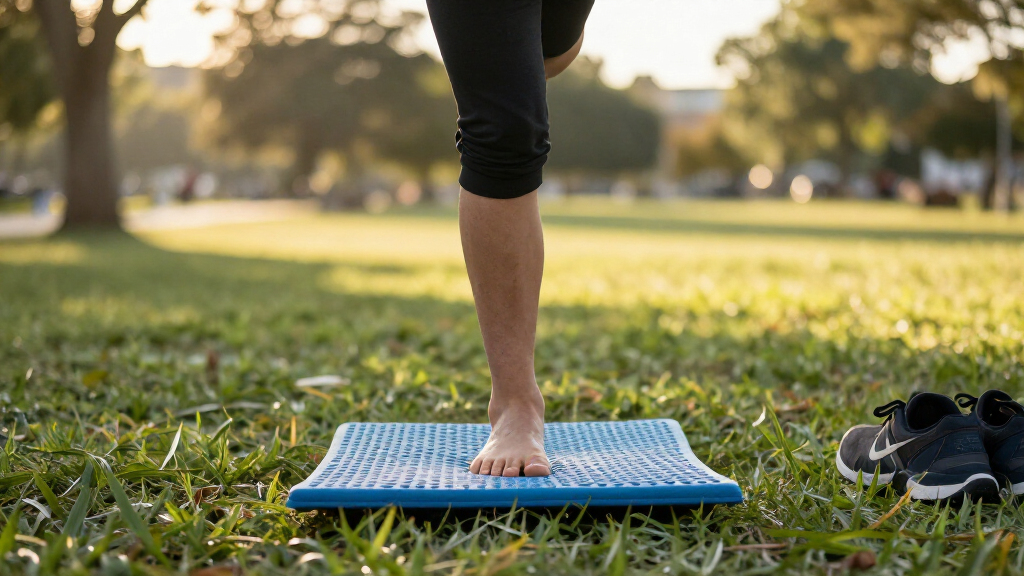
Culp describes the first exercise as “delayed walking.” Walk slowly enough to spend longer balancing on one foot as each step changes sides, and practise for several minutes a day. The report advises gradually increasing the time spent in each step transition, rather than trying to make the movement challenging all at once.
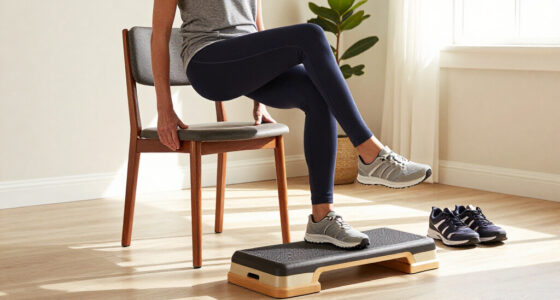
The second drill adapts a familiar high-knee movement by slowing it down. Raise one knee and take three seconds to complete the movement cycle before putting the foot down; continue for two minutes daily. Culp’s suggested progression is to add one second to the leg cycle every fifth day. The report says this would result in 10-second cycles after 35 days.
Culp also suggests optional challenges, such as briefly closing the eyes or reaching toward the lifted foot with both hands. These increase the difficulty of the exercise. The report does not give safety instructions for those variations or specify how readers should judge whether they are ready to try them.
Practice for Steadier Everyday Movement
Balance is used in ordinary activities such as walking, dressing and stepping over obstacles, not only in sports or formal exercise. Culp told Fit&Well that it supports confidence in movement and becomes more important with age. For readers who struggle to stand on one leg, the drills offer a structured starting point based on repeating familiar movements at a slower pace.
That does not establish a medical benefit for every reader. The article presents Culp’s coaching guidance and an account of one writer’s experience; it does not report a controlled study, measured outcomes or evidence that the drills reduce an individual’s fall risk. People with a history of falls, pain, dizziness or a health condition affecting balance may need advice from a clinician or qualified physical therapist before changing their activity.
For anyone trying the drills, the practical implication is to make the task manageable first. Use a clear space and keep a stable surface nearby for support, especially when beginning. Progress should be gradual, and readers should stop if a movement causes pain, marked dizziness or unusual symptoms.
Culp’s Five Fitness Checks
The Fit&Well report places balance within a broader set of fitness measures Culp uses. It identifies standing on one leg while doing a task as the first of five fitness “litmus tests”; the other areas address cardio fitness, strength and mobility. The example offered is whether someone can remain steady while doing a task such as tying a shoe.
Culp’s point, as reported by Fit&Well, is that balance and coordination can be practised. The article’s writer says they found it difficult to put on a sock and shoe while standing on one leg, then began standing on one leg to put on socks and noticed improvement over several months. That is a personal account, not evidence that the same result or timeline applies to everyone.
The two drills are presented as alternatives for people who are not comfortable standing on one leg. Both use movement rather than requiring a prolonged stationary one-leg hold, and both rely on consistency and gradual increases in difficulty.
““Balance is one of the clearest indicators of how well the body is functioning day to day.””
— Yancy Culp, quoted by Fit&Well
Evidence and Safety Details Not Given
The supplied report does not identify a study testing these two drills, quantify how much balance might improve, or show that they prevent falls. Culp’s prediction that practice will improve balance is an expert’s guidance quoted in the article, not a reported clinical trial result. The writer’s account of improvement is anecdotal.
The article also does not set out screening advice, adaptations for particular health conditions, or a full safety protocol. It does not explain whether the drills suit people with recent injuries, significant mobility limitations or a history of falls. The suggested eyes-closed and reaching variations may be harder to perform safely, and the report does not describe supervision or support for them.
Readers should not treat the 35-day progression as a guaranteed outcome. The timeline describes Culp’s suggested increase in cycle duration; individual ability and progress may vary.
Build Difficulty at Your Own Pace
The report gives no announced follow-up, study or formal programme. Its practical schedule is to practise delayed walking for several minutes daily and slow high knees for two minutes daily, increasing the high-knee cycle time by one second every fifth day if that remains comfortable.
Beginners can start beside a stable counter or with another secure support within reach, and keep their eyes open while learning the movements. Only add a challenge when the current version feels controlled; the optional eyes-closed or reaching variations are not necessary to follow the basic routine. Anyone unsure whether balance exercise is appropriate, or who experiences pain or dizziness, should seek guidance from a health professional.
Key Questions
What are the two balance drills?
Delayed walking means walking slowly to lengthen the time spent balancing during each step. Slow high knees means raising a knee and taking several seconds to complete the movement cycle before lowering the foot.
How often does Culp recommend practising?
The report says to practise delayed walking for several minutes every day and slow high knees for two minutes daily. It does not prescribe a rest-day schedule.
How does the high-knee progression work?
Culp’s suggested plan starts with a three-second leg cycle and adds one second every fifth day. The report says this reaches 10-second cycles after 35 days, but that schedule is not a guarantee of an individual result.
Are the drills proven to prevent falls?
The supplied Fit&Well report does not cite research showing that these specific drills prevent falls. It presents them as coaching suggestions for practising balance, not as a proven fall-prevention treatment.
Should beginners close their eyes during the exercises?
Closing the eyes is an optional challenge mentioned by Culp, not a requirement. Beginners should first practise with their eyes open, in a clear area and with stable support nearby; people with health or balance concerns should ask a clinician for guidance.
Source: rss