
TL;DR
Fit&Well recommends the bodyweight good morning for walkers who do not have time for a full cool-down. The outlet says the hip-hinge movement stretches muscles along the back of the body, but the report does not provide research showing that this single stretch prevents stiffness or replaces a full routine.
Fit&Well has recommended the bodyweight good morning as a brief post-walk stretch for walkers who do not have time for a full cool-down. The fitness outlet’s trainer-author says the hip-hinge exercise targets muscles along the back of the body, including the hamstrings, glutes, back and calves.
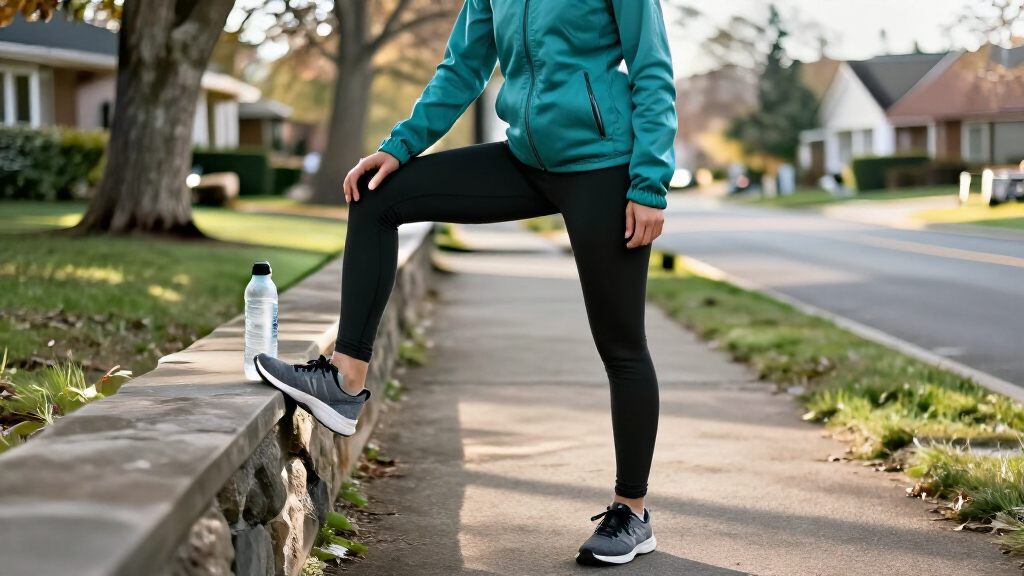
The report says the author recommends walking to personal-training clients as a low-impact way to improve cardio fitness, but that some clients skip stretching afterward because of time constraints. The proposed alternative is one bodyweight movement, rather than a full-body stretching routine. The article gives a suggested duration of 60 seconds.
To do the movement, stand with feet about hip-width apart and knees slightly bent. Place hands on hips or beside the ears, then push the hips backward and hinge forward until the torso is parallel to the floor or a stretch is felt at the back of the legs. Keep the back flat and shoulder blades engaged, then drive the hips forward to stand again, according to the instructions in Fit&Well.
The trainer advises keeping a slight bend in the knees rather than straightening them, and focusing on sending the hips back. The outlet describes the movement as stretching the posterior chain—a group of muscles on the back of the body—and helping with hip-hinge mobility. The report presents this as a practical recommendation, not as a finding from a cited clinical study.
A Short Option After a Walk
The recommendation addresses a familiar practical problem: some walkers want a brief way to wind down but do not have time for several stretches. A single movement may be easier to fit into a routine than a longer sequence, and the bodyweight good morning needs no equipment. Its simple setup also makes it possible to do at home or in another space where there is room to hinge safely.
That convenience should not be confused with proof that the stretch is necessary or sufficient for everyone. Fit&Well’s report says regularly skipping stretches can contribute to stiff muscles, but it does not cite evidence quantifying that risk or establish that this exercise prevents stiffness. Readers should treat the move as one suggested option, not a guaranteed remedy, medical treatment or substitute for individualized advice.
How the Good Morning Works
The bodyweight good morning is a hip-hinge movement: the hips travel backward while the torso inclines forward, then the hips move forward to return to standing. Fit&Well says this action can place a stretch through the hamstrings and other muscles on the back of the body. The report also notes that placing hands beside the ears, with elbows out, engages the back and stretches the chest and shoulders.
The article’s premise is that a short, focused movement can fit the needs of walkers who skip a longer cool-down. It does not say that walking itself requires a particular post-exercise routine, nor does it compare the good morning with other stretches. The recommendation comes from the outlet’s trainer-author, who describes suggesting it to clients with limited time.
““Most of my clients don’t have time to do a full-body routine after every walk, so instead I suggest they do one simple move: the bodyweight good morning.””
— Fit&Well trainer-author
Evidence and Individual Suitability
The source does not provide a date, identify the author by name in the supplied material, or cite studies supporting the claim that neglecting post-walk stretching regularly can lead to stiff muscles. It also does not explain how the suggested 60-second duration was selected or compare outcomes with other cool-down approaches. Those points remain unsubstantiated within the report.
It is also unclear whether the movement is appropriate for every reader. Fit&Well does not discuss modifications for people with pain, limited mobility or a history of injury. The instructions say to stop at the point where a stretch is felt, but offer no individualized assessment; anyone who experiences pain or has concerns about exercise suitability may need guidance from a qualified health professional.
Using the Move Safely
Fit&Well’s report does not announce a study, trial or follow-up, so no further evidence or formal next milestone is specified. For readers who choose to try the exercise, the next step is to follow the outlet’s basic cues: keep the knees slightly bent, move from the hips, maintain a flat back and use a comfortable range rather than forcing the torso down.
The recommendation remains a brief fitness tip, not a clinical directive. Readers can decide whether it fits their post-walk routine, while recognizing that the source does not establish that one stretch is necessary for all walkers or that it replaces a broader cool-down.
Key Questions
What stretch does Fit&Well recommend after a walk?
Fit&Well recommends the bodyweight good morning, a standing hip-hinge movement, for walkers who do not have time for a full cool-down.
How do you do a bodyweight good morning?
Stand with feet hip-width apart and knees slightly bent. Push your hips back as you hinge forward with a flat back, stopping when your torso is parallel to the floor or you feel a stretch at the back of your legs. Then drive your hips forward to stand.
How long does the report suggest doing it?
The Fit&Well instructions list 60 seconds. The report does not explain how that duration was determined.
Does this stretch prevent stiffness?
The report says regularly neglecting stretching can lead to stiff muscles, but it does not cite supporting research or show that the good morning prevents stiffness. It should be understood as a trainer’s recommendation, not a proven guarantee.
Source: rss