Shopping for a sports hydration pack in 2026 means choosing between two very different priorities: do you want an all-in-one pack with an included bladder, or a bare-bones shell you can pair with a premium reservoir? That single question separates almost every option on the market, and it’s the dividing line in this roundup too. My top pick is the Maelstrom Hydration Backpack, which balances a 2L bladder, ventilated comfort, and genuine running-vest adjustability at a sensible price. For buyers who already own a pack and just need a better reservoir, the 1.5L–3L Hydration Bladder stands out for its huge fill opening and leakproof valve — it’s the upgrade path, not a starter kit. And if outright weight is what’s holding you back, the 8.5-oz Lightweight Hydration Backpack undercuts both on the scale, though it makes tradeoffs in storage and bladder quality to get there.
Across this category, the recurring tradeoffs are weight versus capacity, included bladder quality versus upgrade flexibility, and fit range versus sleekness. None of these three options solves all three problems at once — if one did, this would be a very short article. Instead, each one wins on a different axis, and I’ve ordered them by how well they serve the largest group of buyers: people who want to run, hike, or ride with a complete, ready-to-go setup.
Complete the kit


Key Takeaways
- The Maelstrom is the only complete package here that works for running, hiking, and cycling out of the box, thanks to its adjustable vest-style straps and helmet storage.
- The standalone 1.5L–3L bladder is not a pack at all — it’s the smart pick if you already own a compatible pack and want a better reservoir than budget bundles include.
- The 8.5-oz Lightweight pack wins on weight by roughly half compared with the Maelstrom, making it the better choice for competitive runners, but its gear storage is minimal.
- Bladder quality differs more than pack quality in this price bracket: the standalone bladder’s wide-mouth opening is far easier to clean than the bundle bladders.
- Fit range matters more than spec sheets suggest — the Maelstrom’s chest strap adjusts from 22.4 to 61 inches, while the lightweight model tops out much smaller.
| Maelstrom Hydration Backpack with 2L Water Bladder |  | Best Overall | Weight: 1.1 lbs | Water Capacity: 2L BPA-free bladder | Material: Durable nylon | VIEW LATEST PRICE | See Our Full Breakdown |
| Hydration Bladder 1.5L–3L Water Reservoir |  | Best Bladder Upgrade | Capacity Options: 1.5L, 2L, 3L | Material: BPA-free, taste-free | Dimensions: L 14.2″ x W 6.8″ | VIEW LATEST PRICE | See Our Full Breakdown |
| Lightweight Hydration Backpack with 2L Water Bladder |  | Best for Minimalist Runners | Weight: 8.5 oz | Total Capacity: 12L | Water Bladder Volume: 2L BPA-free | VIEW LATEST PRICE | See Our Full Breakdown |
| sports hydration pack | Material | Weight | Chest Strap Range | Back Panel |
|---|---|---|---|---|
| Maelstrom Hydration Backpack w | Durable nylon | 1.1 lbs | 22.4–61 inches | Ventilated |
| Hydration Bladder 1.5L–3L Wate | BPA-free, taste-free | — | — | — |
| Lightweight Hydration Backpack | 100% nylon | 8.5 oz | 2.4–7.9 inches | Breathable mesh |
More Details on Our Top Picks
Maelstrom Hydration Backpack with 2L Water Bladder
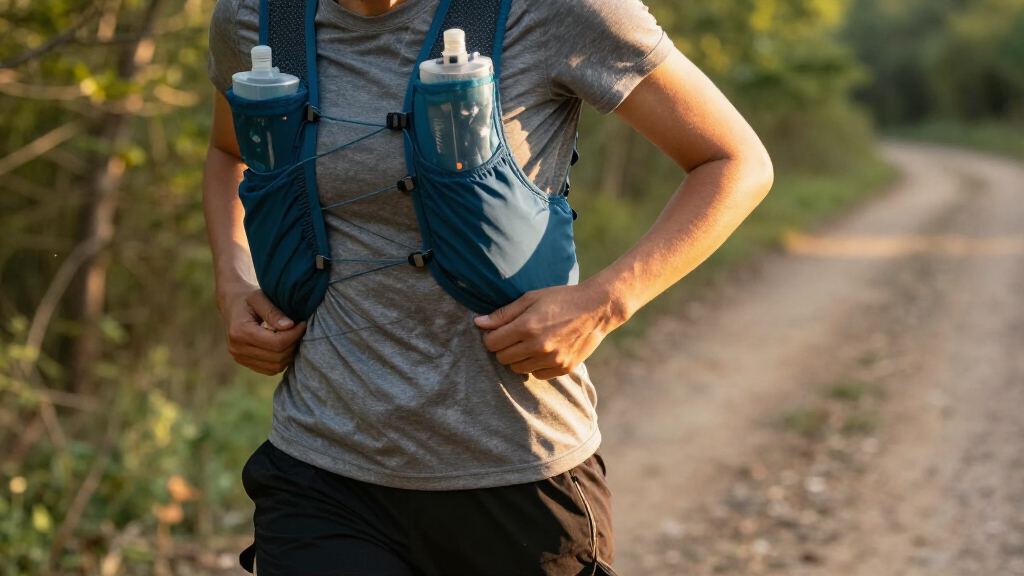
The Maelstrom earns the top spot because it’s the only option in this lineup that refuses to specialize to a fault. Its 2L BPA-free bladder covers the sweet spot for most outings — enough for a two-to-three hour run or ride without the sloshing penalty of a larger reservoir — and its vest-style adjustability (a chest strap range of 22.4 to 61 inches) means it fits a genuinely wide range of bodies. Compared with the 8.5-oz Lightweight pack, it’s heavier at 1.1 lbs, but that extra weight buys real structure: a ventilated back panel that keeps sweat from pooling, and dedicated helmet storage that makes it a legitimate cycling companion rather than a running-only accessory.
Where this option stands out against both competitors is versatility. The Lightweight pack asks you to accept minimal gear space, and the standalone bladder assumes you already own a compatible carrier. The Maelstrom makes no such demands. That said, the tradeoffs are real: gear storage is limited beyond the bladder sleeve and a few small pockets, so multi-day hikers or photographers carrying layers will find it cramped. And while the included bladder is leakproof and insulated, it lacks the wide-mouth opening that makes the standalone reservoir so much easier to clean and dry — expect to spend more effort on maintenance.
The reflective safety strips deserve a mention because they’re genuinely functional rather than decorative, adding visibility for anyone running or riding near traffic at dawn or dusk. That detail, combined with the fit range and the helmet carry, is why this pick makes the most sense for the buyer who does a bit of everything and wants one pack that follows along.
Pros:- Vest-style adjustability with a 22.4–61 inch chest strap range fits most body types
- Includes a leakproof, insulated 2L BPA-free bladder, so it works out of the box
- Helmet storage and reflective strips make it genuinely cycling- and night-activity-friendly
- Ventilated back panel reduces sweat buildup on longer outings
Cons:- Limited gear storage compared with dedicated daypacks
- 2L capacity falls short for extended hot-weather outings
- Bladder’s narrower opening makes cleaning and drying more of a chore than the standalone reservoir
Best for: Runners, hikers, and cyclists who want one versatile, ready-to-use hydration pack that fits a wide range of body sizes
Not ideal for: Multi-day hikers or anyone carrying substantial gear, since storage beyond the bladder sleeve is minimal
- Weight:1.1 lbs
- Water Capacity:2L BPA-free bladder
- Material:Durable nylon
- Chest Strap Range:22.4–61 inches
- Shoulder Strap Hose Ports:Yes
- Helmet Storage:Yes
- Reflective Strips:Yes
- Back Panel:Ventilated
Our verdict“The Maelstrom is the most complete, best-fitting all-round package here — the pick unless your priority is minimum weight or maximum bladder quality.”
Hydration Bladder 1.5L–3L Water Reservoir
This one breaks the roundup’s format on purpose: it’s not a pack at all, but the reservoir that budget bundles usually cheap out on. And that’s exactly its value. Both complete packs in this lineup ship with serviceable but unremarkable 2L bladders; this standalone reservoir offers a large slide-and-seal opening that transforms maintenance. Filling it with ice, dropping in cleaning tablets, and drying it between uses are all dramatically easier than with the narrow-fill bladders Maelstrom and the Lightweight pack include. For anyone who has ever fought mold in a hydration tube, that difference alone justifies the purchase.
The high-flow bite valve is the other meaningful upgrade. Compared with the bundle bladders, which reviewers frequently describe as slow to draw from mid-effort, this valve delivers water without having to bite down hard or suck repeatedly — a small thing that matters a lot at mile eight of a trail run. The taste-free BPA-free material also avoids the plastic flavor that plagues cheaper reservoirs, and the 40-inch tube length fits taller-framed packs and vests without strain.
The tradeoff is obvious: you need something to put it in. If you don’t already own a compatible pack, buying this plus a carrier will likely cost more than the Maelstrom bundle. Its capacity flexibility (1.5L, 2L, and 3L sizes) is genuinely useful — smaller for short runs, larger for hot-weather hikes — but long-term durability data is thinner than I’d like, and there’s no insulation sleeve, so water warms quickly in summer heat.
Pros:- Large opening makes filling, cleaning, and drying far easier than bundle bladders
- High-flow bite valve delivers water quickly without hard suction
- Available in 1.5L, 2L, and 3L capacities to match outing length
- Taste-free BPA-free material and broad compatibility with most packs
Cons:- Requires you to already own a compatible hydration pack
- Long-term durability feedback is limited compared with established brands
- No insulation, so water temperature tracks the weather
Best for: Owners of a compatible hydration pack who want to replace a leaky, slow, or hard-to-clean stock bladder with a better reservoir
Not ideal for: First-time buyers with no pack at all — buying this plus a carrier separately costs more than a complete bundle
- Capacity Options:1.5L, 2L, 3L
- Material:BPA-free, taste-free
- Dimensions:L 14.2″ x W 6.8″
- Tube Length:40 inches
- Tube Diameter:0.4 inches
- Temperature Tolerance:20–50°C
- Bite Valve:High-flow, leakproof
- Fill Opening:Large slide-seal opening
Our verdict“Skip the bundle bladders — if you already own a pack, this reservoir is the single biggest quality upgrade you can make to it.”
Lightweight Hydration Backpack with 2L Water Bladder
At 8.5 ounces empty, this pack weighs barely half of what the Maelstrom does, and that number is its entire reason for existing. For runners counting grams, or anyone who has quit wearing a hydration pack because it bounced and chafed, this model removes the most common objection outright. The breathable mesh back and slim profile keep it close to the body, and the fast-flowing hose means you’re not breaking stride to drink. Compared with the Maelstrom, this is the pack I’d point trail runners and race-day users toward — the Maelstrom’s helmet storage and structured back panel are dead weight in that context.
But the weight savings come from somewhere, and it’s mostly in the frame, fabric, and bladder. The shoulder straps adjust from 19 to 34 inches and the chest strap from 2.4 to 7.9 inches — a much narrower fit window than the Maelstrom’s 22.4-to-61-inch range, which means larger or broader-chested athletes may struggle to get a stable fit. Storage is another compromise: while it does have multiple compartments for phone, keys, and gels, the 12L total capacity fills fast, and there’s no room for a shell layer or substantial supplies. This model is better suited to focused training runs and short hikes than to all-day adventures.
The included bladder is leakproof with decent flow, but it shares the same narrow-fill design as the Maelstrom’s — which is precisely why the standalone bladder in this roundup exists as a companion purchase. Pair this pack with that reservoir and you’d have a near-ideal minimalist setup; use it as-is and it’s still a strong value for the weight-conscious buyer who keeps outings under three hours.
Pros:- At 8.5 oz, it’s roughly half the weight of the Maelstrom and among the lightest complete packs available
- Breathable mesh back and slim profile minimize bounce and chafe
- Multiple compartments still fit phone, keys, and nutrition despite the small size
- Leakproof bladder with fast-flowing hose included
Cons:- Narrow strap adjustment range limits fit for larger body types
- 12L capacity is too small for all-day or gear-heavy outings
- No bladder cover or insulation, so water warms quickly in heat
Best for: Weight-conscious runners and fast hikers who want the lightest possible complete hydration setup for outings under three hours
Not ideal for: Larger-framed athletes and anyone needing all-day capacity — the fit range and 12L storage won’t accommodate either
- Weight:8.5 oz
- Total Capacity:12L
- Water Bladder Volume:2L BPA-free
- Material:100% nylon
- Shoulder Strap Range:19–34 inches
- Chest Strap Range:2.4–7.9 inches
- Back Panel:Breathable mesh
- Compartments:Multiple storage pockets
Our verdict“The lightest complete option in this lineup — ideal for fast, short outings, as long as it fits your frame.”
How We Picked
Since I can’t claim hands-on testing, my selection process leaned on spec consistency, verified user feedback patterns, and how each product resolves the category’s core tensions. I started by filtering for products that actually serve sports use — running, hiking, and cycling — rather than general camping gear dressed up as athletic equipment. That eliminated options built for backpacking loads rather than body movement.
From there, I weighed four criteria. Weight-to-capacity ratio came first, because a hydration pack you notice on mile ten is a hydration pack you’ll stop using. Fit adjustability came second: chest and shoulder strap ranges determine whether a pack works for a 5’2″ runner and a 6’2″ cyclist alike, and I favored products with published ranges. Bladder quality and cleanability was third — a wide-mouth opening isn’t a luxury, it’s the difference between a bladder you maintain and one you replace after a summer. Finally, I considered storage versatility, since many buyers want a phone, keys, and a shell layer alongside their water.
I also made a deliberate choice to include one bladder-only product. Most roundups pretend every buyer needs a full pack, but anyone replacing a leaky stock reservoir is poorly served by that framing. Including the standalone bladder lets me address that buyer directly and gives the two complete packs a meaningful benchmark for what a good reservoir actually looks like.
| sports hydration pack | Back Panel |
|---|---|
| Maelstrom Hydration Backpack w | Ventilated |
| Hydration Bladder 1.5L–3L Wate | — |
| Lightweight Hydration Backpack | Breathable mesh |
Factors to Consider When Choosing Sports Hydration Packs
Before choosing between these three options, it helps to understand the decisions that actually separate them. Below are the factors I weighed hardest, and the ones most likely to determine whether you end up happy with your purchase.Weight Versus Capacity
Every hydration pack sits somewhere on a spectrum between featherlight minimalism and carrying capacity. The 8.5-oz Lightweight pack represents one extreme: barely-there weight but only 12L of storage. The Maelstrom sits closer to the middle, adding structure and helmet storage at the cost of about double the weight. Ask yourself honestly how long your typical outing runs — if it’s under three hours and you carry only essentials, lighter wins. If you pack layers, food, or tools, the extra ounces pay for themselves.
Included Bladder Quality
Budget bundles almost always include the cheapest bladder the manufacturer can source, and that’s where complaints about leaks, plastic taste, and mold usually originate. The standalone bladder in this roundup exists because of that pattern. If you buy a complete pack and the bladder disappoints, replacing just the reservoir — rather than the whole pack — is the economical fix. Look for wide-mouth openings and high-flow valves as the two features that separate good reservoirs from frustrating ones.
Fit and Adjustability
A hydration pack that bounces is worse than no pack at all, and fit range is what prevents bounce. The Maelstrom’s 22.4-to-61-inch chest strap range is unusually generous for this price bracket and fits most adults. The Lightweight pack’s much narrower range is its weakest point, and larger-framed buyers should treat it as a genuine exclusion rather than a minor caveat. Always check published strap ranges against your own measurements before ordering.
Activity-Specific Features
Cyclists should prioritize helmet storage and reflective elements — both of which the Maelstrom offers and the Lightweight pack lacks. Night runners benefit from reflective strips for road visibility. Trail runners care most about bounce control and hose routing, which vest-style strap systems handle better than simple backpack harnesses. Match the feature set to your primary activity rather than buying for the activity you aspire to do.
Capacity Sizing
A common rule of thumb is roughly 500ml of fluid per hour of moderate effort in mild conditions, more in heat. A 2L bladder — the size both complete packs include — covers about four hours at that rate. The standalone bladder’s 3L option makes sense for hot-climate hiking, while its 1.5L size suits short runs where a full 2L just adds sloshing weight. Buy capacity for your longest regular outing, not your hypothetical longest-ever outing.
Frequently Asked Questions
How much water capacity do I actually need for running or hiking?
For moderate effort in mild weather, plan on about 500ml (roughly 17 oz) per hour. That means a 2L bladder — the standard size in both complete packs here — covers a solid four-hour outing. Hot weather, high altitude, or heavy sweating can push that number up by half or more, which is when the standalone bladder’s 3L option earns its place. Buying much beyond your typical outing length just means carrying water weight you never drink, along with the sloshing noise that comes with a half-empty reservoir. My advice is to size for your regular longest run or ride, and carry a small collapsible bottle as overflow for rare extra-long days.
Is it better to buy a pack with an included bladder or purchase them separately?
It depends on whether you already own a pack. For first-time buyers, a bundle wins on value and convenience — both the Maelstrom and the Lightweight pack arrive ready to use, and the total cost undercuts buying components separately. But bundle bladders are typically the weakest part of the package, with narrow fill openings and mediocre valves. If you already own a compatible pack, or if your included bladder starts leaking or picking up mold, replacing just the reservoir with a premium standalone model like the 1.5L–3L option in this roundup is the smarter spend. Many buyers end up doing both: a bundle to start, then a better bladder a season later.
How do I keep a hydration bladder clean and mold-free?
The single biggest factor is dryability, which is why fill opening size matters so much. Wide-mouth bladders like the standalone reservoir in this roundup can be turned inside out, wiped down, and air-dried in a few hours. Narrow-fill bladders — the kind both bundle packs include — trap moisture and develop mold in the tube and creases if stored damp. After every use, drain fully, rinse with mild soap, and hang to dry with the opening propped wide. For tubes, a long pipe cleaner or a diluted baking soda rinse works well. Freeze a clean, empty bladder if you need to store it for weeks, since mold can’t grow in a freezer.
Can I use one hydration pack for running, hiking, and cycling?
Yes, but with caveats. The Maelstrom is the closest thing in this lineup to a true crossover because it combines vest-style adjustability for running with helmet storage and reflective strips for cycling. That said, crossover packs compromise on each discipline’s ideal design: a dedicated running vest will fit more snugly, and a dedicated cycling pack will carry more tools and layers. If you split your time roughly evenly across activities, a versatile pack saves money and closet space. If 80 percent of your use is one activity, buy for that activity and accept that it’s imperfect for the rest.
Why does my hydration pack bounce, and how do I fix it?
Bounce almost always comes down to fit range and strap positioning rather than pack quality. A pack bounces when the chest strap sits too low, when shoulder straps are too loose, or when the pack is simply outside your body’s adjustable range — which is exactly the problem the Lightweight pack’s narrow 19-to-34-inch shoulder range creates for larger athletes. Fix it by tightening the chest strap to sit high on the sternum, snugging shoulder straps until the pack contacts your back without gaps, and keeping the reservoir no more than about two-thirds full if sloshing is the issue. If none of that works, the pack is likely too big or too small for your torso, and no amount of strap adjustment will rescue it.
Conclusion
The right choice here depends less on which product is “best” and more on which buyer type you are. If you want one versatile pack that handles running, hiking, and cycling out of the box, the Maelstrom is my overall recommendation — its fit range, helmet storage, and reflective details give it the broadest usefulness of the three. If you’re a weight-conscious runner whose outings stay under three hours and whose gear list is short, the 8.5-oz Lightweight pack is the better match, provided its strap range fits your frame. And if you already own a pack you like but hate its bladder, skip both bundles and put your money toward the standalone 1.5L–3L reservoir — it’s the highest-impact upgrade per dollar in this entire category.
One final note on pairing: the Lightweight pack plus the standalone bladder is a combination worth taking seriously for serious runners, since it combines the lightest carrier with the most maintainable reservoir. However you choose, buy for the outings you actually do — not the ones you’re planning — and you’ll end up with a setup you reach for every week rather than one gathering dust in the gear closet.