
TL;DR
Pilates instructor Nikkii Behrens says a magic circle, also called a Pilates ring, can help people practice controlled movement, balance and body alignment. She presents it as a complement to dumbbells, not a replacement, and outlines three exercises using the lightweight resistance tool.
Pilates instructor Nikkii Behrens says a lightweight magic circle, or Pilates ring, can be more useful than dumbbells for teaching controlled movement and body alignment, though she recommends using both kinds of equipment in a rounded fitness routine. In a Fit&Well report, Behrens described three ring-based exercises intended to challenge core stability, lower-body strength and movement precision.
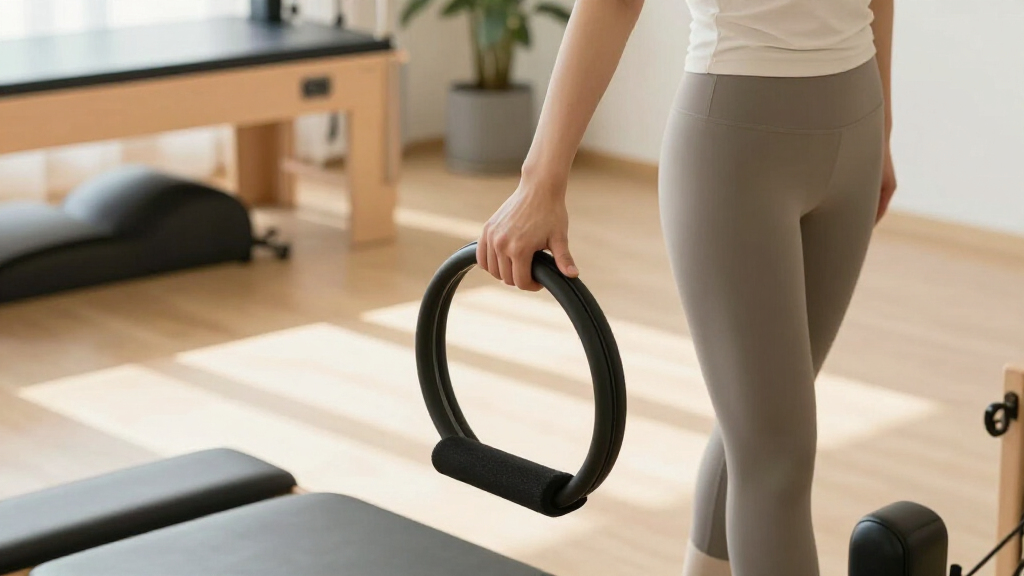
Behrens, founder of Rare Street Pilates, describes the ring as a lightweight resistance tool that adds gentle resistance to Pilates movements. Unlike dumbbells, it is not intended to provide a high load. The distinction she draws is between training muscles to produce force and practicing how to use strength with control, balance and efficiency.
The report’s three exercises are a dead bug crunch, a squat and press, and a side-lying leg-lift series. The dead bug variation uses the ring between the knees while the person crunches and extends the legs. The squat and press pairs a squat with squeezing and releasing the circle. In the side-lying series, the ring is used between the ankles and later pressed with the hand as the top leg lifts.
Behrens says the exercises are designed to work areas including the deep core, glutes and hip stabilizers. The suggested sessions use two to three rounds, with timed work periods and short rests; the side-lying series is listed at 30 seconds per side. Fit&Well advises beginners to reduce work time and take longer rests as needed. The source does not provide independent testing or evidence comparing the ring’s effects with dumbbells.
A Tool for Practicing Movement Control
The recommendation highlights a difference in training aims rather than establishing that one piece of equipment is generally superior. Dumbbells provide external load for resistance exercises, while the ring’s gentle resistance can give users a cue to maintain pressure and alignment as they move. That may make it useful for people learning to coordinate their limbs and keep their torso or pelvis steady.
For readers choosing home workout equipment, the instructor’s framing offers a practical distinction: a ring may suit exercises focused on precision and stability, while weights remain relevant to strength training. Behrens explicitly says both can belong in a well-rounded routine. Her comments are expert guidance reported by Fit&Well, not evidence that the ring produces better results for every person or fitness goal.
How the Ring Differs From Weights
The magic circle is also known as a Pilates ring. The Fit&Well report describes it as lightweight equipment that users squeeze or press during exercises to add resistance. The report lists several commercially available rings, but does not compare their materials, resistance levels, durability or prices.
Behrens’ central comparison is about the skill being practiced. In her account, dumbbells emphasize force production, while the circle encourages control, balance and efficiency. She says ring work can support posture, movement quality and core stability, but presents it alongside weights rather than as a substitute. The source offers exercise instructions and the instructor’s rationale, not a study measuring those outcomes.
“Dumbbells train your muscles to produce more force, while the circle trains your body to use that strength with greater control, balance and efficiency.”
— Nikkii Behrens, founder of Rare Street Pilates, as quoted by Fit&Well
Evidence Behind the Instructor’s Comparison
The report does not establish that a Pilates ring is broadly better than dumbbells. That comparison is Behrens’ view about teaching control and alignment, not a result from a head-to-head trial described in the source. It is also unclear how much resistance different rings provide, how the exercises should be adjusted for particular health conditions, or whether the suggested routines produce measurable changes in posture or pain.
Behrens links the dead bug exercise to better posture and reduced back pain, but the source gives no supporting clinical data or specific outcome measures. Readers with pain, injuries or movement restrictions are not given tailored guidance in the report. The material also does not say whether the exercise instructions were reviewed by a medical or rehabilitation professional.
How Readers Can Apply the Advice
Fit&Well’s report gives readers a starting set of three movements rather than announcing a new product, clinical finding or formal training program. Anyone trying the routine can follow the report’s stated modifications: shorten the work periods, rest longer, and simplify the side-lying sequence by starting with the leg swings before adding the other steps. Behrens advises keeping the pelvis still during that series.
The article does not set out a follow-up study or say that further findings are planned. Readers should treat the equipment comparison as instructor guidance and choose exercises that match their goals and ability. People who are new to exercise or have pain or a health concern may want to consult a qualified fitness or health professional before attempting the movements.
Key Questions
What is a magic circle in Pilates?
A magic circle, also called a Pilates ring, is a lightweight resistance tool that users squeeze or press during exercises.
Does the instructor say to replace dumbbells?
No. Behrens says both weights and precision equipment such as the ring can be part of a well-rounded fitness routine. Her comparison concerns the different skills each may emphasize.
Which exercises does the report recommend?
The report describes a dead bug crunch, a squat and press, and a side-lying leg-lift series using the ring.
Is the ring proven to improve posture or reduce back pain?
The source reports Behrens’ view that ring exercises may support posture and says she links one exercise to reduced back pain. It provides no independent clinical evidence establishing those outcomes.
How can beginners adjust the exercises?
Fit&Well advises people new to exercise to reduce workout times and rest longer as needed. Behrens also suggests beginning the side-lying series with its leg swings and adding later steps gradually.
Source: rss