
TL;DR

Get sports gear delivered free with Prime
- Fast, free delivery on millions of items
- Prime Video, Amazon Music and more included
- Member-only deals all year
Fit&Well published a 15-minute, equipment-free lower-body circuit built around squats, reverse lunges, glute bridges and lateral lunges. Its report recommends beginners start with three circuits, use extra rest and seek coaching on form when needed; it also advises stopping for sharp pain.
Fit&Well has published a 15-minute, equipment-free leg workout that readers can do at home using four bodyweight movements: squats, reverse lunges, glute bridges and lateral lunges. The report sets out a timed circuit and beginner adjustments, while cautioning that people new to exercise may find the routine challenging and should prioritize form and comfortable effort.
The workout is organized as a time-based circuit: each exercise is performed for 30 seconds before moving to the next. After all four movements, the report instructs readers to rest for one minute and repeat. It says five circuits should take about 15 minutes, although the stated schedule of four 30-second exercises plus one minute of rest per round does not spell out exactly how the total time is calculated, including any rest after the final round.
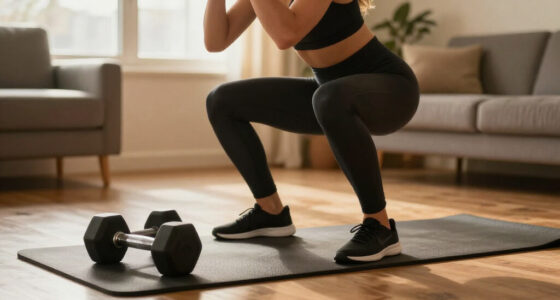
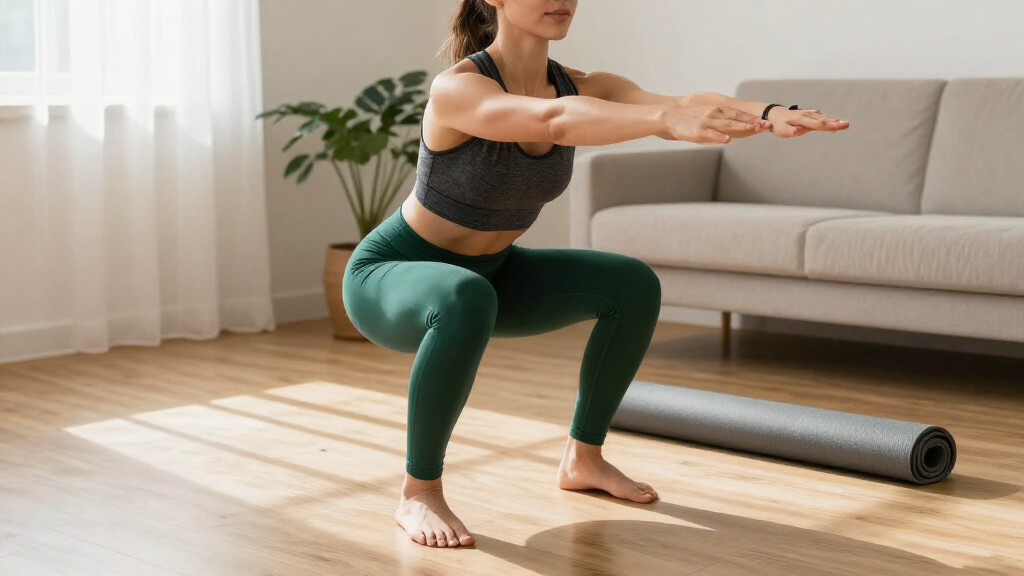
The sequence starts with bodyweight squats, with feet about hip-width apart. The instructions call for bending at the hips and knees, lowering until the thighs are parallel with the floor if comfortable, then standing again. Fit&Well’s form tips are to keep the chest upright, avoid rounding the spine and keep the feet planted.
The second movement is a reverse lunge, alternating sides. The report advises keeping the front knee aligned with the middle of the foot and maintaining an upright chest and straight back. It says readers do not need to lower the back knee to the floor if that is outside their comfortable range; a solid chair or similar support can help with balance.
For the glute bridge, readers lie on their backs with knees bent and feet flat, tighten the core and lift the hips until they align with the shoulders and knees. The report advises squeezing the glutes, avoiding an arched lower back and preventing the knees from falling inward. It suggests a bed or couch as an alternative for people who cannot get down to the floor.
The final movement, the lateral lunge, steps to one side while bending that knee and keeping the other leg straight, then returns to standing and alternates sides. Fit&Well recommends pointing the toes forward and keeping the chest upright. The report says beginners should begin with three circuits and extra rest between exercises, then gradually add circuits and reduce rest as strength and conditioning improve.
A Short Routine With Beginner Options
The report offers readers a brief home workout that does not depend on gym access or equipment. Its four movements include squatting, stepping backward and sideways, and raising the hips from the floor, giving the circuit several different lower-body patterns within a short session.
Its practical value depends on adapting the routine rather than treating the suggested 15 minutes as a target for everyone. Fit&Well explicitly says the exercises may challenge beginners and recommends starting with fewer circuits and more rest. That progression lets readers adjust the workload, though the source does not provide research results showing how much strength or muscle a person can expect to gain from this particular workout.
The form guidance also helps clarify that completing the movements safely matters more than reaching a particular depth or pace. The report allows a comfortable range of motion for lunges and offers support for balance, making the routine less rigid for people who need modifications. These are general suggestions in the article, not individualized medical or training advice.
Products Worth Considering

GoPro Hero12 Black Waterproof Action Camera with 5.3K60 Video and 27MP Photos

Coleman Skydome XL 8-Person Family Tent

GoPro MAX Waterproof 360 and Traditional Action Camera with Touch Screen, 5.6K Video, 16.6MP Photos, Live Streaming, Stabilization
As an affiliate, we earn on qualifying purchases.
Four Moves, Timed in Circuits
Fit&Well presents the routine as an option for days when a person cannot leave home for the gym. It requires only space to move and no exercise equipment. The source does not identify a particular training plan, study or clinical test behind the workout; it is a practical routine described by the publication.
The listed exercises are each assigned 30 seconds. The source says to rest for one minute after completing all four, then repeat, and recommends five circuits for a 15-minute session. Because four 30-second work periods total two minutes before the stated rest, the article’s timing leaves some details about the total session duration unstated. Readers may also need extra time to change positions or take additional breaks, especially when starting out.
For beginners, the report advises three circuits to start, with rest between exercises. It says people can gradually increase the number of circuits and reduce rest as their fitness improves. The source also recommends meeting with a personal trainer if someone is new to exercise, both to learn technique and to discuss modifications.
“The exercises in this workout aren’t very advanced, but they may challenge a beginner.”
— Fit&Well
Timing and Results Need Clarification
The report does not state a publication date, identify the author in the supplied material or cite evidence measuring the workout’s effects. Its promise to help readers build a stronger lower body is the framing of the workout, not a quantified result: no strength, muscle-growth or fitness outcomes are reported.
The timing also needs interpretation. Four exercises at 30 seconds each amount to two minutes of activity per circuit, while the instructions add one minute of rest after completing the exercises. Fit&Well says five circuits should take 15 minutes, but does not explain whether that estimate includes transitions, extra rest or a rest period after the final circuit. The source likewise does not specify how intensely to perform each movement or how much recovery to take between workout days.
Individual suitability is not established. The article offers general modifications but does not assess readers’ health, injuries, mobility or training history. Anyone unsure whether the routine is appropriate should seek qualified advice; the source’s safety guidance says to stop and speak with a doctor if sharp pain occurs.
Start Gradually and Adjust
Readers following the report can begin with three circuits and rest between exercises, rather than attempting five rounds immediately. They can use the suggested support for balance, choose a comfortable lunge depth and take additional rest if needed. The source recommends adding circuits and reducing rest gradually as strength and conditioning improve, rather than making both changes at once.
Fit&Well does not announce a follow-up, a new version of the routine or a date for further guidance. For people who are new to training, its stated next step is to consult a personal trainer who can teach form and offer modifications. Anyone who experiences sharp pain should stop the workout and speak with a doctor, as the publication advises.
Key Questions
What exercises are included in the routine?
The circuit includes bodyweight squats, reverse lunges, glute bridges and lateral lunges. Each movement is assigned 30 seconds before moving to the next.
Does the workout require equipment?
No equipment is required, according to Fit&Well. The report says readers need only a little space to move. It suggests using a solid chair or similar structure for support during reverse lunges if balance is an issue.
How should beginners start?
Fit&Well advises beginners to start with three full circuits and add rest between exercises. It recommends gradually increasing circuits and reducing rest as strength and conditioning improve, and suggests asking a personal trainer for form instruction or modifications.
Is the routine exactly 15 minutes?
The publication says five circuits should take about 15 minutes, but its instructions do not fully explain the calculation. Four 30-second exercises total two minutes of work per circuit, followed by a one-minute rest after the exercises; transitions and extra breaks may affect the total.
What should someone do if an exercise causes sharp pain?
Fit&Well says to stop immediately and speak with a doctor if sharp pain occurs. The report does not assess individual injuries or medical conditions.
Source: rss