TL;DR

Get sports gear delivered free with Prime
- Fast, free delivery on millions of items
- Prime Video, Amazon Music and more included
- Member-only deals all year
Physiotherapist and Pilates instructor Helen O’Leary shared four standing exercises for people who struggle with floor-based workouts. The moves target mobility, balance and core stability, and can be done with a nearby surface for support.
Physiotherapist Helen O’Leary, clinical director at Complete Pilates, has shared four standing Pilates moves for people who find it difficult to exercise on the floor. The exercises—standing book opener, scooter, marching and hip abduction—are intended to work on mobility, balance and core stability, according to the Fit&Well report.
O’Leary said standing Pilates can challenge the body differently from floor-based exercises. She told Fit&Well that staying upright tests core strength and may help counter the effects of prolonged sitting by encouraging better posture. These are her stated reasons for recommending the format; the report does not present clinical trial results or compare outcomes with mat-based Pilates.
The sequence begins with a standing book opener: stand with feet hip-width apart, place the hands behind the head, and rotate the rib cage and head from side to side. O’Leary recommends three sets of four to five repetitions on each side. Keeping the pelvis facing forward can make the turn feel tighter, she said.
The other exercises involve controlled leg movements. For the scooter, shift weight onto one leg while hinging forward at the hips, then slide the other foot back and forward with the toes on the floor. The suggested volume is three rounds of 10 to 15 repetitions per side. Marching involves lifting one knee while standing on the other leg, for three rounds of 10 to 15 repetitions per side. For standing hip abduction, lift and move a straight leg out to the side, repeating up to 10 times before switching legs; the report recommends three rounds.
A Floor-Free Pilates Option
Standing exercises can offer an alternative for people who have difficulty getting down to or up from the floor, while still giving them a way to practise controlled movement and balance. The four moves also vary in how much support and coordination they require: the book opener focuses on trunk rotation, while the scooter, marching and hip abduction ask the participant to control the legs while standing.
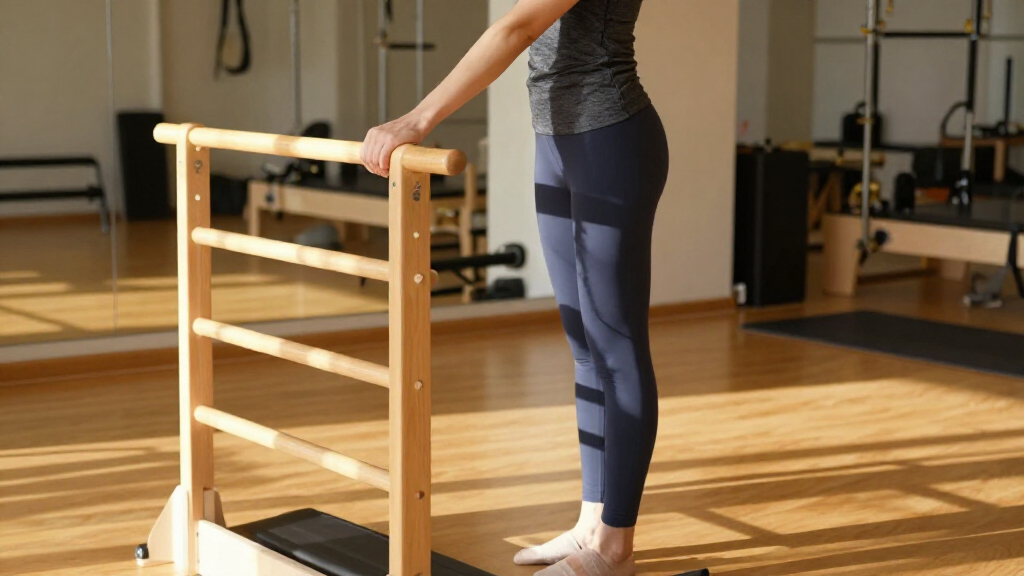
That flexibility may make the routine easier to adapt at home. O’Leary’s instructions include using a chair, table or countertop for support during balance exercises. Such modifications are practical guidance, not a guarantee that every move is appropriate for every person. The report does not specify adaptations for injuries, medical conditions or different levels of mobility.
Products Worth Considering

Solo Stove Bonfire 2.0 Smokeless Wood-Burning Fire Pit with Stand, Silver

Coleman 6-Person Instant Camping Tent with 1-Minute Setup

Garmin GHC 50 Marine Autopilot Touchscreen Display
As an affiliate, we earn on qualifying purchases.
How the Four Moves Work
Pilates is often associated with mat exercises or a reformer, but the Fit&Well report presents standing work as another way to practise Pilates movements. O’Leary’s four selections combine upper-body rotation with standing leg and balance work. The recommended repetitions are provided for each movement, though the source does not set out a full session duration or say how often to repeat the routine.
Several of the exercises can be adjusted with basic household support. For the scooter, the report suggests wearing a sock or putting a towel under the moving foot on a wooden floor. For marching, a chair back, table or high countertop can help steady the participant. In hip abduction, the instruction is to lower the moving leg when balance begins to give way, and the report says the range of movement may increase with practice.
““Standing Pilates exercises might sound as though they’re easy, but they test you in many ways that floor-based moves won’t.””
— Helen O’Leary, physiotherapist and clinical director at Complete Pilates, speaking to Fit&Well
Limits of the Exercise Advice
The report does not say when the article was published, provide research evaluating this exact four-move routine, or establish that standing Pilates is more effective than floor-based Pilates. O’Leary’s comments about posture and core challenge are attributed expert guidance, not measured outcomes from a study included in the source.
It is also unclear how the routine should be changed for people with pain, significant balance limitations or other health concerns. The source offers household support options but does not provide individualized medical advice, safety screening or a progression plan. Readers with concerns about whether these movements are suitable for them may need guidance from a qualified health professional.
Adapting the Routine at Home
The report offers the exercises as a home routine rather than announcing a new program or scheduled follow-up. Someone trying the moves can use a stable surface for support where the instructions allow, begin within a comfortable range, and stop or modify a movement if it causes pain or feels unsafe. O’Leary’s suggested repetitions provide a starting structure, but the source does not prescribe a weekly schedule.
No further research, instructor guidance or publication update is identified in the supplied material. Whether these exercises suit a particular reader depends on their abilities and circumstances; the article’s general directions do not replace individualized assessment.
Key Questions
Which four standing Pilates moves did Helen O’Leary recommend?
She recommended the standing book opener, scooter, marching and standing hip abduction. The Fit&Well report says the exercises address mobility, balance and core stability.
Can the exercises be done with support?
Yes. The report suggests holding or resting a hand on a chair, table or countertop for balance during movements such as marching. Use a stable surface and follow the exercise directions.
How many repetitions does the routine call for?
The book opener is suggested for three sets of four to five repetitions per side. Scooter and marching are listed as three rounds of 10 to 15 repetitions per side; hip abduction is up to 10 repetitions per side, for three rounds.
Does the report show that standing Pilates is better than mat Pilates?
No. O’Leary says standing exercises challenge the body in different ways, but the report does not provide a study comparing their results with floor-based Pilates.
Source: fitandwell.com