TL;DR
Online search interest and news coverage of padel, a racquet sport played on enclosed courts, is spiking in the United States. The sport has grown steadily for years, but the specific trigger for the current surge in attention is unconfirmed.
Data indicates that interest in padel, the enclosed-court racquet sport, is growing rapidly in the United States, with search activity and news coverage of the sport spiking in recent weeks. The surge extends a multi-year expansion of the sport in the US, but the specific development driving the current wave of attention has not been confirmed.
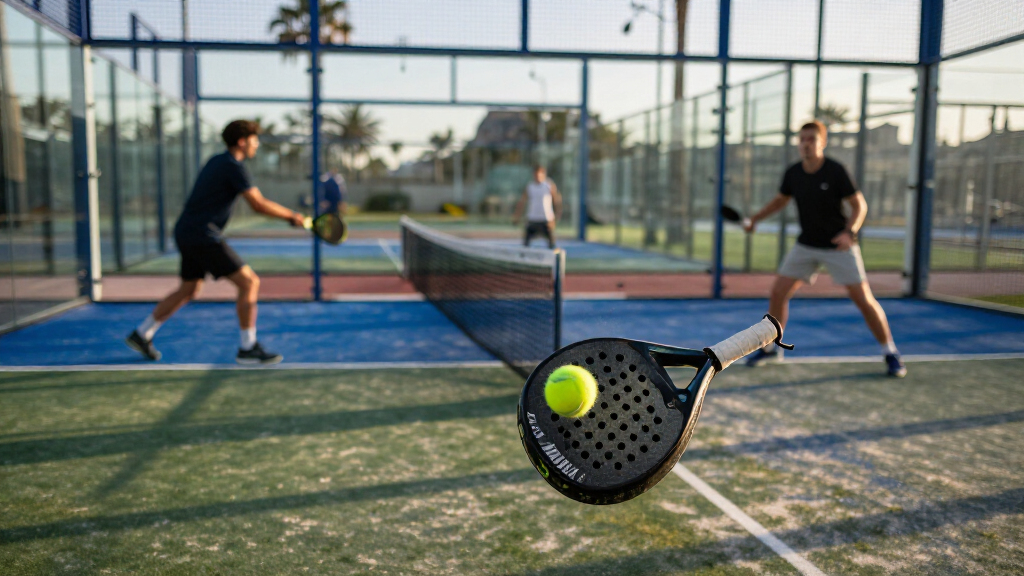
Padel is a racquet sport typically played in doubles on an enclosed court roughly half the size of a tennis court, with walls that form part of play. Originating in Mexico in the 1960s, it has long been established in Spain and Argentina and, over the past decade, has expanded internationally. That expansion has included the United States, where dedicated padel clubs, court installations, and amateur leagues have appeared in a growing number of cities — a trend that is long-standing and well documented within the sport’s industry press.
The current signal is a spike in search and coverage interest around US padel adoption, tracked via a wellness-topic data feed. Interest of this kind generally reflects a combination of new facilities opening, celebrity or investor involvement, media profiles of the sport, and seasonal participation patterns — any or all of which may be contributing. No single trigger has been verified for the present surge, and no specific announcement, event, or dataset has been identified as its source beyond the trend signal itself.
What is confirmed at this stage is limited: the topic is trending, and the sport’s US footprint has been growing for years. Claims about precise participation numbers, court counts, or growth rates should be treated as unverified unless attributed to a named organization or published study.
Why Racquet Sport Growth Gets Attention
Padel’s US growth matters for several audiences. For the fitness and wellness industry, a fast-growing racquet sport represents new demand for court construction, coaching, club memberships, and equipment — categories already reshaped by the pickleball boom. For investors and club operators, padel offers a possible successor or complement to pickleball’s expansion, with higher court-construction costs but strong social-format appeal. For recreational players, the sport’s enclosed courts and doubles format lower the entry barrier compared with tennis, which has supported its rapid adoption elsewhere.
The surge in search interest also signals mainstream curiosity rather than niche awareness, which historically precedes facility investment in new sports markets. However, search interest does not equal sustained participation, and the durability of the trend remains to be seen.
Padel’s Long Road to the US Market
Padel was invented in Acapulco, Mexico, in 1969 and became deeply embedded in Spain and Argentina, where it ranks among the most-played participatory sports. Its international push accelerated in the 2010s as professional tours, including circuits backed by international federations and private leagues, expanded to new regions. US growth has followed a familiar pattern seen with pickleball: early adoption in warm-weather states such as Florida, Texas, and California, followed by indoor facilities in northern metros. Industry groups and sports-business outlets have reported steadily rising US court counts in recent years, though no single official participation census comparable to tennis or pickleball surveys is widely cited.
“US padel adoption is growing fast, data shows.”
— Trend data (wellness topic feed via RSS)
What the Trend Data Does Not Show
The trigger for the current spike is unconfirmed. It is not yet clear whether it stems from a new participation study, a facility or league announcement, a high-profile investor or celebrity involvement, or simply organic seasonal interest. Key figures — the number of US padel players, courts, and clubs, and the year-over-year growth rate — are not included in the trend signal and should not be inferred from it. No named organizations, officials, or spokespeople have been tied to the current wave of coverage, and no statements or quotes from them are available at this time.
Signals That Would Confirm Real Growth
p”: “Watch for corroborating evidence in the coming weeks and months: published participation or court-count studies from sports-industry bodies, announcements of new padel clubs or court conversions by major operators, and coverage in established sports-business outlets. Sustained search interest over multiple months, rather than a short spike, would offer stronger evidence of durable adoption. Official guidance from racquet-sports federations and facility operators remains the most reliable source for participation figures as the picture develops.
Key Questions
What is padel?
A racquet sport played mostly in doubles on an enclosed court about a third the size of a tennis court, where walls are part of play. It originated in Mexico in 1969 and is especially popular in Spain and Argentina.
Is padel really growing fast in the US?
Search and coverage interest is spiking, and the sport’s US footprint has grown steadily for years. However, the precise growth rate in participation is not confirmed by a named published study in the current trend signal.
How is padel different from pickleball?
Padel is played with solid racquets and a depressurized tennis-style ball on an enclosed court with walls; pickleball uses paddles and a plastic ball on an open court. Padel courts are larger and costlier to build.
What caused the current spike in interest?
It is unconfirmed. Plausible drivers include new facilities, media profiles, investor activity, or seasonal participation patterns, but no specific trigger has been verified.
Where can I play padel in the US?
Padel clubs have opened in a growing number of US cities, concentrated in Florida, Texas, and California, with indoor facilities expanding elsewhere. Checking local racquet-club directories or the sport’s national association listings is the most reliable way to find courts.
Source: rss