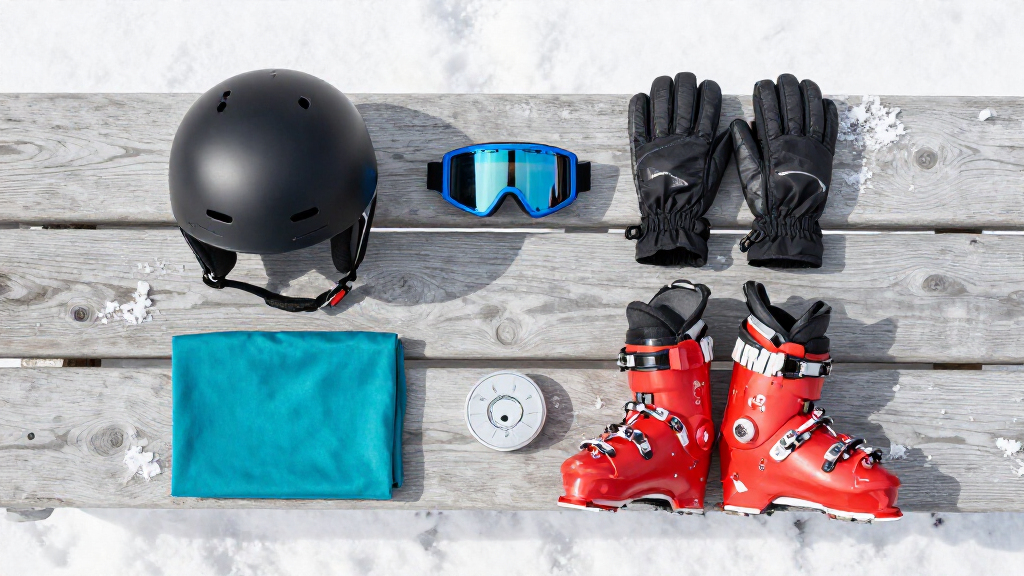
As we look toward the 2026 winter season, ensuring your equipment is ready is crucial for a safe and enjoyable experience on the slopes. This checklist is designed for active enthusiasts who want to upgrade or replace their gear with reliable, high-performance items. Whether you are a seasoned veteran or a dedicated beginner, having the right foundation prevents discomfort and enhances your time outdoors.

Get sports gear delivered free with Prime
- Fast, free delivery on millions of items
- Prime Video, Amazon Music and more included
- Member-only deals all year
The guide is organized by critical gear categories, starting with footwear and head protection, moving through thermal layers, and finishing with essential accessories like gloves and socks. Each section highlights specific product recommendations where applicable, while also providing universal advice for items that require more personal fitting. This structure allows you to tackle your shopping list systematically and efficiently.
To use this checklist effectively, review each section carefully and check off items as you evaluate your current equipment. Do not rush the process; proper fit is more important than brand loyalty. Use the specific product names provided as benchmarks for quality and features, but always prioritize how the gear feels on your body. This approach ensures you invest in items that will last multiple seasons.
Snowboard Boots
Snowboard boots are arguably the most critical component of your setup, acting as the direct interface between your body and the board. A poor fit here leads to blistering pain and reduced control, making every run miserable. Many buyers make the mistake of choosing boots based solely on aesthetics or brand recognition rather than technical fit. You must ensure the boot wraps snugly around your foot without creating pressure points, allowing for precise edge control.
The Burton Ruler BOA Snowboard Boots offer a compelling solution for riders seeking convenience and consistent performance. The BOA closure system allows for micro-adjustments, which is vital for accommodating foot swelling during long days on the mountain. When trying these or similar boots, wear the socks you intend to ride in and stand in a riding stance. Your toes should barely touch the front liner when standing straight but pull back slightly when you flex your knees into a neutral riding position. Avoid buying boots that feel loose initially, as they will pack out significantly over time, leading to a sloppy fit that compromises safety and responsiveness.
What to look for:
- Snug heel hold to prevent lift
- Toe box room without excess space
- Closure system ease of use
- Liner material comfort and warmth
- Flex rating matching your skill level
Burton Ruler BOA Snowboard Boots, Black

These snowboard boots feature a dual-zone BOA fit system with independently adjustable lace zones and a medium-flex tongue for a snug fit. The heat-moldable Imprint 2 liner, 3M Thinsulate insulation, and reflective foil underfoot provide warmth, while the waterproof construction and impact-damping cushioning support riding in cold conditions.
Pros:
- Dual-zone BOA system allows independent fit adjustment
- Warm liner includes 3M Thinsulate insulation and reflective foil
- Waterproof construction with a sealed lower boot zone
- Heel hold and cushioning are designed for comfort and impact damping
Cons:
- Medium flex may not suit riders seeking a very soft or very stiff boot
- The listing provides limited sizing and fit guidance
Best for: riders wanting convenient lacing
Not ideal for: those preferring traditional laces
Bottom line: The Burton Ruler BOA provides a secure, adjustable fit ideal for all-day comfort.
Ski Helmet
Head protection is non-negotiable, and modern helmets have evolved beyond simple hard shells. The SMITH Descend MIPS Helmet exemplifies this evolution by integrating Multi-directional Impact Protection System technology. This feature allows the head to rotate slightly relative to the skull during angled impacts, potentially reducing rotational forces on the brain. When selecting a helmet, prioritize safety certifications and fit over stylish aesthetics.
A common error is purchasing a helmet that is too large, hoping it will accommodate thicker hats later. Helmets should fit snugly against your head, with cheek pads applying gentle pressure. If you can rotate the helmet independently of your scalp, it is too loose. Ensure the helmet integrates seamlessly with your goggles to avoid the “gaper gap,” which exposes your forehead to cold air. The Descend’s ventilation system is also noteworthy, allowing you to regulate temperature as you exert energy. Always try on helmets with your goggles on to ensure compatibility and proper coverage of the forehead and ears without restricting your peripheral vision or hearing.
What to look for:
- MIPS or similar rotational safety tech
- Adjustable dial fit system
- Goggle compatibility without gaps
- Adequate ventilation options
- Certified safety standards compliance
SMITH Descend MIPS Helmet

The Smith Descend Helmet offers lightweight, impact-absorbing protection for skiing and snowboarding, featuring MIPS technology and Zonal Koroyd coverage. It includes adjustable vents, a customizable fit, and removable ear pads for comfort and convenience.
Pros:
- Lightweight and durable construction
- Advanced impact protection with MIPS and Zonal Koroyd coverage
- Excellent ventilation with adjustable vents
- Comfortable fit with adjustable dial and removable ear pads
Cons:
- May be more expensive than basic helmets
- Ear pads are removable but may be lost if not handled carefully
Best for: safety-conscious skiers and riders
Not ideal for: those needing extreme lightweight
Bottom line: The Smith Descend offers robust protection and customizable fit for serious mountain days.
Thermal Base Layers
Base layers are your primary defense against moisture and cold, making material choice paramount. Cotton is strictly prohibited because it retains sweat, leading to rapid heat loss. Merino wool, such as that found in the Smartwool Men’s Classic Thermal Merino Base Layer Bottom, is the gold standard for its natural temperature regulation and odor resistance. This specific product provides excellent warmth without excessive bulk, allowing for easy layering under shell pants.
When buying base layers, avoid the mistake of choosing items that are too tight, which can restrict circulation, or too loose, which creates cold air pockets. The fit should be like a second skin, hugging your legs firmly to wick moisture away from your body. Check the flatlock seams to ensure they will not chafe during repetitive movements. The Smartwool option strikes a balance between durability and softness, making it suitable for high-output activities. Pay attention to the waistband construction; it should stay in place without digging into your skin. Investing in quality merino is a long-term strategy, as it lasts for years if cared for properly, maintaining its thermal properties even when damp.
What to look for:
- Merino wool content for warmth
- Flatlock seams to prevent chafing
- Snug but non-restrictive fit
- Moisture-wicking capabilities
- Odor-resistant natural fibers
Smartwool Men’s Classic Thermal Merino Base Layer Bottom

These slim-fit, midweight Merino wool base layer bottoms are designed for cold-weather activities like skiing and hiking. They offer excellent moisture-wicking, breathability, and comfort, with a snug fit to reduce bulk and friction.
Pros:
- Excellent moisture-wicking and breathability
- Slim fit reduces bulk and friction
- Made from high-quality Merino wool for warmth and comfort
- Flatlock seams minimize chafing
Cons:
- May be too slim for those preferring looser fit
- Midweight fabric might be less suitable for very cold conditions without additional layers
Best for: skiers needing reliable insulation
Not ideal for: those preferring synthetic feel
Bottom line: Smartwool merino bottoms deliver consistent warmth and comfort for variable conditions.
Ski Goggles
Ski goggles protect your eyes from UV radiation, wind, and snow glare, while enhancing visibility in flat light conditions. The Smith Squad Goggles with ChromaPop Lens utilize contrast-enhancing technology to make terrain features pop, which is critical for navigating moguls or icy patches. A frequent buying mistake is selecting a single lens tint for all conditions. Ideally, you should have interchangeable lenses or a photochromic lens that adapts to light changes.
Fit is just as important as lens technology. The frame must seal around your face without pressing too hard on your nose or temples. Test the goggle with your helmet to ensure a seamless integration that prevents fogging and cold air entry. The Smith Squad’s spherical lens design offers a wider field of view and reduces distortion compared to flat lenses. Ensure the foam lining is plush and hypoallergenic to prevent skin irritation. Ventilation is also key; look for systems that facilitate airflow to keep the inner lens clear of condensation. A secure strap with silicone grips will keep the goggles in place during high-speed runs and falls.
What to look for:
- ChromaPop or similar contrast tech
- Anti-fog ventilation system
- Helmet compatibility for no gaps
- UV protection rating
- Comfortable foam face seal
Smith Squad Goggles with ChromaPop Lens

The Smith Squad Goggles feature a semi-rimless design with oversized cylindrical lenses for a wide field of view and sharp optics. Equipped with ChromaPop lens technology to enhance contrast and natural colors, they offer anti-fog, moisture-resistant coatings, and a secure, adjustable fit for skiing or snowboarding.
Pros:
- Enhanced contrast and natural color with ChromaPop lens technology
- Wide field of view with sharp optics
- Anti-fog and moisture-resistant coatings for clear vision
- Secure and adjustable fit for comfort
Cons:
- May require careful cleaning to maintain anti-fog coating
- Design may not suit those preferring full-rim goggles
Best for: riders seeking clarity in glare
Not ideal for: those preferring minimal frames
Bottom line: Smith Squad goggles provide superior visibility and comfort for diverse weather conditions.
Insulated Gloves
Keeping your hands warm and dry is essential for maintaining dexterity and overall comfort. The biggest error skiers make is choosing gloves that are too bulky, which hinders their ability to adjust bindings or use poles effectively. Look for gloves with a waterproof membrane, such as Gore-Tex, to ensure moisture from snow does not penetrate the insulation. Breathability is equally important to prevent sweat buildup inside the glove, which can freeze and cause cold fingers.
Consider the closure system; wrist gauntlets that extend over your jacket sleeve prevent snow from entering. Some riders prefer mittens for extreme cold due to the shared warmth of fingers, while others prefer gloves for better grip. If you choose gloves, ensure the palm material offers high friction for secure pole handling. Check for reinforced fingertips if you plan to use touchscreens or adjust goggles frequently. The fit should allow for a thin liner if needed, but not so loose that you lose tactile feedback. Proper insulation weight should match your typical riding intensity and local climate conditions.
What to look for:
- Waterproof breathable membrane
- Secure wrist closure system
- High-friction palm material
- Adequate insulation warmth rating
- Touchscreen compatible fingertips
Ski Socks
Ski socks are often overlooked, yet they play a pivotal role in foot health and boot performance. The cardinal rule is to wear only one pair of socks. Wearing multiple pairs restricts blood flow and creates wrinkles that lead to blisters. Choose socks made from merino wool or synthetic blends, never cotton, as moisture management is critical for preventing cold feet. The sock should extend above the boot cuff to prevent chafing.
Fit is subtle but vital; the sock should be snug but not compressive. Thin cushioning zones in the shin and foot provide comfort without adding bulk that could alter your boot fit. Avoid thick, heavy socks that promise warmth but actually reduce circulation. The right sock works in tandem with your boot’s liner, wicking sweat away from the skin. Look for reinforced heels and toes for durability. If you experience cold feet, it is often a sign of too-tight boots or socks, not insufficient insulation. Always try boots on with the specific socks you plan to wear to ensure the correct overall volume.
What to look for:
- Merino wool or synthetic blend
- Calf-high length
- Thin cushioning zones
- Seamless toe construction
- Snug but non-compressive fit
To manage your budget effectively, prioritize gear that directly impacts safety and comfort. Start with boots and helmets, as these are non-negotiable for protection and performance. Next, invest in quality base layers and goggles, which enhance your daily experience. Gloves and socks can often be sourced from previous seasons or sales, provided they still offer adequate waterproofing and fit. This order ensures you cover the most critical functional needs first.
Remember, the best gear is the gear that fits you perfectly. Take time to try on items in person whenever possible, and do not hesitate to ask shop staff for fitting assistance. A well-fitted setup will transform your winter days from painful struggles into joyful adventures. Stay safe, stay warm, and enjoy the slopes in 2026.