
This checklist is for athletes, coaches, and active families building a practical setup for speed, agility, and coordination. It covers selected training gear alongside two categories where choosing to suit your space and drills matters more than starting with a particular product.
The sections are organized by equipment type: agility ladder, resistance bands, cones, speed parachute, reaction training, and balance training. Each one explains the slot’s role, points out common selection mistakes, and offers fit and compatibility checks to make before adding equipment.
Use the checklist as a starting point, not a requirement to buy everything at once. Match each item to your sport, training surface, available space, and experience level; pay special attention to dimensions and setup needs before choosing a pick.
Agility Ladder
An agility ladder gives you a visual pattern for footwork drills, making it a useful option when you want to practice quick steps and controlled changes of direction. The listed pick, Agility Ladder, 20ft Speed Training Equipment Set, identifies a 20-foot ladder, but the product name alone does not establish its rung spacing, materials, anchoring method, or what else comes in the set. Check those details on the product listing before deciding whether it suits your drills.
A common mistake is focusing only on ladder length. Measure the area where you expect to train, including room to start and stop, and consider whether the surface is suitable for laying the ladder flat. Also check how the ladder is adjusted or secured, and whether its layout can accommodate the patterns you plan to practice. Rung spacing affects how a drill feels, so confirm the specifications rather than assuming a particular configuration from the name. If you train with others, consider whether the setup allows safe spacing between participants. Choose based on usable space, layout, and drill needs, rather than treating any ladder as a complete agility program.
What to look for:
- Confirm the ladder’s assembled length and rung spacing.
- Check the listed surface compatibility and anchoring or adjustment method.
- Measure the training area, including space beyond both ends.
- Verify what equipment is included in the set.
- Choose a layout that fits your planned footwork patterns.
Agility Ladder, 20ft Speed Training Equipment Set

This comprehensive agility training set includes a 20ft adjustable speed ladder, hurdles, cones, resistance parachute, jump rope, and accessories, designed to improve footwork, speed, coordination, and overall athletic performance for athletes of all levels. Suitable for indoor and outdoor use, it supports various sports and fitness routines, making training versatile and portable.
Pros:
- Complete multi-sport training set suitable for all skill levels
- Portable and easy to set up indoors or outdoors
- Includes a variety of equipment to improve speed, agility, and endurance
Cons:
- Some users may find the setup time for multiple components lengthy
- Durability of accessories may vary with intense use
- Adjustable hurdles may require careful handling to maintain stability
Best for: Athletes seeking a defined ladder-drill setup
Not ideal for: Buyers who need confirmed specifications before comparing options
Bottom line: Check the full listing for rung spacing, setup details, and included components before choosing this 20-foot set.
Resistance Bands
Resistance bands can add a portable pulling option to training, but the right choice depends on the exercises and assistance or resistance level you need. The pick is Gymreapers Resistance Bands for Working Out – Elastic Pull Up Exercise; its name indicates workout and pull-up use, but does not specify band dimensions, resistance levels, materials, or the number of bands included. Read the listing carefully and make sure its stated details line up with your intended use.
A frequent buying mistake is selecting a band based on its label alone, without checking the actual resistance information or whether it works for the movement being trained. For pull-up assistance, consider your current ability and whether the listed resistance options offer a suitable starting point; for other exercises, check band length and attachment needs. Verify any care and use instructions, and inspect bands regularly for visible wear before training. If you are combining bands with other equipment, confirm that the connection method is appropriate rather than improvising a setup. Prioritize resistance details, dimensions, and intended exercises over a broad “workout” description.
What to look for:
- Check the listed resistance levels and how they are identified.
- Confirm band length, width, and included quantity.
- Match the band’s stated use to your planned exercises or pull-up assistance needs.
- Review any attachment, care, and use instructions.
- Inspect for wear and replace equipment that appears damaged.
Gymreapers Resistance Bands for Working Out – Elastic Pull Up Exercise Assistanc
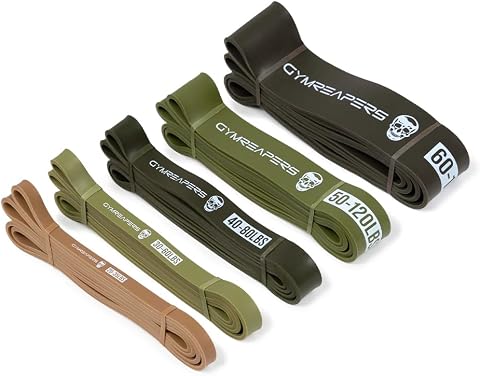
These durable latex resistance bands are designed to enhance mobility, strength, and rehabilitation exercises. Suitable for various workouts, they are portable and come in multiple weight options to suit different fitness levels.
Pros:
- Durable latex construction for long-lasting use
- Multiple weight options suitable for various fitness levels
- Portable and lightweight for workouts anywhere
- Effective for mobility, strength, and rehabilitation exercises
Cons:
- May require additional equipment for some exercises
- Color coding may be confusing for beginners
- Limited information on included accessories
Best for: Shoppers looking for an elastic band for workouts and pull-ups
Not ideal for: Anyone who cannot confirm the resistance range they need
Bottom line: Compare the listed resistance and dimensions with your exercises before selecting this Gymreapers band.
Cones
Cones help mark boundaries, lanes, and turning points, so they can make drills easier to organize without defining the drill for you. There is no specific product pick for this slot; choose cones around your training setting and how you plan to place them. For a small practice area, consider whether you need a compact set or a larger number of markers to lay out several stations.
Common mistakes include buying a quantity that does not support the planned layout, overlooking visibility, or assuming cones will stay put on every surface. Check the product’s dimensions, material, and intended use, then consider how easy the markers are to collect and store. For outdoor sessions, account for the surface and conditions where you train; for shared spaces, make sure the layout leaves clear routes for athletes. If your drills require precise spacing, measure or mark distances rather than estimating each time. A practical choice is one that supports clear layouts, reliable visibility, and easy handling for your usual sessions.
What to look for:
- Choose a quantity that fits your planned drill layouts.
- Check cone height, base dimensions, and material.
- Consider visibility against your usual training surface.
- Confirm whether the cones suit indoor, outdoor, or both settings as stated.
- Look for storage and handling details that fit your routine.
Speed Parachute
A speed parachute is an optional piece of sprint-training equipment, so it makes sense to choose one only when its use fits your training plan and available running area. This checklist has no product pick for the category. Before browsing, decide where you would use it, how you would attach it, and whether the setup is appropriate for the drills you intend to perform.
One common mistake is treating the category name as enough information to establish fit. Product listings may differ in harness adjustment, attachment details, canopy specifications, and included components, so verify each point rather than assuming a standard setup. Check the manufacturer’s use guidance and confirm that the harness can be adjusted to the intended user. Consider whether the available training space allows unobstructed movement, with room to start and finish drills. Do not improvise attachment points or use the equipment in a way that conflicts with its instructions. Prioritize secure fit, clear use guidance, and suitable space; if those details are unclear, consider another training tool for the session.
What to look for:
- Review the stated harness adjustment range and fit guidance.
- Check attachment details and how the equipment is intended to be used.
- Verify canopy specifications and included components in the listing.
- Confirm that your training area provides unobstructed running space.
- Follow manufacturer instructions and avoid improvised attachments.
Reaction Ball
Reaction training can build practice around responding to visual cues, but the selected item’s name calls for a closer look before purchase. The pick is ReactionX Reaction Training Light System for Speed and Agility, which is described as a light system rather than simply a ball. Check the product listing to confirm what the system contains, how the lights are operated, and whether the name accurately matches the equipment you expect for your drills.
A common mistake is choosing from a category heading without checking the actual product format. Confirm whether this item includes a physical reaction ball, a light-based setup, or components for a particular training arrangement; do not assume the answer from the section label. Review power or charging requirements, setup instructions, and any device or space requirements stated by the seller. Consider who will operate the system during practice and whether the cues suit individual or group sessions. Match the product’s documented functions to your goal, whether that is responding to light prompts or practicing with a ball. Clear expectations about included components and operating requirements are especially important for this pick.
What to look for:
- Confirm whether the product is a light system, a physical ball, or includes both.
- Review the listed components and setup instructions.
- Check any power, charging, or device requirements stated by the seller.
- Match the cue format to your planned reaction drills.
- Consider whether the system suits solo practice, coached sessions, or group use.
ReactionX Reaction Training Light System for Speed and Agility

The ReactionX Reaction Training Light is a high-tech system designed to improve reaction speed, memory, and spatial awareness. Controlled via a mobile app, it includes multiple lamps and accessories suitable for various sports and rehabilitation purposes.
Pros:
- Highly responsive with 0.01-second reaction time
- Customizable training modes via mobile app
- Suitable for various sports and rehabilitation
- Includes comprehensive accessories for versatile use
Cons:
- Samsung S21 series not supported
- Requires mobile app for full functionality
- Limited to specific sports and training purposes
Best for: Shoppers seeking light-based speed and agility training
Not ideal for: Anyone specifically expecting a conventional reaction ball without verifying contents
Bottom line: Confirm the ReactionX system’s contents and operating requirements before treating it as a reaction-ball pick.
Balance Trainer
A balance trainer should match the stability work you plan to do and the environment where you will use it. The listed pick is SQUATZ Apollo Board Mini: 150lb Resistance Smart Cable Machine for Ful. Because the supplied product name is truncated and describes a board alongside a resistance cable machine, verify the full product title and specifications before treating it as a conventional balance trainer. The name alone does not establish the board’s dimensions, setup, included accessories, or intended exercises.
A common buying mistake is assuming a product’s category based on a partial title. Check the complete listing, then confirm the equipment’s intended use, dimensions, stability requirements, and any stated user or load limits. The “150lb” wording appears in the supplied name, but check the listing for what that figure refers to and how it applies to the equipment; do not assume it describes a board capacity. Measure the available space and review any floor or assembly requirements. If you want a simple balance surface, verify that this pick actually provides that function; if you want cable-based resistance, confirm the setup supports your planned movements. Prioritize full specifications and exercise compatibility before choosing.
What to look for:
- Find the complete, untruncated product title and listing.
- Confirm whether the product is primarily a balance board, cable machine, or combined system.
- Review dimensions, assembly needs, and surface requirements.
- Clarify what the listed 150-pound figure refers to.
- Check that the equipment supports your planned exercises and fits your space.
SQUATZ Apollo Board Mini: 150lb Resistance Smart Cable Machine for Full Body Wor

The SQUATZ Apollo Board Mini is a compact, foldable home gym cable machine designed for full-body strength training. It features adjustable resistance up to 150 lbs, includes various accessories, and connects to a free app for workout programs and tracking.
Pros:
- Compact and space-saving design
- Adjustable resistance up to 150 lbs
- Includes multiple workout accessories
- Connects to a free app for guided workouts
Cons:
- Requires a smartphone to access workout programs
- Limited resistance range for advanced lifters
Best for: Shoppers whose planned exercises match the verified product setup
Not ideal for: Anyone seeking a simple balance trainer based only on the partial title
Bottom line: Verify the complete listing and intended use before deciding whether this SQUATZ pick fits the balance-training slot.
Build your setup in a needs-first order: start with equipment that supports drills you already do, then add optional tools such as cones or a speed parachute when your space and plan call for them. Confirm dimensions, resistance details, included components, and operating requirements before purchasing, especially for products whose names leave key specifications unclear.
You do not need every category to make training purposeful. Pick a few items that fit your sport, available space, and routine, and use each one with a clear goal. With a little checking before you buy, this checklist can help you assemble a practical, compatible training setup at your own pace.