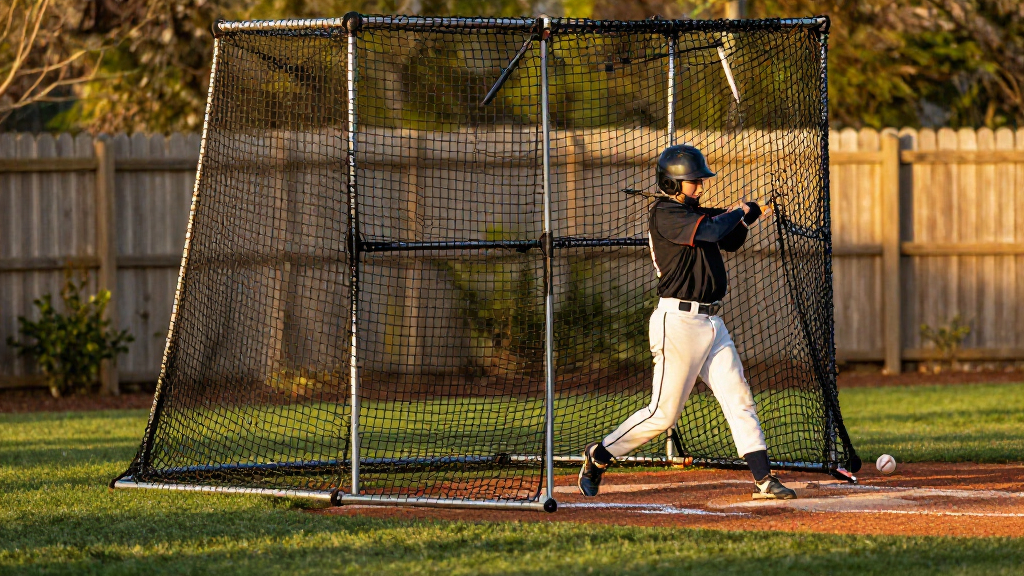
For portable batting cages for backyard practice, my best overall pick is the HSPXCTMFL 24 ft Batting Cage with Reinforced Netting, which pairs a useful practice length with a net built for repeated impact. The IDEATRY 22/30 ft cage stands out for buyers who want a choice of length, while the VEVOR 35 ft steel-frame cage is the longer, more substantial option for a dedicated practice area. The main tradeoffs are yard footprint, setup effort, frame stability, and how much room hitters need to take full swings. A smaller cage can fit more yards, but a longer model gives more space for ball flight and varied drills. Read on for the full breakdown, selection criteria, and advice on matching a cage to your space and practice routine.

Get sports gear delivered free with Prime
- Fast, free delivery on millions of items
- Prime Video, Amazon Music and more included
- Member-only deals all year
Complete the kit


Key Takeaways
- The lineup favors practical backyard dimensions: many models measure about 22 × 12 × 8 ft, so the clearest differences are often frame, net, and setup rather than basic footprint.
- Length choices change how a cage can be used: IDEATRY, LTNKXUP, and RIIFRILY list multiple lengths, while VEVOR’s 35 ft model suits yards set aside for a longer practice lane.
- Reinforced netting is a meaningful differentiator: the HSPXCTMFL pick leads the roundup because its reinforced netting addresses repeated ball impact directly.
- Portable does not mean equally easy to place: a metal or steel frame may provide a more substantial structure, but it also calls for more space and a plan for setup and storage.
- Special formats serve narrower needs: VEVOR’s 12 ft cage and OZIS’s inflatable model offer alternatives to a standard full-length frame, but buyers should match their practice goals to those formats.
| HSPXCTMFL 24 ft Batting Cage with Reinforced Netting |  | Best for Reinforced Netting | Dimensions: 24 × 10 × 10 ft | Net material: 4-ply polyester no-knot mesh | Mesh size: 1.25 in | VIEW LATEST PRICE | See Our Full Breakdown |
| KuiBonu Portable Batting Cage, 22 x 12 x 8 ft |  | Best for Pitching-Machine Practice | Dimensions: 22 × 12 × 8 ft | Netting: 5-ply, 1.25-inch stretchable polyester | Pole material: 14 mm fiberglass | VIEW LATEST PRICE | See Our Full Breakdown |
| IDEATRY Portable Baseball and Softball Batting Cage Net, 22/30 ft x 12 ft x 8 ft |  | Best for Adjustable Cage Length | Dimensions: 22 or 30 ft × 12 ft × 8 ft | Mesh: 1.25-inch, 4-strand polyethylene | Frame: 12.7 mm fiberglass poles | VIEW LATEST PRICE | See Our Full Breakdown |
| Vertura Portable Baseball and Softball Batting Cage, 22 x 12 x 8 ft |  | Best for Rope-Anchored Stability | Dimensions: 22 × 12 × 8 ft | Netting: 3-ply blue Oxford polyester | Frame: 14 mm fiberglass poles | VIEW LATEST PRICE | See Our Full Breakdown |
| IDEATRY Portable Baseball and Softball Batting Cage Net, 22/30 ft | | Best for Tool-Free Pole Assembly | Available lengths: 22 ft or 30 ft | Width and height: Not specified in the supplied product data | Net material: 1.25-inch, 4-strand polyethylene mesh | VIEW LATEST PRICE | See Our Full Breakdown |
| ZivPlay Portable Baseball and Softball Batting Cage Net, 22 x 12 x 8 ft |  | Best for Soft-Rebound Practice | Dimensions: 22 x 12 x 8 ft | Net material: Three-ply stretchable polyester | Pitching hole: 20 x 40 in | VIEW LATEST PRICE | See Our Full Breakdown |
| Apex Sports Portable Batting Cage, 22 x 12 x 8 ft |  | Best for Ready-to-Store Setup | Dimensions: 22 x 12 x 8 ft | Netting: 3-ply, 1.25 in stretchable polyester | Pitching-machine opening: 3.5 x 2 ft | VIEW LATEST PRICE | See Our Full Breakdown |
| Baseball and Softball Batting Cage Net with Metal Frame |  | Best for a Sturdier Frame | Dimensions: 20 x 10 x 8 ft | Frame material: Metal | Frame tube thickness: 25 mm | VIEW LATEST PRICE | See Our Full Breakdown |
| LTNKXUP Baseball and Softball Batting Cage, 22/30 ft × 12 ft × 8 ft |  | Best for Choosing Cage Length | Dimensions: 22 or 30 ft × 12 ft × 8 ft | Mesh material: 6-strand polyethylene | Mesh opening: 1.75 in | VIEW LATEST PRICE | See Our Full Breakdown |
| VEVOR Portable Baseball and Softball Batting Cage, 12 ft |  | Best for Compact Backyards | Dimensions: 12 × 10.2 × 7.6 ft | Frame: Fiberglass | Net material: Polyester, 4-ply reinforced mesh | VIEW LATEST PRICE | See Our Full Breakdown |
| OZIS Inflatable Baseball Batting Cage with Blower |  | Best for Fast, Temporary Setup | Inflated dimensions: Approximately 19.7 × 11.5 × 9.8 ft | Materials: 210D Oxford fabric and polyester netting | Sports: Baseball, softball, and tennis | VIEW LATEST PRICE | See Our Full Breakdown |
| Shopsource Portable Baseball and Softball Batting Cage, 22 x 12 x 8 ft |  | Best for Pitching-Machine Access | Dimensions: 22 × 12 × 8 ft | Sports: Baseball and softball | Material: Polyester | VIEW LATEST PRICE | See Our Full Breakdown |
| VEVOR Portable Baseball Batting Cage, 35 ft, Steel Frame |  | Best for a Full-Length Practice Lane | Dimensions: 35 × 10.5 × 10.2 ft | Frame material: Powder-coated high-carbon steel | Net material: HDPE | VIEW LATEST PRICE | See Our Full Breakdown |
| RIIFRILY Backyard Baseball Batting Cage with Net and Steel Frame, 20/30/40 ft |  | Best for Choosing a Backyard-Fit Length | Available lengths: 20 ft, 30 ft, and 40 ft | Listed size: 40 ft | Frame material: Steel tubing | VIEW LATEST PRICE | See Our Full Breakdown |
| portable batting cages for backyard practice | Dimensions | Warranty | Net material | Frame |
|---|---|---|---|---|
| HSPXCTMFL 24 ft Batting Cage w | 24 × 10 × 10 ft | 1 year | 4-ply polyester no-knot mesh | 12.7 mm fiberglass arches |
| KuiBonu Portable Batting Cage | 22 × 12 × 8 ft | 2 years | — | — |
| IDEATRY Portable Baseball and | 22 or 30 ft × 12 ft × 8 ft | 1 year | — | 12.7 mm fiberglass poles |
| Vertura Portable Baseball and | 22 × 12 × 8 ft | 1 year | — | 14 mm fiberglass poles |
| IDEATRY Portable Baseball and | — | 1 year | 1.25-inch, 4-strand polyethylene mesh | 12.7 mm fiberglass poles |
| ZivPlay Portable Baseball and | 22 x 12 x 8 ft | — | Three-ply stretchable polyester | 12.7 mm fiberglass poles |
| Apex Sports Portable Batting C | 22 x 12 x 8 ft | 1 year | — | — |
| Baseball and Softball Batting | 20 x 10 x 8 ft | 1 year | 7-ply nylon mesh | — |
| LTNKXUP Baseball and Softball | 22 or 30 ft × 12 ft × 8 ft | 1 year | — | Fiberglass; 12.7 mm poles |
| VEVOR Portable Baseball and So | 12 × 10.2 × 7.6 ft | — | Polyester, 4-ply reinforced mesh | Fiberglass |
| OZIS Inflatable Baseball Batti | — | — | — | — |
| Shopsource Portable Baseball a | 22 × 12 × 8 ft | 1 year | — | — |
| VEVOR Portable Baseball Battin | 35 × 10.5 × 10.2 ft | — | HDPE | — |
| RIIFRILY Backyard Baseball Bat | — | 1 year | Polyethylene (PE) | — |
More Details on Our Top Picks
HSPXCTMFL 24 ft Batting Cage with Reinforced Netting
The HSPXCTMFL pairs a 24 × 10 × 10 ft enclosure with 4-ply, no-knot polyester netting, making it a strong fit for backyard hitters who want more length than a standard 22-foot cage. Its zipper entry and separate side pitching opening give families flexibility to switch between machine work and other drills. Compared with the KuiBonu 22 x 12 x 8 ft, this cage is longer and taller, while KuiBonu offers a wider footprint and a much larger machine opening. The tradeoff is that the HSPXCTMFL opening is only 18 × 18 cm, so machine placement may be less convenient. Its fiberglass arches need stakes and ropes, and setup calls for two people; it is portable, but not a quick one-person pop-up.
Pros:- 24 ft length and 10 ft height provide more enclosed space than the 22 × 12 × 8 ft options.
- 4-ply, no-knot polyester mesh is designed for repeated ball impact.
- Zipper entry and side pitching opening support different practice arrangements.
- Carry bag and tool-free frame assembly support storage and transport.
Cons:- The 18 × 18 cm pitching opening is comparatively small.
- Assembly requires two people, and outdoor use depends on secure anchoring.
Best for: Backyard baseball or softball families who want a taller, longer cage with reinforced netting and can leave room for anchored setup.
Not ideal for: Hitters who need a roomy pitching-machine port or a cage one person can assemble and anchor alone.
- Dimensions:24 × 10 × 10 ft
- Net material:4-ply polyester no-knot mesh
- Mesh size:1.25 in
- Frame:12.7 mm fiberglass arches
- Anchoring:6+1 U-shaped iron stakes and adjustable 4 m wind ropes
- Entry:1.6 m zipper door
- Pitching opening:18 × 18 cm
- Package weight:15.06 kg
- Warranty:1 year
Our verdict“Choose the HSPXCTMFL if reinforced netting and extra cage length matter more than a large machine opening or solo setup.”
KuiBonu Portable Batting Cage, 22 x 12 x 8 ft
The KuiBonu is the clearest choice here for machine-fed backyard sessions: its 31.5-inch square pitching opening is far larger than the small side port on the HSPXCTMFL. The 22 × 12 × 8 ft layout also gives hitters a broad practice lane without the extra length of the 24-foot HSPXCTMFL or the selectable 30-foot IDEATRY. Its 5-ply stretchable polyester netting and eight metal stakes add a substantial anchor-and-net setup for repeated use. That strength comes with practical limits: the cage needs a full 22 × 12 ft footprint, and fiberglass poles and stakes must be assembled and secured outdoors. The included bag helps with storage, but this is better treated as a dedicated backyard practice area than something to reposition after every session.
Pros:- Large 31.5 × 31.5 in machine opening accommodates a machine-focused setup.
- 5-ply, 1.25-inch stretchable polyester netting is designed for repeated practice.
- Eight metal stakes help secure the cage outdoors.
- Two-year warranty is longer than the one-year coverage listed for the other products in this batch.
Cons:- Its 22 × 12 × 8 ft footprint needs substantial clear backyard space.
- Fiberglass poles and stakes require assembly and anchoring before use.
Best for: Families using a pitching machine who have a level backyard with room for a 22 × 12 ft cage and want a large, dedicated machine port.
Not ideal for: Small-yard owners or buyers seeking the longest batting lane or the easiest setup to move frequently.
- Dimensions:22 × 12 × 8 ft
- Netting:5-ply, 1.25-inch stretchable polyester
- Pole material:14 mm fiberglass
- Pitching machine opening:31.5 × 31.5 in
- Anchors:8 metal stakes
- Included components:Net, fiberglass poles, support nets, and carry bag
- Backing door:Zippered
- Warranty:2 years
Our verdict“Pick the KuiBonu for a roomy machine opening and robust netting if you have space to keep a full-size cage anchored.”
IDEATRY Portable Baseball and Softball Batting Cage Net, 22/30 ft x 12 ft x 8 ft
This IDEATRY cage is the flexible pick for backyards where practice needs may change: its listed 22- or 30-foot length gives buyers a choice between a more manageable lane and a longer hitting area. A closeable pitching-port curtain also lets the cage be enclosed when a machine is not in use. Compared with the fixed 24-foot HSPXCTMFL, it can offer a longer configuration, while the HSPXCTMFL has a specified 10-foot height and reinforced 4-ply netting. IDEATRY uses 1.25-inch, 4-strand polyethylene mesh with Oxford cloth reinforcement at the seams, plus a spare pole and a broad set of anchors, ropes, and hooks. The cost of that flexibility is a large footprint at either length and assembly work; buyers should confirm which length configuration the selected kit supports.
Pros:- Choice of 22- or 30-foot length accommodates different yard sizes and practice needs.
- Closeable pitching-port curtain helps contain practice when the port is unused.
- Oxford cloth seam reinforcement and a spare fiberglass pole add practical support.
- Kit includes iron stakes, U-shaped anchors, ropes, hooks, and a carry bag.
Cons:- The 30-foot configuration requires a long, unobstructed backyard area.
- Assembly is required, and buyers should verify the selected kit’s length configuration.
Best for: Households choosing between a shorter practice lane and a longer 30-foot setup, especially those who want a closable machine port.
Not ideal for: Small yards or buyers who need a clearly specified, single-length cage with minimal assembly.
- Dimensions:22 or 30 ft × 12 ft × 8 ft
- Mesh:1.25-inch, 4-strand polyethylene
- Frame:12.7 mm fiberglass poles
- Pitching machine port:Dedicated port with closeable curtain
- Anchors:10 iron stakes and 10 U-shaped anchors
- Included hardware:10 hooks, 10 rope connectors, and 10 ropes
- Poles included:5 fiberglass poles, including 1 spare
- Assembly:Snap-together poles with elastic ropes
- Warranty:1 year
Our verdict“Choose this IDEATRY model if you want length options and a closable machine port, and can accommodate assembly and a large footprint.”
Vertura Portable Baseball and Softball Batting Cage, 22 x 12 x 8 ft
The Vertura centers its backyard setup on a support system of 16-strand braided ground ropes and metal anchors, a useful distinction for buyers who want more than poles and stakes holding the cage in place. Its fixed 22 × 12 × 8 ft footprint matches the common full-size layout, and a 3.3 × 1.6 ft machine opening plus detachable door give it more setup flexibility than the HSPXCTMFL’s smaller 18 × 18 cm port. The tradeoff is netting: Vertura lists 3-ply Oxford polyester, fewer plies than the KuiBonu’s 5-ply net. It also takes about an hour and needs two or three people to assemble, so it is less convenient to pack away often than the tool-free HSPXCTMFL. At 28 lb, the carry bag supports transport, though this is still a substantial backyard structure.
Pros:- Braided ground ropes and metal anchors provide a dedicated support system.
- 3.3 × 1.6 ft pitching opening gives machine setups more room than the HSPXCTMFL port.
- Detachable door supports alternate practice arrangements.
- Carry bag is included for storage and transport.
Cons:- Assembly takes about an hour and requires two or three people.
- 3-ply netting has fewer plies than the 5-ply KuiBonu net.
Best for: Backyard hitters who value rope-and-anchor support, want a generous machine opening, and can assemble the cage with a small group.
Not ideal for: Solo assemblers, frequent pack-away users, or buyers prioritizing higher-ply netting over the KuiBonu.
- Dimensions:22 × 12 × 8 ft
- Netting:3-ply blue Oxford polyester
- Frame:14 mm fiberglass poles
- Ground support:16-strand braided ropes with metal anchors
- Pitching opening:3.3 × 1.6 ft
- Weight:28 lb
- Assembly:About 1 hour; 2–3 people
- Included components:Net, fiberglass poles, supporting ropes, metal anchors, and carry bag
- Warranty:1 year
Our verdict“Choose Vertura if its rope-anchored support and large pitching opening matter more than higher-ply netting or quick solo setup.”
IDEATRY Portable Baseball and Softball Batting Cage Net, 22/30 ft
This second IDEATRY option suits buyers who want a flexible cage length and a setup designed around elastic-rope-connected poles. The listed choices of 22 or 30 feet make it easier to match the cage to a yard, while its pitching-port curtain closes the opening for practice without a machine. Like the longer IDEATRY model in this group, it includes a spare pole and a full anchoring kit; compared with the Vertura, the listed assembly system aims for tool-free pole connection rather than an hour-long, two-to-three-person build. However, the product information gives less complete dimensions than the other IDEATRY listing, which specifies a 12-foot width and 8-foot height. Its large footprint, required anchoring, and one-year warranty keep it from being the strongest choice for buyers seeking a more fully specified or higher-ply net system.
Pros:- Available in 22- or 30-foot lengths for different backyard layouts.
- Pitching-port curtain closes the opening when practicing without a machine.
- Elastic-rope-connected fiberglass poles are designed for tool-free assembly.
- Includes a spare pole, storage bag, anchors, ropes, hooks, and connectors.
Cons:- The product data does not specify the cage’s width and height.
- Either length needs substantial clear space and outdoor anchoring.
Best for: Backyard players who want a 22- or 30-foot lane, a closable machine port, and elastic-connected poles for tool-free assembly.
Not ideal for: Buyers who need full dimensions confirmed before planning a tight yard layout or want clearly stated reinforced netting.
- Available lengths:22 ft or 30 ft
- Width and height:Not specified in the supplied product data
- Net material:1.25-inch, 4-strand polyethylene mesh
- Frame:12.7 mm fiberglass poles
- Pitching port:Opening with closeable curtain
- Poles included:5 fiberglass poles, including 1 spare
- Anchoring hardware:10 iron stakes, 10 U-shaped anchors, 10 hooks, and 10 ropes
- Assembly:Elastic-rope-connected poles; instructions and video tutorial included
- Warranty:1 year
Our verdict“Pick this IDEATRY version for flexible lane length and tool-free pole connections, but confirm the full cage dimensions before buying.”
ZivPlay Portable Baseball and Softball Batting Cage Net, 22 x 12 x 8 ft
The ZivPlay suits backyard hitters who want a full-size practice lane and a net designed to soften ball rebound. Its three-ply stretchable polyester and 20 x 40-inch pitching hole support both batting-machine sessions and work with a pitcher, while the detachable door makes access and drills more flexible. Setup is listed at under 30 minutes without tools, a practical advantage for families who plan to put the cage up and take it down between sessions. Compared with the VEVOR 12 ft, ZivPlay offers a much longer hitting area, but it also demands substantially more yard space. Fiberglass poles and ground pegs keep the package portable, though anchoring depends on being able to use pegs and ropes. This is a practice-first pick, not a cage to leave assembled in a cramped yard.
Pros:- Three-ply stretchable polyester is designed to soften ball rebound.
- Pitching hole and detachable door support machine-fed and pitcher-led drills.
- Tool-free setup is listed at under 30 minutes.
- Includes support ropes and ground pegs for anchoring.
Cons:- The 22 x 12 ft footprint requires substantial backyard space.
- Ground-peg anchoring is less practical on surfaces where stakes cannot be driven.
Best for: Backyard players who have room for a 22-foot cage and want a pitching opening for machine or pitcher drills.
Not ideal for: Owners of small yards or hard-surface practice areas where the cage’s ground pegs cannot be used.
- Dimensions:22 x 12 x 8 ft
- Net material:Three-ply stretchable polyester
- Pitching hole:20 x 40 in
- Frame:12.7 mm fiberglass poles
- Support:8 ropes and ground pegs
- Setup:Under 30 minutes; no tools required
- Package weight:13.29 kg
Our verdict“Choose ZivPlay if you want a full-length backyard cage with a soft-rebound net and have suitable space and ground for anchoring.”
Apex Sports Portable Batting Cage, 22 x 12 x 8 ft
The Apex Sports is a strong fit for backyard practice that moves between locations: it comes with a carry bag, stakes, and supporting nets, so transport and storage are part of the package rather than an afterthought. Its 22 x 12 x 8 ft enclosure gives hitters room for repeated swings, and the 3.5 x 2 ft opening accommodates a pitching machine. The stretchable three-ply polyester is designed to rebound balls softly, similar in purpose to the ZivPlay net. Apex’s more obvious advantage is its included carry bag and stated one-year warranty; ZivPlay, by contrast, specifies a smaller pitching hole and tool-free setup under 30 minutes. The tradeoff is the same large footprint, plus fiberglass poles and plastic stakes that call for careful handling during assembly. I’d favor it for families who pack away gear after practice, not for a yard with little clear space.
Pros:- Carry bag makes storage and transport easier.
- 3.5 x 2 ft machine opening supports pitching-machine sessions.
- Stretchable three-ply polyester is designed to rebound balls softly.
- Includes stakes, supporting nets, and a one-year warranty.
Cons:- The 22 x 12 ft footprint needs a large clear area.
- Fiberglass poles and plastic stakes may require careful handling.
Best for: Families and coaches who need a full-size cage with a carry bag for seasonal storage or trips to a practice area.
Not ideal for: Buyers with limited yard space or anyone seeking a frame and anchoring system suited to rough handling.
- Dimensions:22 x 12 x 8 ft
- Netting:3-ply, 1.25 in stretchable polyester
- Pitching-machine opening:3.5 x 2 ft
- Poles:12.7 mm fiberglass
- Included anchoring:8 plastic stakes and supporting nets
- Storage:Carry bag included
- Warranty:1 year
Our verdict“Pick Apex Sports if a carry bag and machine opening matter more than minimizing the space needed for a full-size cage.”
Baseball and Softball Batting Cage Net with Metal Frame
For buyers who would rather trade portability for a more substantial frame, this WICTTISPOSI metal-frame cage takes a different approach from the fiberglass-pole ZivPlay and Apex Sports models. Its 25 mm frame tubes and seven-ply nylon mesh are intended for impact-heavy batting, pitching, and fielding practice, while the zippered entry and 3.5 x 2.5 ft pitching hole make it usable for more than straight hitting drills. At 20 x 10 x 8 ft, it is shorter and narrower than those 22 x 12 ft options, which may make it easier to fit in some yards. The cost of that heavier-duty construction is a listed weight of 38.56 kg, so it is less convenient to move and store. The manufacturer also limits its outdoor use: severe weather and intense sun may damage it. This makes more sense for a fair-weather setup than for frequent relocation or year-round exposure.
Pros:- 25 mm metal frame tubes offer a sturdier alternative to fiberglass poles.
- Seven-ply nylon mesh is designed for batting, pitching, and fielding practice.
- Zippered entry and pitching hole support varied drills.
- Pre-linked tubes assemble without tools.
Cons:- Listed weight of 38.56 kg makes moving and storing it less convenient.
- Not intended for prolonged exposure to severe weather or intense sun.
Best for: Backyard players who prioritize a metal frame and thicker net construction over easy carrying and frequent relocation.
Not ideal for: Buyers who need a lightweight portable cage or plan to leave equipment exposed to severe weather or intense sun.
- Dimensions:20 x 10 x 8 ft
- Frame material:Metal
- Frame tube thickness:25 mm
- Net material:7-ply nylon mesh
- Pitching hole:3.5 x 2.5 ft
- Entry door height:6.7 ft
- Weight:38.56 kg
- Warranty:1 year
Our verdict“Choose this cage if a metal frame matters more than lightweight portability and you can store it or use it in fair weather.”
LTNKXUP Baseball and Softball Batting Cage, 22/30 ft × 12 ft × 8 ft
The LTNKXUP stands out for buyers who want to choose between a 22- and 30-foot cage length rather than commit to the single 22-foot layout offered by ZivPlay or Apex Sports. Its six-strand polyethylene mesh, closable side door, and pitching window support contained practice, including feeding balls from a pitching machine outside the cage. The included carry bag and setup hardware help with transport, while the listed 10 iron stakes and 10 U-shaped anchors provide more anchoring components than the basic peg-and-rope approach described for ZivPlay. Assembly takes about 30 minutes, and the pitching machine itself is not included, so buyers should treat this as a net-and-frame setup rather than a complete training system. The extra length option is useful only if the yard can accommodate it; measure the practice area before choosing the larger configuration.
Pros:- Available in 22- or 30-foot lengths to suit different practice areas.
- Pitching window allows a machine to feed from outside the cage.
- Closable side door helps contain balls during sessions.
- Includes carry bag, iron stakes, U-shaped anchors, and a spare fiberglass pole.
Cons:- Assembly takes approximately 30 minutes.
- Pitching machine is not included.
- The 30-foot option requires a longer clear area than the 22-foot models.
Best for: Players who want a choice of cage length and need a closable door, pitching window, and supplied anchoring hardware.
Not ideal for: Buyers who need a ready-to-use pitching machine or have a yard that cannot fit the selected 22- or 30-foot length.
- Dimensions:22 or 30 ft × 12 ft × 8 ft
- Mesh material:6-strand polyethylene
- Mesh opening:1.75 in
- Frame:Fiberglass; 12.7 mm poles
- Anchoring hardware:10 iron stakes and 10 U-shaped anchors
- Features:Pitching window and closable side door
- Setup time:Approximately 30 minutes
- Warranty:1 year
Our verdict“Choose LTNKXUP if adjustable cage length and supplied anchoring hardware fit your yard and practice routine.”
VEVOR Portable Baseball and Softball Batting Cage, 12 ft
Where the 22-foot ZivPlay and Apex Sports cages need a long stretch of yard, the VEVOR 12 ft is the compact choice for practice in a tighter space. Its 12 × 10.2 × 7.6 ft enclosure is fully enclosed, with a zippered entry and pitching-machine opening to help keep balls contained during shorter drills. The four-ply reinforced polyester mesh and 600D nylon edge are designed to handle repeated impacts, and the package includes tie ropes, ground stakes, and a storage bag. That smaller footprint comes with a real limitation: it offers less length for batting practice than the 22-foot models. VEVOR also recommends storing it after use rather than leaving it outdoors for long periods, and assembly requires two people. I’d choose it when yard dimensions matter more than a long hitting lane and there is room to pack it away between sessions.
Pros:- Compact 12 ft length fits spaces that may not accommodate full-length cages.
- Fully enclosed design, zippered entry, and pitching opening help contain balls.
- Four-ply reinforced mesh and 600D nylon edge are designed for repeated impacts.
- Includes storage bag, stakes, and tie ropes.
Cons:- Shorter practice lane than the 22- and 30-foot options in this lineup.
- Requires two people to assemble.
- Designed to be stored after use, not left outdoors for long periods.
Best for: Backyard hitters with limited length who want an enclosed practice area that can be stored after each session.
Not ideal for: Players who need a long hitting lane, want a one-person setup, or plan to leave their cage outdoors for extended periods.
- Dimensions:12 × 10.2 × 7.6 ft
- Frame:Fiberglass
- Net material:Polyester, 4-ply reinforced mesh
- Edge fabric:600D nylon
- Item weight:17.3 lbs
- Included anchoring:4 U-shaped ground stakes, 6 metal ground stakes, and 8 tie ropes
- Included accessories:Storage bag, electrical tape, and repair module
Our verdict“Pick the VEVOR 12 ft if your backyard cannot fit a full-length cage and you can assemble and store it with help.”
OZIS Inflatable Baseball Batting Cage with Blower
The OZIS takes a different approach from the framed cages in this roundup: its inflatable design creates a roomy, covered practice area without assembling a steel structure. At about 19.7 × 11.5 × 9.8 ft, it offers useful space for backyard batting, pitching, and even tennis, while mesh panels allow airflow. The included blower, stakes, and sandbags mean the main setup components come together in one package. Compared with the Shopsource 22 × 12 × 8 ft cage, this model is shorter and depends on powered inflation rather than rods and netting. That makes it a distinct choice for temporary sessions, but a poor match for an always-ready cage: it needs continuous power and calm, dry conditions. Balls and training accessories are also separate purchases.
Pros:- Inflated enclosure provides a covered space for batting and pitching
- Mesh panels promote airflow
- Blower, stakes, and sandbags are included
- Can support baseball, softball, and tennis practice
Cons:- Requires continuous power to remain inflated
- Not suitable for rain, wind, snow, or other adverse weather
- Balls and training accessories are not included
Best for: Families who want a covered, multi-sport practice space for occasional backyard sessions and have a suitable power source.
Not ideal for: Players seeking a cage that can stay set up outdoors or be used in wind or rain; continuous inflation and weather limits make it less flexible.
- Inflated dimensions:Approximately 19.7 × 11.5 × 9.8 ft
- Materials:210D Oxford fabric and polyester netting
- Sports:Baseball, softball, and tennis
- Blower:Included; 110V, 60Hz
- Power requirement:Continuous power required to remain inflated
- Included accessories:Outer bag, accessories package, ground stakes, and sandbags
- Weather guidance:Not waterproof; avoid adverse weather
- Balls and training accessories:Not included
Our verdict“Choose the OZIS for a covered, temporary practice space when you can supply continuous power and use it in calm, dry conditions.”
Shopsource Portable Baseball and Softball Batting Cage, 22 x 12 x 8 ft
The Shopsource earns its place for backyard hitters who want a large machine opening and a removable door, not for buyers seeking a cage that pops up without assembly. Its 22 × 12 × 8 ft footprint gives it more length than the OZIS inflatable, while supporting rods and a one-inch mesh net create a conventional framed enclosure. Ground nails, anchors, and an elastic rope add ways to secure it, and the carrying bag helps with transport or storage. Compared with the VEVOR 35 ft steel-frame cage, Shopsource uses a shorter, more manageable layout, but it gives up the longer hitting lane and the listed steel-frame construction. Assembly and space remain real requirements, so patios and compact yards may not suit it despite the portability claim.
Pros:- Large opening accommodates most pitching machines
- Removable door provides convenient access
- Carrying bag supports transport and storage
- One-inch mesh netting and included anchors suit backyard practice
Cons:- Requires assembly before use
- The 22 × 12 ft footprint needs substantial setup space
- Does not offer the longer practice lane of the VEVOR 35 ft cage
Best for: Backyard players who use a pitching machine and have room for a 22-foot cage, but want a model that can be packed away between sessions.
Not ideal for: Buyers with a small yard or anyone wanting a ready-to-use enclosure without assembling rods and supports.
- Dimensions:22 × 12 × 8 ft
- Sports:Baseball and softball
- Material:Polyester
- Mesh size:1 in
- Included components:Batting cage and carrying bag
- Frame and anchoring features:Supporting rods, ground nails, anchors, and elastic rope
- Access:Removable door and large opening for most pitching machines
- Warranty:1 year
Our verdict“Pick Shopsource if pitching-machine access and pack-away portability matter more than a longer hitting lane or minimal assembly.”
VEVOR Portable Baseball Batting Cage, 35 ft, Steel Frame
For buyers with the yard to accommodate it, the VEVOR offers the longest listed practice lane among these four: 35 feet of enclosure for batting and softball or baseball work. Its powder-coated steel frame and HDPE netting prioritize a fixed, substantial setup over quick portability; at 71.2 lb, it is not the easiest cage here to move frequently. The included stakes, ropes, connectors, and hooks help secure the frame, and a hook-and-loop entry makes access straightforward. Compared with the Shopsource 22 × 12 × 8 ft cage, VEVOR gives hitters more length but requires more yard space and two people for assembly. Storage also matters for long-term performance, so this is a better fit for a dedicated practice area than for a cage that needs to be packed away after every session.
Pros:- 35-foot enclosure provides a long practice lane
- Powder-coated steel frame is designed for a reinforced structure
- HDPE netting has reinforced edges intended to resist abrasion and tears
- Includes a removable hook-and-loop entry door and ground-securing hardware
Cons:- Assembly requires two people
- At 71.2 lb, it is less convenient to move frequently
- Proper storage is recommended for longer-lasting performance
Best for: Adult players and families with a large backyard who want a long, framed batting lane for regular practice.
Not ideal for: Small-yard owners or solo users who need a lightweight cage that can be assembled, moved, and stored easily.
- Dimensions:35 × 10.5 × 10.2 ft
- Frame material:Powder-coated high-carbon steel
- Net material:HDPE
- Mesh size:1.89 in (48 mm)
- Weight:71.2 lb
- Entry:Removable hook-and-loop door
- Included securing hardware:12 ground stakes, 2 long ropes, 3 short ropes, 6 bead connectors, 6 carabiner hooks, 6 metal tie ropes, and 6 U-shaped stakes
- Suggested users:Adults
Our verdict“Choose the VEVOR when a long, sturdy practice lane is the priority and you have space, help for assembly, and room to store it.”
RIIFRILY Backyard Baseball Batting Cage with Net and Steel Frame, 20/30/40 ft
RIIFRILY stands out for giving backyard buyers a choice of 20, 30, or 40 feet, letting them match the lane to available space rather than accept one fixed size. The listed 40-foot version is the longest option in this group, extending beyond the VEVOR 35 ft cage for players who want more room for full practice routines. Its steel-tube frame, ground stakes, and integrated gate net are aimed at outdoor use, while the polyethylene net is described as UV-resistant and weatherproof. That outdoor focus separates it from the OZIS inflatable, which must be used in calm, dry conditions and needs continuous power. RIIFRILY still calls for assembly and enough clear yard space, and the supplied repair patches suggest net upkeep is part of ownership rather than something to ignore.
Pros:- Available in 20, 30, and 40 ft lengths to suit different practice areas
- UV-resistant, weatherproof polyethylene net is intended for outdoor use
- Steel-tube frame and ground stakes support a backyard setup
- Integrated gate net provides an access point
Cons:- Longer versions require substantial clear space
- Assembly is required
- Net repair patches are included, but upkeep may still be needed over time
Best for: Backyard players who want to choose a cage length to fit their practice area and plan to keep the setup outdoors.
Not ideal for: Households with limited yard space or buyers who need a cage that requires little assembly or no outdoor footprint.
- Available lengths:20 ft, 30 ft, and 40 ft
- Listed size:40 ft
- Frame material:Steel tubing
- Frame tubing:1.26 in diameter; 1/25 in thickness
- Net material:Polyethylene (PE)
- Net specification:30#
- Included components:Ground stakes and repair net patches
- Warranty:1 year
Our verdict“Choose RIIFRILY if you want an outdoor steel-frame cage in a length matched to your yard, especially the 40-foot lane for extended practice.”
How We Picked
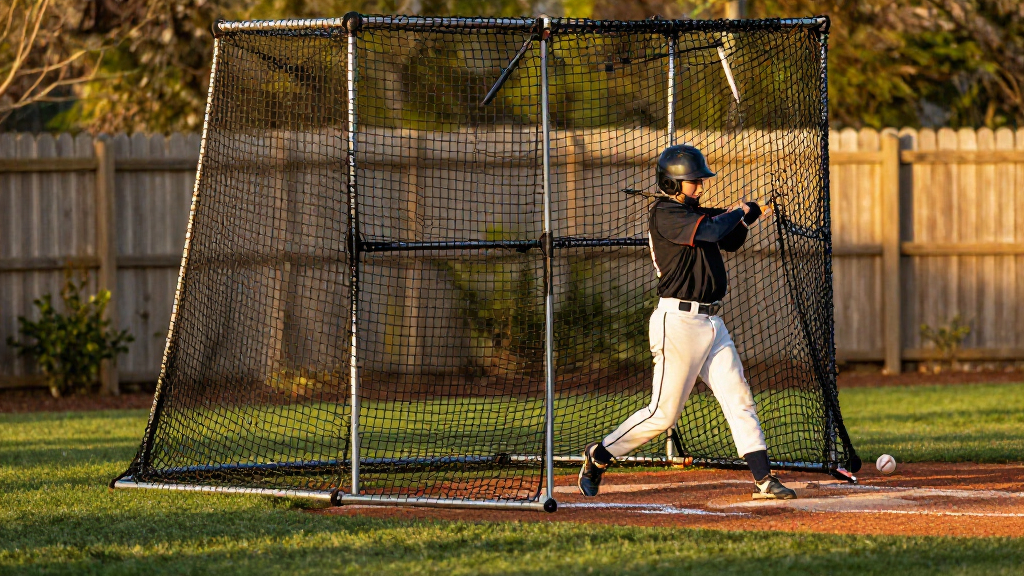
I ranked these cages for actual backyard practice needs, not simply by maximum listed length. The main criteria were usable hitting space, net and frame details, how readily a buyer can match the footprint to a yard, and whether the format suits regular batting practice or a narrower use. I also weighed portability against the practical work of setting up, anchoring, and putting away a cage.
The HSPXCTMFL 24 ft cage leads because reinforced netting is directly relevant to repeated impact while its length remains more manageable than the 35 ft VEVOR. Multi-length options rank well for buyers who need to fit a particular yard, while the steel-frame and specialty models serve more specific priorities. Product names and listed dimensions do not establish performance under every condition, so I distinguish between stated features and what buyers should verify before purchase.
Factors to Consider When Choosing Portable Batting Cages For Backyard Practice
Before choosing a model, I would work backward from the space and routine you can reliably support. A cage that looks suitable on a product page may leave too little clearance for a full swing, be awkward to secure, or take longer to assemble than your practice schedule allows. These factors help separate a useful backyard setup from one that is difficult to use.
Measure the Whole Practice Area, Not Just the Cage
Measure the proposed footprint and the clearance around it, including space behind the hitter and room to move around the frame. The listed 22 × 12 × 8 ft dimensions describe the structure, not necessarily the full area needed for safe setup and access. Check for branches, fences, windows, overhead wires, and nearby paths before settling on a location. A longer cage can contain more ball flight, but it may leave too little usable yard for other activities. If the available area is irregular, a shorter or adjustable-length design may be more practical than forcing a large rectangle into the space. Confirm the manufacturer’s dimensions and setup requirements before buying.
Choose Length Based on the Drills You Will Actually Run
More length is useful when you want a longer ball path, pitching practice, or room to vary drills, but it is not automatically better for every hitter. A compact practice routine focused on tee work may not need the same lane as live pitching or repeated machine work. Models with multiple listed lengths can help match the cage to a yard, though buyers should verify how the length is configured and whether all sizes use the same frame and net. Avoid choosing a long cage solely because it sounds more versatile; its footprint can make setup and storage harder. Also check whether the listed width and height give the intended hitter enough room for a full swing without contacting netting or poles. Let the drills and available space set the length.
Treat Net and Frame as a Single System
A net’s ability to contain balls depends partly on how it is supported, so do not judge netting independently from the frame. Reinforced netting, as listed for the HSPXCTMFL, speaks to impact resistance, while a metal or steel frame may appeal to buyers seeking a more substantial structure. Those labels alone do not tell you how a cage will perform in wind, how its joints hold up, or whether replacement netting is available. Look for clear information about materials, connection points, included anchors, and care instructions. A rigid frame can be less convenient to move or store than a lighter setup, so weigh steadiness against portability. When details are missing, ask the seller rather than assuming a feature from the product name.
Plan for Anchoring, Weather, and Storage
Portable cages still need a stable setup, especially outdoors where wind can catch a large net. Check whether stakes, tie-downs, or other anchoring hardware are included and whether your ground can accept them. A paved yard may need a different anchoring plan than grass, and some surfaces may not be suitable for the supplied hardware. Decide where the frame and net will go between sessions; folding or taking a cage down can reduce exposure to weather but adds work to each practice day. Do not assume a portable design is intended to stay outdoors year-round. Following the manufacturer’s guidance on wind, rain, and storage can help avoid damage and make the equipment easier to maintain.
Match Setup Effort to Your Practice Routine
A cage is only useful if you can put it up when practice time arrives. Before buying, check the assembly instructions, the number of frame parts, and whether more than one person is recommended for setup. A larger frame can offer more room but may take more time to assemble, move, or store than a short session justifies. If you expect to leave the cage in one spot, setup effort may matter less than if you plan to move it between practices. Compare the listed package contents so you know whether tools or extra anchoring supplies are needed. A straightforward setup may suit beginners better than a cage that demands a permanent backyard station.
Pay More for a Need, Not Just a Bigger Number
A longer cage or heavier-sounding frame is worthwhile only if it solves a real practice or durability concern. For frequent use, stronger net construction, clear replacement-part support, and a frame suited to repeated assembly may matter more than extra feet of length. For occasional tee work, a smaller footprint could be easier to live with and leave more yard available. Specialty formats such as an inflatable cage may appeal when quick deployment is a priority, but verify the blower and operating requirements and whether the design suits your drills. Compare what is actually included rather than relying on broad claims about portability or strength. Spend for the feature that removes a recurring problem in your setup.
Frequently Asked Questions
How much backyard space should I leave around a portable batting cage?
Start with the cage’s full listed footprint, then add clearance for assembly, access, and the hitter’s movement. Keep the hitting area away from windows, fences, branches, and places where people regularly walk. Check overhead obstacles as well as ground space, since a listed cage height does not account for nearby wires or tree limbs. The required margin depends on the cage design and how you plan to practice, so follow the manufacturer’s setup guidance rather than treating the product dimensions as the complete safe area. If the yard is tight, a shorter cage may be a better choice than squeezing in a longer one.
Is a 22 ft cage long enough for backyard batting practice?
A 22 ft cage can suit many backyard routines, particularly when the goal is tee work or contained hitting practice. Whether it is long enough depends on the hitter, the type of pitching or ball delivery, and how much ball flight you want inside the enclosure. A longer model may be a better match for varied drills or a dedicated practice lane, but it also takes more yard space. Check the manufacturer’s intended use and dimensions before assuming a listed length suits live pitching or a particular training machine. Choose based on your drills and site, not length alone.
Should I choose a steel-frame cage or a lighter portable design?
A steel-frame design may appeal if you want a more substantial structure and have a regular place to set it up. A lighter or more compact design can be easier to move or store, which matters if the cage must come down after each session. Frame material by itself does not establish wind stability or long-term durability, so check the joints, anchors, net attachment, and care instructions. Also consider who will assemble it and how often you expect to move it. The right choice depends on whether your main constraint is a fixed practice area or easy handling.
Can I leave a portable batting cage outside between practices?
That depends on the manufacturer’s guidance and the cage’s materials; portable does not automatically mean suitable for permanent outdoor exposure. Wind can place force on a large net and frame, while wet conditions and sunlight may affect components over time. Check whether the instructions specify limits for weather, anchoring, or storage, and take the cage down when conditions exceed those recommendations. If you plan to leave it assembled, consider where it will be secured and whether replacement parts are available. A storage plan is useful even if you expect to use the cage often.
Is an inflatable batting cage a good choice for regular backyard practice?
An inflatable cage may suit buyers who value a different setup format, but it should not be assumed to work like a framed net cage. Check the blower requirements, power needs, setup process, and the manufacturer’s guidance for the type of practice you plan to do. Consider whether the inflated structure leaves enough usable room for the hitter and whether it can be secured in your yard. A conventional frame may be more appropriate if you want a fixed hitting lane, while an inflatable design may appeal if its deployment method fits your routine. Confirm the intended use before choosing it for frequent practice.
Conclusion
For most buyers seeking a balance of useful length and impact-conscious netting, I would start with the HSPXCTMFL 24 ft cage as the best overall pick. For value-minded shoppers, compare the standard-footprint options such as KuiBonu, Vertura, ZivPlay, and Shopsource by checking what their listings include rather than choosing on dimensions alone. The VEVOR 35 ft steel-frame cage is the best premium-style choice for a dedicated yard with room for a longer lane, while the IDEATRY 22/30 ft cage is a strong fit for buyers who need length flexibility. Beginners should favor a manageable footprint and clearly explained setup over a cage with extra length they may not use. For specific needs, consider VEVOR’s 12 ft model for a compact format or OZIS’s inflatable cage if its blower-based setup matches your routine; verify each model’s intended use and requirements before deciding.